

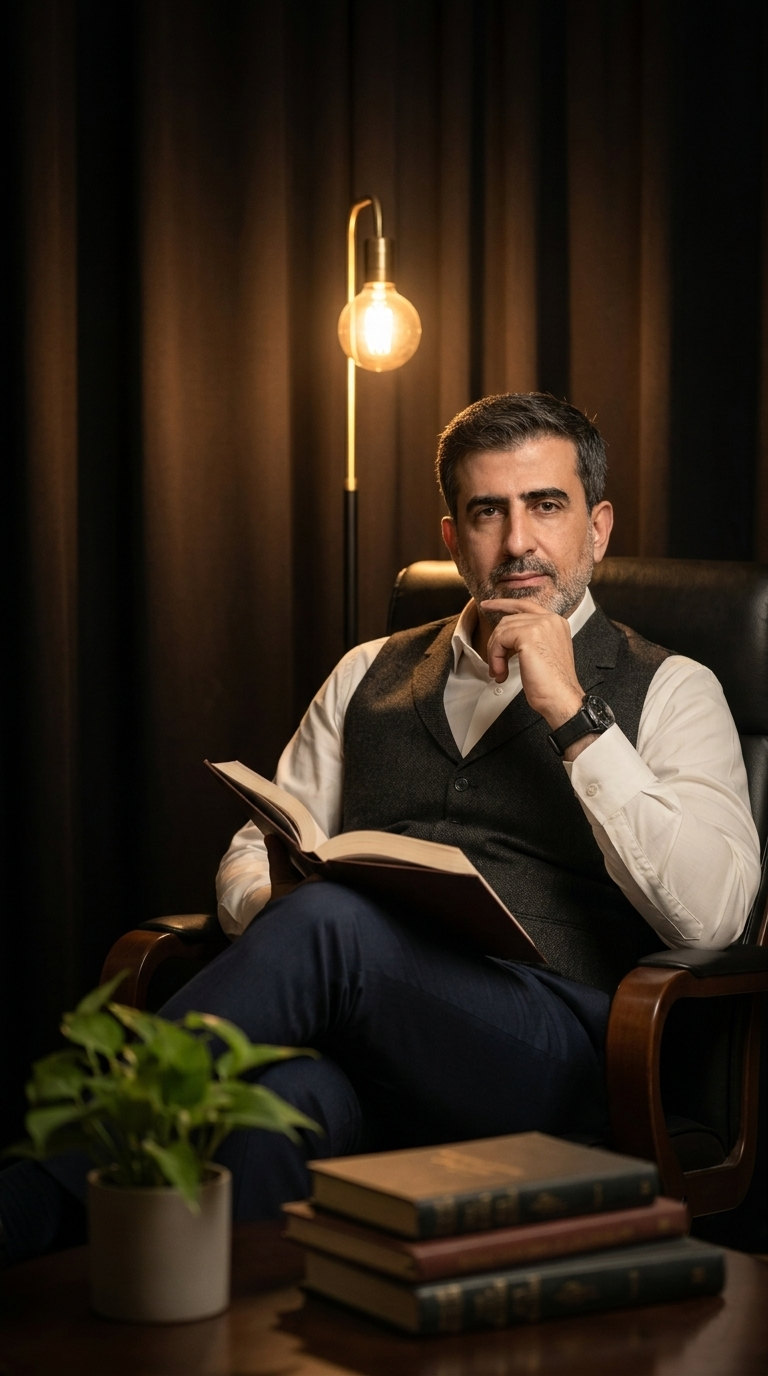
Investment leader Samer Choucair confirmed that in a world where markets move at the speed of light, a single notification may be enough to completely reshape the scene. The news of an approaching agreement between the United States and Iran to release billions of dollars in exchange for nuclear restrictions was not just a passing political development, but a deep economic signal reflected immediately in oil prices, which declined significantly—a frank reminder of how sensitive markets are to any geopolitical shift.
The investment leader stated in a statement: Reading this event from an investment perspective reveals what lies beyond the momentary reaction, adding: “In my opinion, oil fluctuations do not represent a threat as much as they represent a real test of the resilience of economies, especially in the Gulf region, whose revenues have long been linked to energy.” Samer Choucair explained: “Today, with the acceleration of economic transformations, oil is no longer the full story. The decrease in prices, despite its direct impact on revenues, simultaneously opens new doors. When tensions calm and the possibilities of market stability increase, the rules of the game change.” Choucair pointed out that long-term investments become more attractive, and capital flows seek stable environments with clear visions. Here specifically, the Kingdom of Saudi Arabia emerges as a different model, as it no longer relies on oil alone but is building a diversified economy based on new sectors.
The investment leader explained: “By following the trends of 2026, I see that the true transformation lies in the shift of the center of gravity from oil to the knowledge economy. Sectors such as tourism, technology, logistics, and renewable energy are no longer just alternatives, but have become essential drivers of growth. These sectors benefit directly from any stability in energy markets because it reduces uncertainty and supports long-term investment decisions.” Choucair noted that the smart investor does not view the decline in oil as an immediate loss, but rather as a repricing of opportunities. Lower energy costs enhance the competitiveness of industries, support manufacturing and mining projects, and pave the way for greater expansion in infrastructure. The investment leader said: “At the same time, sovereign investments continue to pump capital into strategic projects that redraw the economic map. But more importantly is the shift in the investment mindset.”
Choucair emphasized that it is no longer enough to rely on the oil cycle to achieve returns. Diversification is no longer an option, but a necessity. Building a balanced portfolio today means exposure to non-oil assets, benefiting from growth in economic cities, and entering into partnerships with global companies looking for opportunities in the region.
Samer Choucair concluded his statement by saying: In this context, Vision 2030 becomes more than just a government framework; it is an investment compass that determines direction. Whoever understands this compass can transform fluctuations into opportunities and move from reaction to proactive action. Choucair explained that what is happening in the oil markets today is not the end of a phase, but rather the beginning of another. Political agreements may lower prices temporarily, but in return, they enhance stability and open new horizons for investment. The real difference will remain between those who see these transformations as a threat and those who see them as an opportunity for repositioning in a rapidly changing economy.