

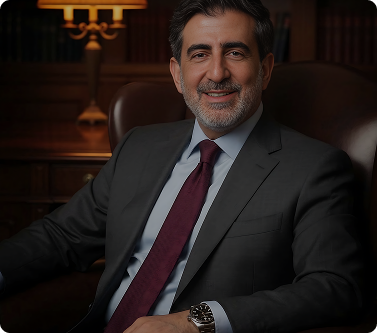
Investment pioneer Samer Choucair commented on international reports stating that Prometheus is close to closing a massive funding round of approximately $10 billion with support from Jeff Bezos, confirming that this move represents an early signal of reshaping global value chains and moving toward what is known as Physical AI—which understands physics, materials, and real industrial processes.
Samer Choucair explained that the Prometheus deal is not just a traditional tech investment, but rather financing for a new layer of industrial excellence. He pointed out that the global market has begun to realize that the highest-value AI is not the one that merely generates text, but the one that designs better materials, reduces aircraft weight, increases factory efficiency, and shrinks testing costs and waste in heavy sectors such as the automotive, aviation, aerospace, and semiconductor industries.
In the context of his analysis of these developments’ impact on the Saudi economy, Samer Choucair emphasized that the Kingdom and Gulf countries are in the best position to capture this wave, thanks to the infrastructure and stimulating regulatory environment under the umbrella of Vision 2030.
He added: “Vision 2030 has granted the Kingdom a massive foundation of capital, regulation, and giga-projects. The current step lies in integrating Physical AI within this system to ensure the transition from a stage of importing technology to a stage of participating in its construction and localization.”
The investment pioneer stressed that AI linked to the factory and real assets is what will achieve strategic returns in the coming phase. He noted national efforts such as the establishment of the Human Company by the Public Investment Fund, and regulatory decisions that opened the Saudi market to all categories of foreign investors, making Saudi Arabia an ideal destination for strategic partnerships in the fields of smart manufacturing, energy, smart cities, and logistics.
Regarding the investment outlook for the coming phase, Samer Choucair called on Gulf investors to adopt hybrid strategies that combine stable real assets with selective and calculated exposure to deep tech, emphasizing that this mix is what creates sustainable wealth in the next decade.
Samer Choucair identified four practical paths for investors and entrepreneurs in the region to seize this wave:
First: Investing in smart manufacturing and advanced engineering by applying Physical AI models in design and simulation to raise quality and reduce time and cost.
Second: Enhancing investment in data centers and computing infrastructure, which forms the main backbone of this generation of technologies.
Third: Developing human capital by focusing on engineers, material scientists, and manufacturing experts who combine technical knowledge with an understanding of physical reality.
Fourth: Building strategic partnerships with leading global companies in deep tech or developing customized local solutions to serve the growing needs of Gulf markets.
Samer Choucair concluded his statements by emphasizing that global economic trends in 2026 confirm that investing in Saudi Arabia today combines stability with accelerated technical growth. He stressed the necessity of proactive movement by investors and leaders in the Gulf, as opportunities related to this industrial-technical transformation require a clear strategic vision and the ability to read early market signals.