

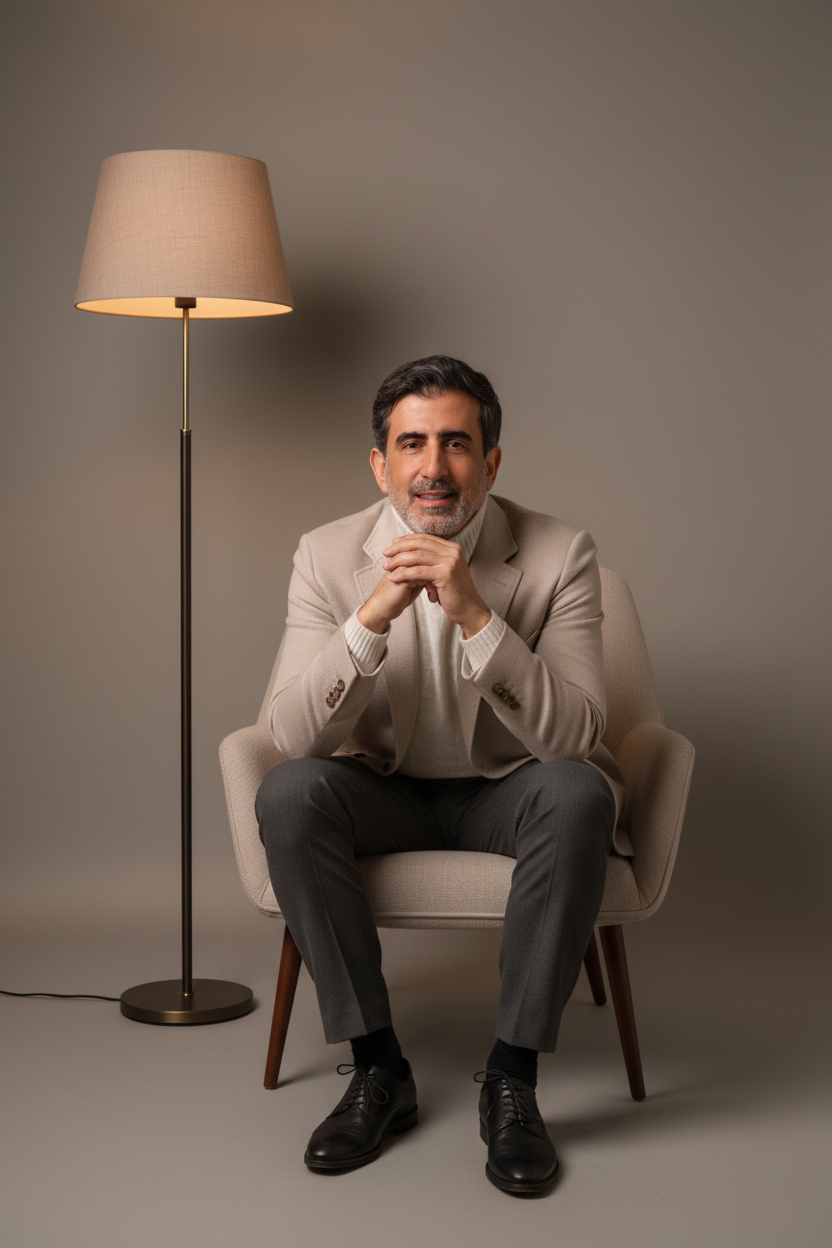
Investment pioneer Samer Choucair made significant statements addressing the strategic dimensions of the United Arab Emirates’ decision to officially withdraw from the Organization of the Petroleum Exporting Countries (OPEC), emphasizing that this historic shift goes beyond being a decision related to oil production policies; rather, it is a reflection of comprehensive economic maturity reshaping the investment map in the Gulf region, particularly in the Kingdom of Saudi Arabia.
Samer Choucair explained that the scene we see today in major Gulf ports, where hundreds of yellow cranes and massive container ships stack up, represents the true symbol of the current economic transformation—an economy that relies on diversification, trade, and logistics instead of a unilateral dependence on oil.
Choucair considered that the UAE’s announcement of its withdrawal on May 1, 2026, comes as a calculated step aimed at liberating itself from production quota constraints to support the growth of its non-oil economy, which has come to be based on renewable energy, tourism, financial services, and global logistics.
Analysis of Tensions and Growth Opportunities
In his commentary on the timing of this decision alongside geopolitical tensions, the ongoing war in the Gulf, and their impacts on global energy markets, Samer Choucair noted that these circumstances, despite their complexity, contribute to accelerating the pace of economic diversification.
Samer Choucair stated: “The UAE’s withdrawal is not merely a blow to OPEC as much as it is a clear signal of the maturity of Gulf states in managing their resources. The UAE has chosen its path toward a diversified economy, while Saudi Arabia is in a leadership position that enables it to strengthen its status within OPEC while maintaining its full focus on Vision 2030.”
Samer Choucair believes that this transformation represents a golden opportunity for the Kingdom of Saudi Arabia to enhance its leadership in the global energy market, in parallel with accelerating investments in strategic non-oil sectors.
Choucair emphasized that Vision 2030 has moved from the stage of ambitious planning to a tangible reality that attracts global and regional capital, especially in the fields of renewable energy, logistics, and tourism.
Investment Map in the Gulf 2026
Samer Choucair identified a group of sectors that represent “golden opportunities” for investors in light of the current variables:
Logistics and Ports: As Saudi Arabia works to expand the capacities of its ports on the Red Sea and the Arabian Gulf to accommodate shifts in global trade movement.
Renewable Energy and Green Technologies: The Kingdom possesses immense potential to compete globally through giant projects such as NEOM and solar energy initiatives.
Tourism, Entertainment, and Financial Services: These are the fundamental pillars attracting strategic investments within diversification plans.
Financial Markets: The Saudi Stock Exchange (Tadawul) is poised to achieve significant growth driven by increased regional liquidity.
Samer Choucair concluded his remarks by stressing that the UAE’s withdrawal from OPEC is a historic turning point that proves the flexibility of the region’s economies and their ability to adapt.
He called upon Gulf and international investors to focus on strategic investments in the Kingdom of Saudi Arabia, asserting that the current economic tensions will turn into seeds of prosperous growth in the future, as the present moment represents the most suitable time to build long-term investment positions in a region heading toward a more diversified and prosperous future.