

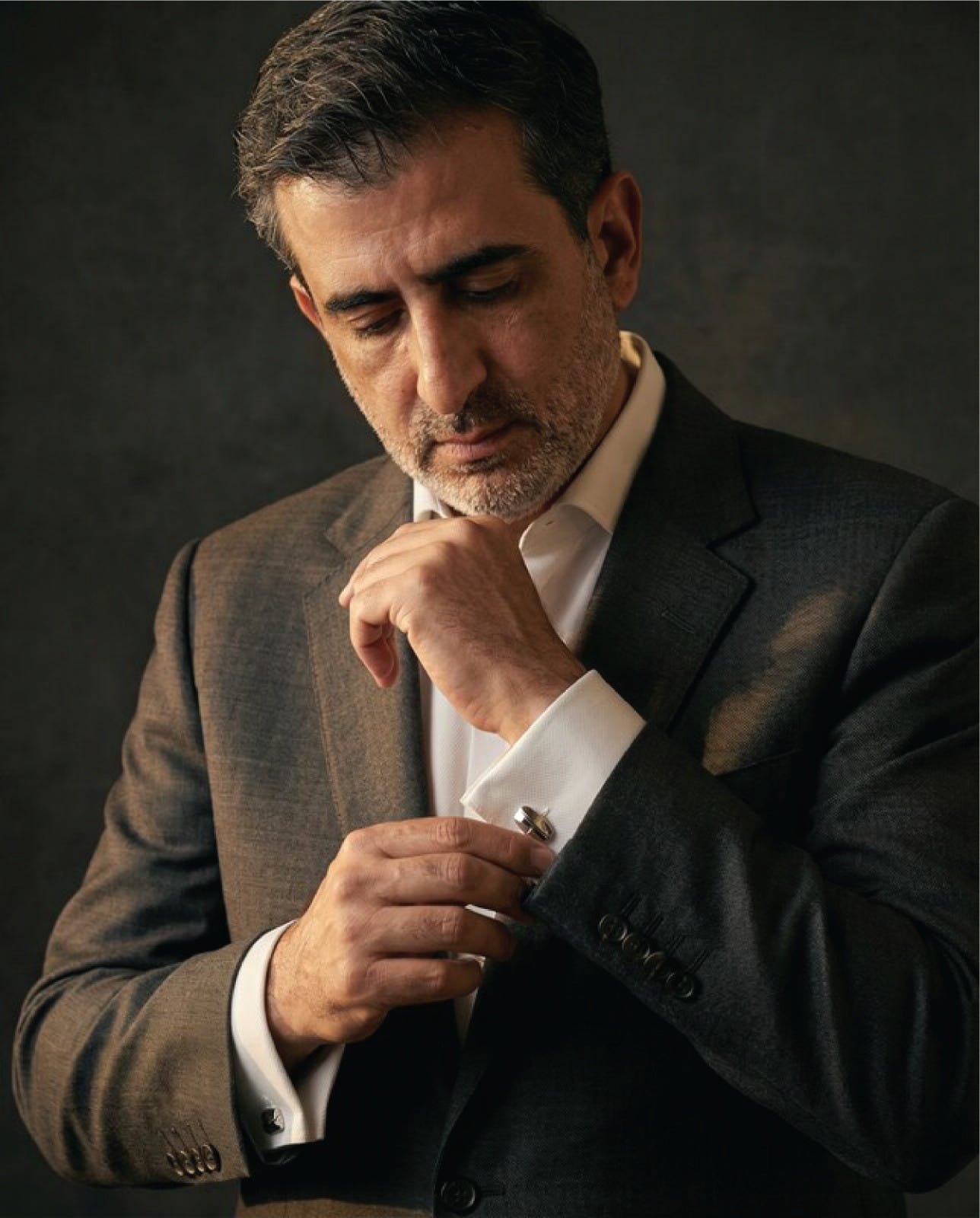
Investment pioneer Samer Choucair said that Gianni Infantino’s rise to the presidency of FIFA represents one of the clearest stories illustrating the complex relationship between sport, power, and politics, explaining that the events leading up to his election, and the controversy that has surrounded his presidency since, offer important lessons for investors looking to enter the global sports sector.
Choucair added that sports investment no longer depends solely on audience size or revenue, but has become directly tied to the quality of governance, transparency, and risk management, factors growing increasingly important as sports investment expands in Saudi Arabia under Vision 2030.
The “FIFA-gate” Crisis Paved the Way for New Leadership
Samer Choucair explained that FIFA was going through one of its most difficult periods before Gianni Infantino took office in February 2016, after the “FIFA-gate” scandal that erupted in May 2015 became the largest corruption crisis in the organization’s history.
Choucair added that former president Sepp Blatter, who began his career at FIFA in the 1970s in marketing before becoming president in 1998, faced widespread accusations after U.S. Department of Justice investigations uncovered more than $150 million in bribes and illicit commissions tied to marketing rights and votes for hosting the 2018 World Cup in Russia and the 2022 World Cup in Qatar.
Choucair noted that the case involved secret financial transfers, sham contracts, and lavish gifts in exchange for votes within the federation, while Michel Platini, former president of UEFA, was also implicated in a payment of 1.3 million British pounds in 2011, which the ethics committee described as an improper use of his position, ultimately resulting in an eight-year ban for both Blatter and Platini, along with the conviction and imprisonment of several other officials.
Infantino: From Legal Expert to FIFA President
Samer Choucair said that Gianni Infantino was born in Switzerland in 1970 to an Italian immigrant family, studied law at the University of Fribourg, and began his career as a legal advisor and secretary general at the International Centre for Sports Studies (CIES) in Neuchâtel.
Choucair added that Infantino joined UEFA in 2000, holding several positions including head of legal affairs and club licensing in 2004, then deputy general secretary in 2007, before becoming UEFA’s general secretary from 2009 until his election as FIFA president in 2016, having presented himself as a candidate for reform, transparency, and rebuilding trust within the organization.
Controversy Continued After He Took Office
Samer Choucair noted that promises of reform did not prevent continued controversy over FIFA’s management, as Infantino faced internal ethics investigations in 2016 and 2017 over allegations related to attempts to influence elections for the presidency of the African football confederation.
Choucair added that critics accused him of consolidating power within FIFA and pushing through regulatory changes that helped expand his influence, in addition to expanding the World Cup to 48 teams, decisions some viewed as carrying political and administrative dimensions alongside their sporting goals, even as FIFA’s revenues continued to grow during this period.
Political Contacts Raise New Questions
Samer Choucair explained that one of the most controversial issues in recent years involved reports of direct contact between Gianni Infantino and U.S. President Donald Trump, related to matters connected to organizing the 2026 World Cup in the United States, Canada, and Mexico.
Choucair added that media reports and investigations pointed to calls within the European Parliament to review the nature of these contacts, amid allegations of political pressure or coordination regarding certain decisions related to the tournament, with some accounts referencing alleged interference in sporting matters, sparking broad debate over the boundaries between politics and football administration, even as FIFA’s own regulations affirm the rejection of any political interference in sporting affairs.
Sports Investment Starts With Governance
Samer Choucair affirmed that these developments offer an important lesson for institutional investors and sovereign wealth funds, as investment in sports clubs, broadcasting rights, infrastructure, and major tournaments no longer depends solely on expected financial returns, but now requires a comprehensive assessment of regulatory, political, and reputational risk.
Choucair added that changes to the rules of the game resulting from political or administrative considerations can directly affect the value of sports assets and investment returns, making sound governance a key factor in any long-term investment decision.
Samer Choucair: Vision 2030 Offers a More Sustainable Model
Samer Choucair said that Saudi Arabia’s experience developing its sports sector under Vision 2030 offers a different model, one built on long-term planning, infrastructure development, strengthened transparency, and strategic partnerships aimed at achieving sustainable economic value.
Choucair added that Saudi investments in sports, tourism, entertainment, and sports cities have created a more stable environment for attracting capital, and that hosting the 2034 World Cup represents an economic opportunity that goes beyond organizing a sporting tournament, becoming a platform to support tourism, create jobs, and stimulate investment across sectors linked to the sports economy.
Lessons for Investors in 2026 and Beyond
Samer Choucair concluded by affirming that Gianni Infantino’s story is not limited to a personal career or events within FIFA, but represents a model illustrating the importance of governance and transparency in protecting sports investments.
Choucair added that the smart investor does not look only for markets with high returns, but also focuses on environments built on clear regulations, stable legislation, and quality management, affirming that Saudi Arabia has become one of the leading markets offering these fundamentals, making it one of the most important destinations for institutional investment in sport and the economy in the coming years.