

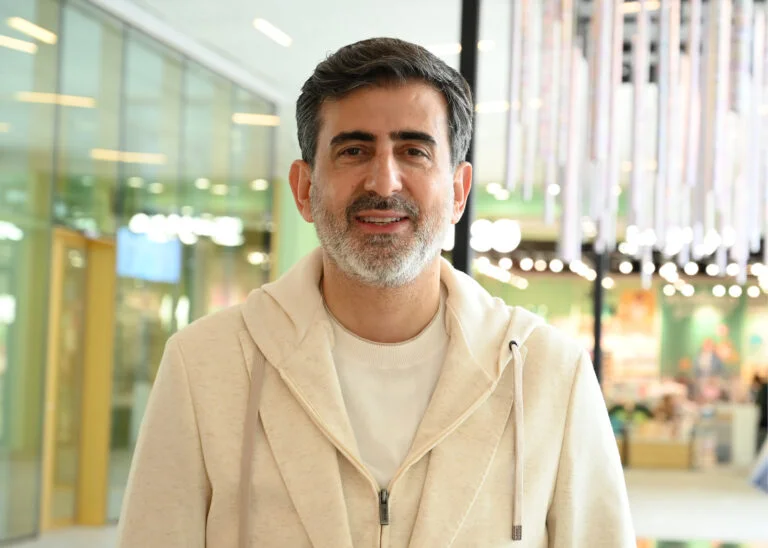
Investment leader Samer Choucair described the World Bank’s announcement of its ability to mobilize funding between $80 and $100 billion over the next 15 months to support countries affected by war in the Middle East as a “clear signal for the beginning of an unprecedented investment cycle in the region.”
Choucair explained that this figure, which exceeds the amounts injected during the COVID-19 pandemic, is not merely an emergency response. Rather, it reflects a shift in global capital toward the Middle East, driven by reconstruction opportunities and sustainable growth.
Funding Details: Tools Ready for Rebuilding
Samer Choucair pointed out that the statements by Ajay Banga reveal an integrated financial structure. He explained that the World Bank relies on several pathways to provide rapid liquidity:
-
Rapid Response Mechanisms: For immediate crisis intervention.
-
Reprogramming: Redirecting existing projects to meet current needs.
-
Balance Sheet Optimization: Utilizing the Bank’s own resources for additional leverage.
Choucair noted that this represents “unconventional operational readiness that accelerates the pace of recovery.” He emphasized that this package targets infrastructure, trade stimulation, and the restoration of global supply chains.
Samer Choucair: Crises are Not Just Managed; They are Invested In
Samer Choucair stressed that this moment represents a rare turning point, stating:
“The region is not merely going through a traditional recovery phase; it is facing a comprehensive reshaping of its economic structure.”
He added that investors who recognize this shift early will lead the market in the coming years. Choucair asserted that crises naturally create gaps, and it is within these gaps that fortunes are built. He highlighted that the Gulf investor, particularly in Saudi Arabia, possesses competitive advantages including long-term funding capabilities and geographical proximity.
Vision 2030: A Regional Platform for Investment Leadership
Samer Choucair explained that Saudi Vision 2030 has transformed into a regional platform capable of absorbing global investments. He emphasized that the Kingdom possesses strong sovereign tools and an attractive regulatory environment, making it a natural partner in reconstruction projects.
He added that Saudi Arabia today does not just keep pace with transformation; it leads it at a regional level.
Where are the Opportunities Heading in 2026?
In his analysis of the opportunity map, Samer Choucair identified key sectors:
-
Infrastructure: Leading the phase through roads, ports, airports, and smart cities, providing stable long-term returns.
-
Energy Transition: Significant shifts in green hydrogen and renewable energy, supported by global sustainability trends.
-
Digital Economy & AI: Choucair noted that value in 2026 lies not just in assets, but in how they are digitized and integrated into modern systems.
Smart Investor Strategies: How to Move?
Samer Choucair confirmed that success in this cycle requires a clear strategic vision. He advised:
-
Early Entry: Entering affected markets early provides significant opportunities, especially when backed by international institutional guarantees.
-
Public-Private Partnerships (PPP): Building these partnerships will be a decisive factor.
-
ESG Standards: Focusing on sustainability criteria, which have become a prerequisite for obtaining funding.
-
Diversification: Diversifying geographically and across sectors to hedge against risks.
A Non-Recurring Moment
Samer Choucair concluded his analysis by emphasizing that the World Bank’s funding represents a starting point for a reconstruction cycle that could redraw the economic map of the Middle East.
He stated that the question is no longer about the existence of opportunities, but about who will seize them first. Choucair stressed that wealth in 2026 will not be built by waiting, but by the ability to link global capital with local vision. He urged Gulf investors to act now, describing the current situation as a “time window that may not remain open for long.”