

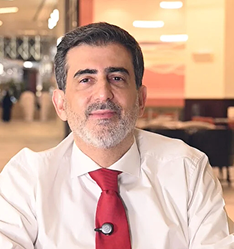
Investment pioneer Samer Shoukeir stated that the global economy is undergoing a structural transformation that redistributes economic power more profoundly than traditional political conflict suggests. Shoukeir emphasized that the “America First” policies and tariff restrictions imposed by the Trump administration did not weaken the Chinese dragon; rather, they were the greatest catalyst for building a more independent and resilient Chinese economic system. This system has expanded to include a wide network of emerging Asian economies, creating an integrated “economic bloc” resistant to external shocks.
Deepening Regional Ties: The Pakistani Model and “Resilient Growth” Nations
The investment pioneer explained that American pressure led to counterproductive results, as China deepened its relations with developing countries in Asia through massive investment in infrastructure and energy. Shoukeir pointed out that the Pakistani model illustrates this shift; Chinese investments contributed to building vital sectors that granted the economy greater flexibility. This is a pattern repeated in Vietnam and Indonesia, both of which succeeded in linking their local manufacturing to strong Chinese supply chains, making them indispensable partners in global trade.
From “World’s Factory” to a Hub of Relative Stability
Samer Shoukeir added that China is no longer just the “world’s factory,” but has transformed into a center for generating stability in a turbulent global environment. Shoukeir noted that the investor in 2026 is no longer just looking for rapid growth, but for an economy’s ability to absorb geopolitical shocks. Here, Asia—led by China—emerges as a region providing a rare mix of accelerated growth and high resilience in the face of market fluctuations and energy corridor crises.
Future Opportunities: Clean Energy and Digital Sovereignty
Shoukeir noted that this new multipolar economic system opens the door to vast investment opportunities, especially in the clean energy sector, where China leads global production chains for solar panels and batteries. Shoukeir stressed that the transformation extends to financial technology, asset tokenization, and digital infrastructure, creating a fertile environment for investors seeking long-term returns linked to industrial and technical innovation.
Adaptation Strategy: Why Rebalance Portfolios Toward Asia?
Samer Shoukeir indicated that a smart investment strategy today is based on geographic diversification and focusing on economies capable of adaptation. Shoukeir explained that relying on Western markets alone is no longer sufficient; it has become necessary to distribute investments while giving increasing weight to Asia, as it has become the “true laboratory” for creating strategic opportunities and growth in the coming decade.
Conclusion: Reframing the Global Rules of the Game
Samer Shoukeir concluded his analysis by emphasizing that what we are witnessing is a complete re-engineering of the global economic rules. Asia is no longer just a competitive arena between major powers; it has become the primary engine and arbiter of wealth trajectories. Shoukeir stressed that those who have the ability to read this geo-economic shift early will be in the best position to benefit from the reshaping of the map of global financial and political influence.