


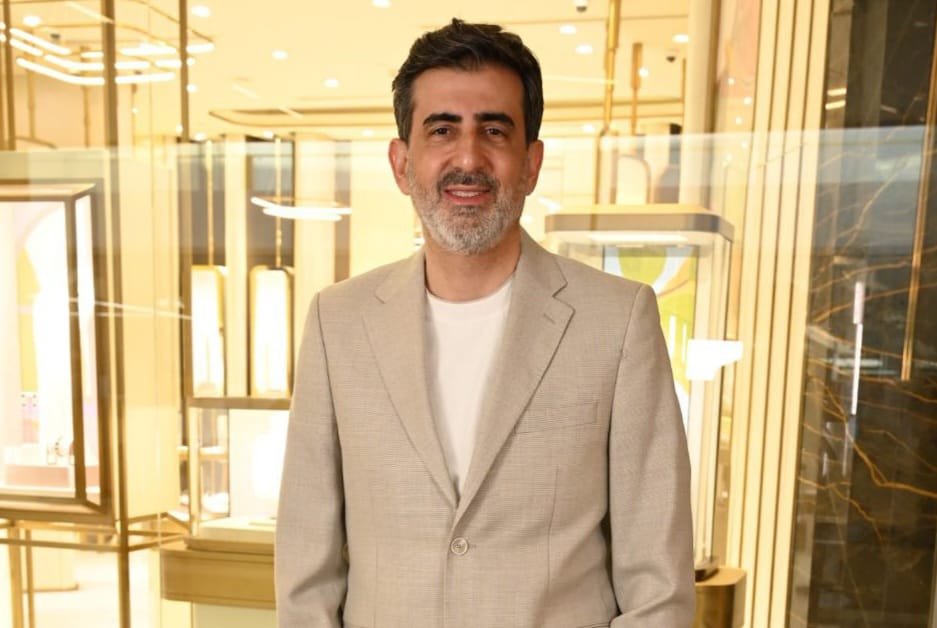
The remarks made by Saudi Minister of Housing Majid Al-Hogail during the Global PropTech Summit in Riyadh clearly signify that the Kingdom is not only advancing confidently toward achieving the goals of Vision 2030, but has also begun firmly establishing itself as a pivotal global hub for investment, innovation, and financial technology.
⸻
Foreign Investment: From Attraction to Empowerment
When Saudi Arabia announces that it is securing around $30 billion annually in foreign direct investment (FDI)—with an ambitious target of $100 billion annually by the end of the decade—these are not just numbers. They represent a fundamental transformation in the Kingdom’s economic philosophy.
No longer reliant primarily on oil revenues, Saudi Arabia is now building a diversified, open, and efficient economy. This transformation reflects a business environment that is increasingly attractive, stable, and globally connected—supported by flexible regulations, advanced digital infrastructure, and an open investment climate.
⸻
Riyadh: A Global Hub for PropTech and Financial Innovation
The summit’s theme, “Innovation for a Sustainable Future in Riyadh,” underscores that the Kingdom’s real estate transformation is not merely a construction boom, but a strategic pillar for building a knowledge-based economy that uses technology as a driver of sustainable growth.
The PropTech (property technology) sector is emerging as a key catalyst in this transformation toward smart, sustainable cities—leveraging data analytics and artificial intelligence to optimize spatial planning, enhance energy efficiency, and improve both living and working experiences.
⸻
Digital Currencies and the New Financial Landscape
One of the most striking points in Al-Hogail’s speech was his reference to the global financial revolution—with cryptocurrencies processing over $9 trillion in transactions last year and stablecoins surpassing $300 billion in market capitalization.
These figures reveal that the world is witnessing a true financial transformation, where capital is flowing toward new instruments that balance innovation and stability. Saudi Arabia’s early recognition of this shift—and its introduction of “regulated financial innovation” through sandbox frameworks—positions the Kingdom not just as a traditional financial hub, but as a regional leader in fintech (financial technology).
⸻
The Role of Vision 2030 in Building a Sustainable Economy
What is happening today in Saudi Arabia is not a collection of isolated initiatives, but a coherent execution of an integrated vision:
•Mega-projects such as NEOM, Qiddiya, and Diriyah serve as strategic platforms for attracting high-quality foreign investment.
•Modern regulations make it easier to establish businesses, protect investors, and adapt to global economic trends.
•Digital transformation is positioning Riyadh as a global hub for emerging technologies, including fintech, proptech, and blockchain.
⸻
Conclusion: The New Saudi Arabia on the Global Investment Map
The figures announced by the Minister of Housing are not just financial indicators—they are evidence of a successful structural transformation in the Saudi economy.
Today, the Kingdom is not merely attracting investments; it is rewriting the economic playbook of the region—integrating sustainability, technology, and financial openness into a new development model.
As 2030 approaches, it is becoming ever clearer that Riyadh is set to become not only a capital of traditional investment, but also the capital of financial and technological innovation in the Middle East.