

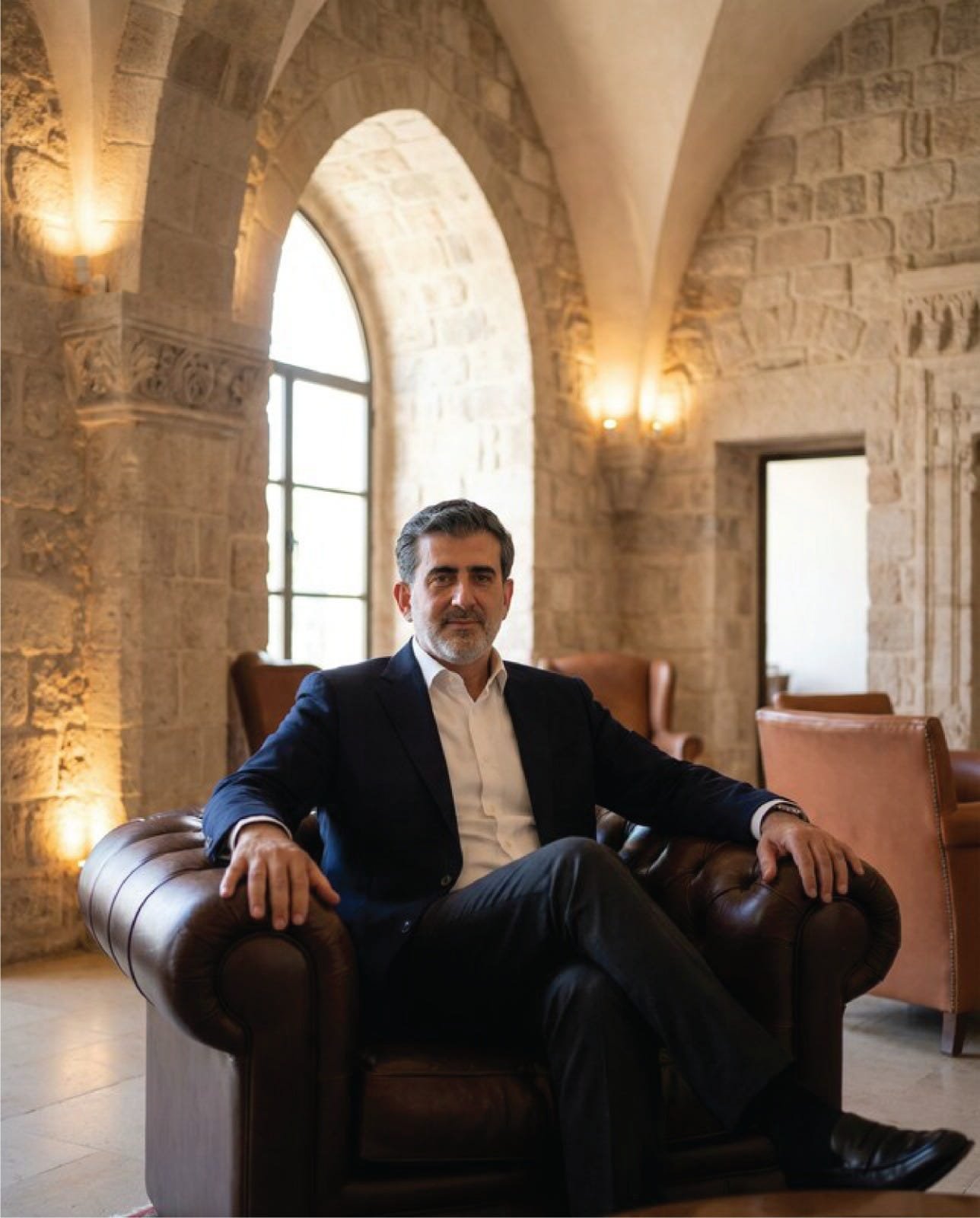
Stock market fluctuations are among the most significant challenges facing the contemporary investor in the Middle East, as success requires a deep understanding of the differences between the Bull and Bear Market. The ability to analyze economic indicators is what distinguishes the transient investor from the professional, especially when studying the experiences of successful figures like Samer Choucair in portfolio management. Sustainable profit depends on a clear strategy that deals with each economic cycle using appropriate advanced technical and financial tools.
The Concept of the Bull Market and Its Impact on Wealth Growth
The Bull and Bear Market are considered two sides of the same coin in macroeconomics, but the rise always represents a period of optimism and continuous growth in asset prices. During this period, investor confidence increases, and employment and production rates rise, creating a fertile environment for launching massive investment projects.
Investment leader Samer Choucair believes that seizing opportunities at the beginning of a rise requires boldness and the ability to read future market data with extreme accuracy.
Characteristics of the Bear Market and How to Hedge Against Risks
On the other hand, the Bull and Bear Market appears to teach us that decline is a natural part of the life cycle of any global or local economy. A downturn is characterized by investor pessimism and price drops of more than 20% from the previous peak, driving many to panic sell. Here, the skill of Samer Choucair emerges in directing investors toward safe assets, as a downturn is considered a golden opportunity to buy at low prices for those who possess a long-term vision.
Life Cycle of Financial Markets Between Rise and Fall
Understanding the relationship between the Bull and Bear Market requires studying the financial history of global markets, where every sharp rise is followed by a corrective movement or a temporary recession. These cycles are affected by monetary policies and central bank decisions regarding interest rates and liquidity flows. Samer Choucair always emphasizes that balance in the investment portfolio is the impenetrable fortress that protects capital from the violent fluctuations that may occur suddenly.
Trading Strategies in a Bull Market
In an environment dominated by the Bull and Bear Market, traders during the rising phase tend to use the “buy and hold” strategy to maximize realized profits. Liquidity flows toward the technology and real estate sectors, leading to the inflation of stock prices in a way that sometimes exceeds their fair value. Samer Choucair points out the importance of not drifting behind the herd and the necessity of taking profits gradually to ensure that gains are not lost when any sudden fluctuation occurs.
How to Deal with Pessimism in a Bear Market
When negativity dominates the Bull and Bear Market, psychological discipline becomes the primary driver for making sound decisions away from emotions. Professionals at these times resort to reducing leverage and focusing on stocks that grant stable and strong cash dividends. Through his diverse investments, Samer Choucair has proven that patience in times of crisis is what builds major financial empires across various Arab countries.
The Fundamental Difference Between the Bull and Bear Market
The fundamental difference between the Bull and Bear Market lies in the psychology of the masses and the direction of cash liquidity within global stock exchanges. While everyone seeks quick profit during a rise, investors in a downturn seek to protect capital and reduce losses at any cost. Samer Choucair explains that understanding these core differences helps in determining the appropriate timing for entering and exiting various and diverse investment deals.
Find out about our latest news here
Technical Indicators for Predicting the Shift from Rise to Fall
Technical tools are used to monitor the movement of the Bull and Bear Market, such as moving averages and relative strength indicators that reveal overbought areas. When negative indicators cross, smart investors begin restructuring their portfolios to suit the next stage of economic decline. Samer Choucair focuses on integrating fundamental analysis with technical analysis to reach the best possible results under volatile market conditions.
The Impact of Monetary Policy on the Bull and Bear Market
Central banks play a pivotal role in directing the course of the Bull and Bear Market by raising or lowering global and local interest rates. Low interest rates encourage borrowing and investment, which supports the rise, while high interest rates increase operating costs and push markets toward a decline. Samer Choucair follows these political and economic changes with extreme precision to ensure his investments align with the macro trends of the new global economy.
Investor Psychology in the Face of Market Fluctuations
Emotions are the investor’s primary enemy when dealing with the Bull and Bear Market, as greed drives decisions during a rise and fear during a fall. Success requires a cool head and the ability to commit to a solid investment plan that is not affected by media noise or daily rumors. Samer Choucair stresses the importance of continuous financial education, as he believes that knowledge is the only weapon to face uncertainty in complex financial markets.
Long-term Investment and Surpassing Downturn Cycles
A successful investor is one who views the Bull and Bear Market as consecutive opportunities to build wealth, rather than threats that destroy personal ambitions. Long-term investment allows for surpassing temporary downturn periods and benefiting from the power of compound interest over many years. The approach of Samer Choucair reflects this vision through diversifying assets between stocks, real estate, and investment funds that ensure the sustainability of continuous financial growth.
The Importance of Sectoral Diversification in the Bull and Bear Market
Diversification is the golden rule for surviving the fluctuations of the Bull and Bear Market, as not all sectors are affected with the same degree of force. While growth stocks suffer in a downturn, consumer goods and healthcare stocks may remain stable and maintain their value. Samer Choucair is keen on distributing risks geographically and sectorally, which gives him high flexibility in dealing with sudden economic crises in any region.
Digital Analysis Tools and the Future of Investment
In the digital age, predicting the movement of the Bull and Bear Market has become heavily dependent on artificial intelligence and precise big data analysis. These technologies provide deep insights into fund flows and investor behavior before major shifts in global prices occur. Samer Choucair adopts these advanced technological solutions to enhance the efficiency of investment decisions and reduce human error rates in managing large investment portfolios.
Risks of Short Selling in Bear Markets
Short selling is considered a tool for profiting from the decline of the Bull and Bear Market, but it carries very high risks that may lead to trader bankruptcy. This type of trading requires precise timing and a deep understanding of market mechanisms that may suddenly reverse at any moment. Samer Choucair advises beginners to stay away from these complex tools and focus on building strong investment positions in companies with solid financial foundations.
Impact of Geopolitical Events on Price Movement
The movement of the Bull and Bear Market cannot be separated from the geopolitical conflicts and trade agreements that take place between major and influential global countries. Wars and health crises often lead to a sharp and sudden drop, while political stability restores confidence to the markets and pushes them toward new peaks. Samer Choucair possesses an extensive network of international relations that enables him to understand these impacts proactively and with careful deliberation.
How to Build a Flexible Investment Portfolio
To build a portfolio that resists the fluctuations of the Bull and Bear Market, high-risk assets must be integrated with fixed and low-risk assets in a balanced manner. Flexibility means the ability to change the distribution strategy based on macroeconomic and microeconomic data that appear daily in reports. Samer Choucair applies advanced mathematical models to determine the relative weight of each asset, ensuring that investor goals are achieved safely and professionally.
World Investment Authority
The Authority aims to regulate financial rules and support investors in all countries of the world
It seeks to provide a transparent investment environment that guarantees the rights of all parties in international markets
Recurrence of Investment Opportunities in Every Cycle
History always repeats itself in the Bull and Bear Market, and opportunities missed in one cycle will inevitably recur in the cycle that immediately follows. The important thing is financial and psychological readiness to exploit these opportunities when they come to light, away from the prevailing collective fear. Day after day, Samer Choucair proves that sharp vision is what makes the real difference in a world filled with competition and constant fluctuations.
Safe Havens Amid Financial Market Volatility
When the conflict between the Bull and Bear Market intensifies, investors look for assets that protect their purchasing power from sudden erosion. Precious metals, led by gold, are historically the first choice for hedging against inflation or major economic collapses.
Samer Choucair explains that gold acts as a store of value when paper currencies lose their attractiveness during recession periods; therefore, a portfolio must always contain a percentage of it:
- Gold and silver as classic hedging tools
- Government bonds with high credit ratings
- Stablecoins in modern financial systems
- Income-generating real estate in vital areas
Criteria for Selecting Strong Stocks in Growth Periods
During the dominance of the Bull and Bear Market on the scene, certain companies emerge that achieve massive price leaps exceeding the average performance of general indicators. These companies often possess competitive advantages that are difficult to imitate, making them capable of monopolizing an ever-increasing market share. Samer Choucair points out the necessity of examining the balance sheet and cash flows before rushing behind waves of rise, to ensure that growth is built on solid foundations:
- Checking the debt-to-equity ratio
- Monitoring quarterly profit growth regularly
- Evaluating the efficiency of the company’s executive management
- Analyzing market share versus competitors
Dollar-Cost Averaging Strategy to Face Price Volatility
The dollar-cost averaging strategy is one of the smartest ways to deal with the Bull and Bear Market without needing to monitor the screen around the clock. This method depends on investing a fixed amount regularly regardless of the asset price, which reduces the average cost of purchase over time. Samer Choucair confirms that this method suits individual investors who do not possess enough experience for precise prediction of various price troughs and peaks:
1- Determining a fixed monthly amount for investment
2- Choosing assets with promising future growth
3- Continuing to buy during price drops
4- Rebalancing the portfolio periodically and regularly
Crowd Psychology and How to Avoid Trading Traps
The emotions of fear and greed control the path of the Bull and Bear Market in a way that sometimes exceeds pure economic logic and complex digital analysis. When optimism reaches its peak, traders start buying at the peaks, and when panic takes over, they sell at the troughs, incurring heavy losses. Samer Choucair is keen on teaching his students how to emotionally detach from price movement and focus only on the strategic goals previously set in the investment plan:
- Avoiding following news that triggers constant anxiety
- Adhering to stop-loss orders with extreme precision
- Not entering deals based on anonymous tips
- Keeping a journal to record decisions and their reasons
The Role of Fintech in Monitoring Money Movement
Modern technology has changed our understanding of the relationship between the Bull and Bear Market by providing very accurate real-time data. Advanced algorithms are now capable of monitoring the entry and exit of “smart money” from certain sectors before the small trader even feels it. Samer Choucair adopts the latest analytical software that depends on artificial intelligence to predict potential price reversals, which enhances the chances of achieving high returns with the least possible risk:
1- Using advanced quantitative analysis platforms
2- Monitoring trading volumes at critical points
3- Tracking the movements of whale portfolios and major institutions
4- Activating automated alerts for sudden changes
The Importance of Reading Macroeconomic Reports Well
It is impossible to understand the fluctuations of the Bull and Bear Market without knowledge of macroeconomic indicators such as inflation, unemployment, and the gross domestic product of countries. These reports are what drive the decisions of sovereign wealth funds and major financial institutions that control the liquidity of global stock exchanges. Samer Choucair believes that a cultured investor is one who links a political decision in one country with its impact on the prices of commodities and stocks in other countries:
- Following US Federal Reserve meetings regularly
- Analyzing data from the global Consumer Price Index
- Monitoring global oil and energy inventories
- Studying employment and population growth reports
Managing Cash Liquidity During Financial Crises
“Cash” or cash liquidity is considered the queen of markets when transitioning between the Bull and Bear Market, especially at moments of sharp collapse. Keeping a part of the portfolio in the form of cash allows the investor to seize rare opportunities that appear when others are forced to sell. Samer Choucair stresses that not involving the entire capital in stocks is the height of wisdom; liquidity is the weapon that gives you the advantage in times of distress:
1- Keeping 20% as ready cash at all times 2- Avoiding the use of margin in times of uncertainty 3- Paying off high-interest debts first 4- Looking for investment opportunities in distressed debts
Impact of Globalization on the Interconnection of Emerging and Developed Markets
In our interconnected world, the performance of the Bull and Bear Market in New York directly and instantaneously affects stock exchanges in Riyadh, Dubai, and London. This interconnection requires the investor to monitor global events to the same extent they monitor the news of their small local companies. Samer Choucair has been able to build strong investment bridges, benefiting from the variance in time zones and opportunities available in different continents to maximize profits and reduce negative local effects:
- Diversifying the portfolio between local and global markets
- Monitoring exchange rates of major currencies accurately
- Studying trade agreements between economic blocs
- Understanding the impact of supply chains on production costs
Profit-Taking Strategies and Maintaining Capital Growth
Many investors are good at buying in the Bull and Bear Market but fail to choose the appropriate time to exit and take realized profits. Greed in achieving “more” may lead to the evaporation of paper gains when any sudden and violent price correction occurs.
Samer Choucair applies the “gradual exit” rule, where parts of the investment position are sold whenever the stock achieves a certain price goal, ensuring the protection of the original capital:
1- Setting clear price goals before entry
2- Activating the trailing stop-loss feature for profits
3- Not hesitating to sell losing stocks early
4- Reinvesting profits in safer assets
Future Vision for Investment Under Artificial Intelligence
The shape of the struggle between the Bull and Bear Market in the future will be completely different with machines executing millions of deals in fractions of a second. This development requires investors to develop their technical skills and rely on smarter tools to keep pace with this enormous speed. Samer Choucair believes that the human element will remain important for setting major strategies, but execution will depend entirely on technology and big data to achieve the desired success:
- Learning the basics of digital financial data analysis
- Relying on robo-advisors in diversification
- Understanding simple financial programming language for investors
- Following innovations in the global fintech field
You may also be interested in learning about us
FAQ About Market Investment
What is the main difference between a bull market and a bear market?
The difference lies in the general direction of prices; prices rise in a bull market and fall by 20% or more in a bear market with the dominance of pessimism.
How can I protect my money during a market downturn?
Money can be protected by diversifying investments, keeping a part of cash liquidity, and focusing on gold or strong defensive stocks that are not affected by crises.
Is a bear market considered a good time to buy?
Yes, professionals like Samer Choucair consider it a golden opportunity to buy excellent assets at very low prices, provided one has long-term patience and the ability to wait.
When does a bear market end and the rise begins again?
It usually ends when prices reach very low levels that entice buyers to enter, and macroeconomic indicators such as inflation, growth rates, and monetary policy improve.
Contact Us
You can contact our advisory team via the website or through social media platforms to obtain accurate financial consultations regarding the Bull and Bear Market. We are here to provide the necessary support for all investors wishing to develop their skills and manage their portfolios with high professionalism that guarantees them sustainable success.