

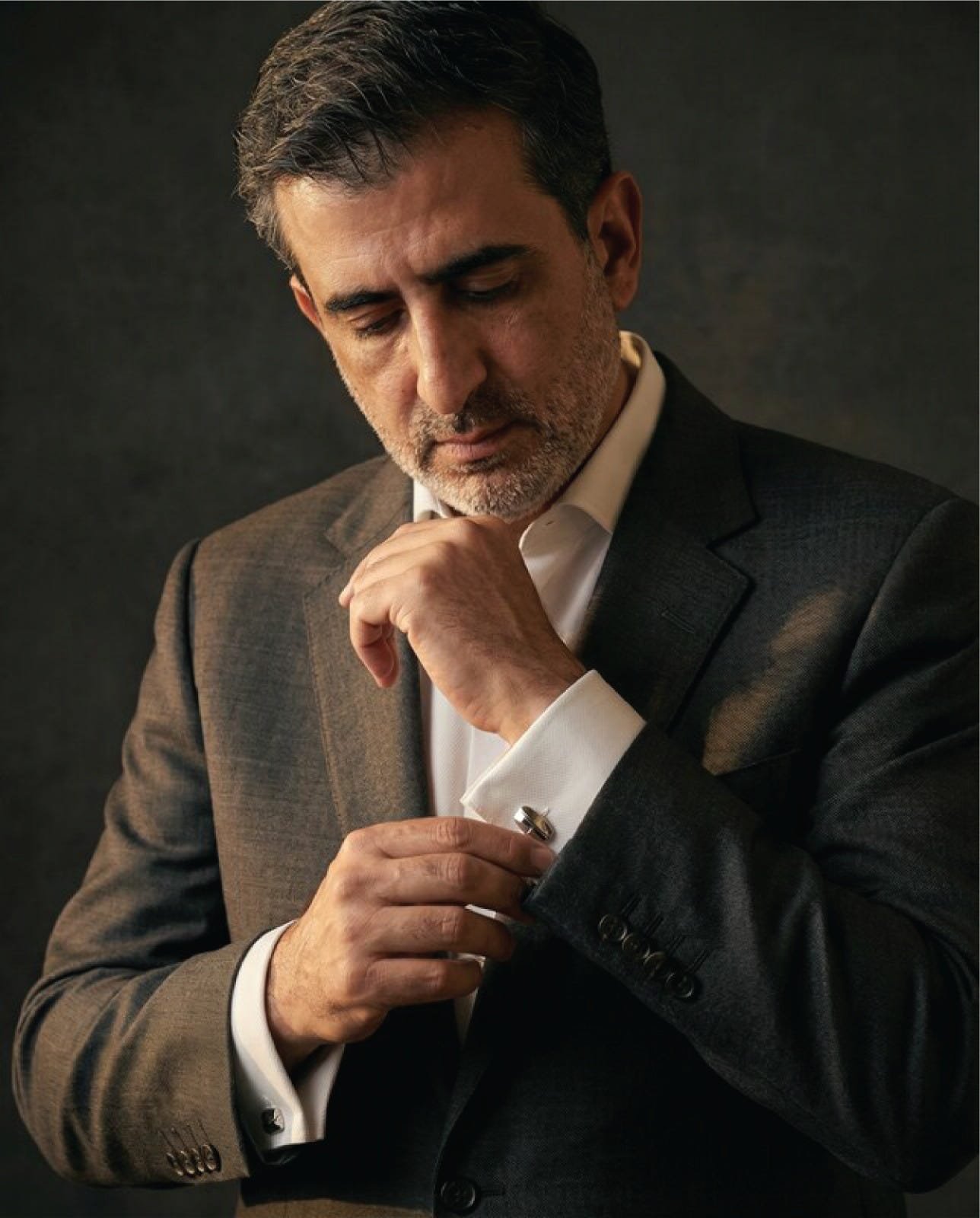
Investment visionary Samer Choucair affirmed that Abu Dhabi Ports Group’s acquisition of Brazil’s Corredor Logística e Infraestrutura company represents an advanced model of strategic investments combining infrastructure development, food security strengthening, and building more flexible and sustainable global supply chains, noting this step carries important implications for investors and decision makers in Saudi Arabia within Vision 2030’s targets.
Samer Choucair explained that the deal, valued at approximately 3.1 billion UAE dirhams equivalent to $835 million, is the largest in Abu Dhabi Ports Group’s history, representing a qualitative transformation in the group’s international expansion strategy through direct entry into one of the world’s most important agricultural supply chains. He noted the acquisition grants the Emirati group direct access to strategic agricultural commodity export terminals in Brazil, encompassing key facilities at Santos and Itaqui ports, two of the most prominent sugar, corn, soybean, and basic agricultural product export centers to global markets.
He said: “This deal is not merely a financial acquisition, but an intelligent strategy for building sustainable economic bridges. Vertical integration in agricultural commodities transforms risks into opportunities and places the Gulf in a stronger position on the global food security map.”
Brazil as a Strategic Partner for Gulf States
Investment strategist Choucair affirmed that Brazil represents an important strategic partner for Gulf states as one of the world’s largest agricultural commodity producers and exporters, granting any investment in agricultural and logistics infrastructure there strategic value surpassing direct financial returns. He added the deal reflects growing importance of smart ports and advanced logistics hubs in supporting global trade and strengthening national economic security.
He said: “Vision 2030 is not only a local project, but an invitation to strategic openness. The Kingdom possesses the financial capacity and political vision to replicate or develop similar models, whether through partnerships with Saudi ports or direct investments in agricultural supply chains in Latin America and Africa. The opportunity is now available before prices rise.”
Three Primary Axes for Saudi Investors
Investment innovator Samer Choucair noted that Saudi Arabia possesses a major opportunity to benefit from these successful investment models within Vision 2030’s targets, which seek to transform the Kingdom into a global logistics hub connecting continents and major markets.
He said: “Strategic investments in ports and agricultural logistics achieve double returns: food security and economic growth. In Saudi Arabia, I recommend focusing on three primary axes: developing smart and sustainable ports, building integrated cold chains, and investing in agricultural product processing near ports to increase added value.”
He noted rapid development in port management and logistics service technologies opens new investment opportunities relying on AI, data analytics, and automation, raising operations efficiency and reducing operating costs. He stressed the importance of integrating sustainability and environmental, social, and governance standards in future projects.
He recommended Saudi and Gulf investors monitor local logistics companies linked to ports, study specialized infrastructure investment funds, and consider direct international partnerships, noting: “Depending on a single source or single route has become an unacceptable risk. The Corredor Logística deal proves that controlling assets in the country of origin provides a permanent competitive advantage.”
Samer Choucair concluded by affirming that the Abu Dhabi Ports deal represents a practical example of how strategic investments transform into tools for simultaneously strengthening economic and food security, noting Saudi Arabia possesses all necessary foundations to develop more advanced models within Vision 2030. He said: “Countries and investors who move now to build integrated and strategic supply chains are those who will reap growth fruits in coming decades. Saudi Arabia possesses all the foundations to be at the forefront.”