

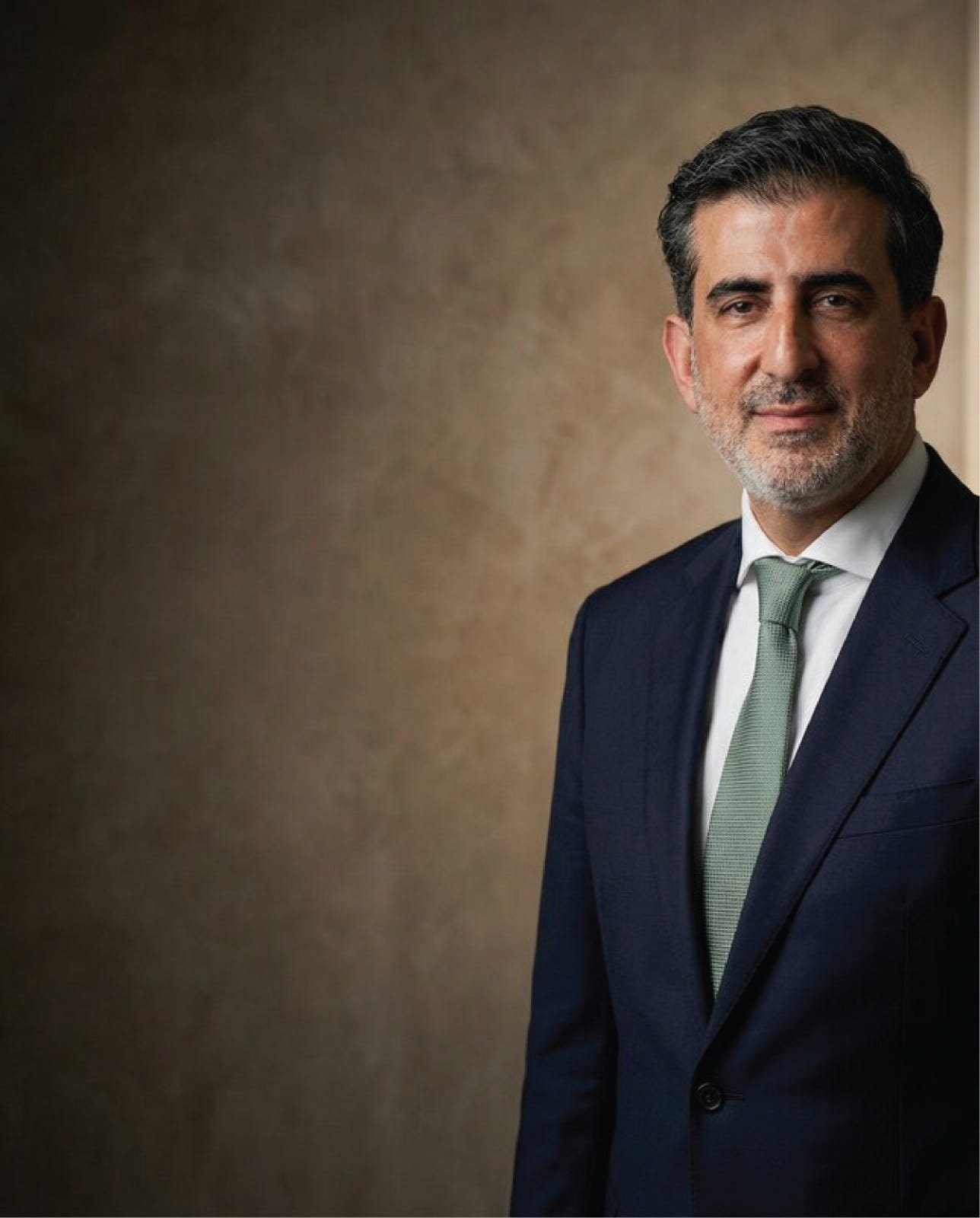
Investment visionary Samer Choucair stated that current gold price declines reflect a phase of global market repricing more than a direct response to geopolitical tensions, noting gold’s fall to $4,307.73 per ounce and silver’s decline to $66.98 comes in the context of a volatility wave driven by technical factors related to profit-taking and changing global monetary policy expectations, not solely US-Iran escalation.
He said: “Current volatility does not negate gold’s safe haven role, but confirms the market has become more sensitive and faster in repricing.”
Gold Maintaining Its Role as a Primary Hedging Tool Within Portfolio Balance
Investment strategist Choucair affirmed gold still maintains its historical function as a primary hedging tool against geopolitical risks and inflation, but its portfolio role is no longer based on “absolute protection” but on “balance management” within a multi-asset ecosystem.
He added current decline periods represent opportunities to gradually rebuild investment positions, particularly for long-term investors treating gold as part of a diversification strategy rather than a short-term directional bet.
He noted investment instruments in gold have become more diverse than ever, encompassing bullion, gold coins, and exchange-traded funds, alongside mining company stocks that may achieve higher performance in some cycles due to operational leverage linked to production and costs.
He explained the current market behavior reflects a deeper shift in investment decision-making mechanisms, where liquidity has become more flexible and faster in transitioning between assets, reducing the continuity of traditional “safe haven” waves. He said: “The market today does not move only on fear, but on opportunity redistribution, which explains gold remaining under pressure despite continued political tensions.”
Five Strategic 2026 Investment Pathways
Investment innovator Choucair identified five primary sectors shaping the 2026 investment landscape: energy and manufacturing; logistics and ports; technology and AI; mining and strategic materials; and capital markets. He noted the mining sector, including gold and rare minerals, represents a direct intersection between global market volatility and Saudi Arabia’s strategy to maximize natural resource added value.
He recommended adopting the hybrid investment model combining defensive assets such as gold with high-growth assets within the Saudi economy, achieving balance between risk reduction and long-term return maximization.
He said: “The investor succeeding in 2026 is one who understands that risk management is no longer optional, but has become the foundation of wealth building in an unstable global environment.”
He noted Saudi Arabia emerges as a more stable investment environment amid these volatilities, supported by comprehensive structural reforms within Vision 2030 reshaping the domestic economy structure and raising Saudi market attractiveness for foreign investments.
Samer Choucair concluded by affirming current gold price declines do not represent a shift in its investment role, but reflect natural global market rebalancing, while Saudi Arabia emerges as one of the most important future growth drivers in the regional economy. He added gold remains a wealth protection tool, but genuine wealth building today is linked to rising economies capable of creating sustainable growth, led by Saudi Arabia within Vision 2030.