

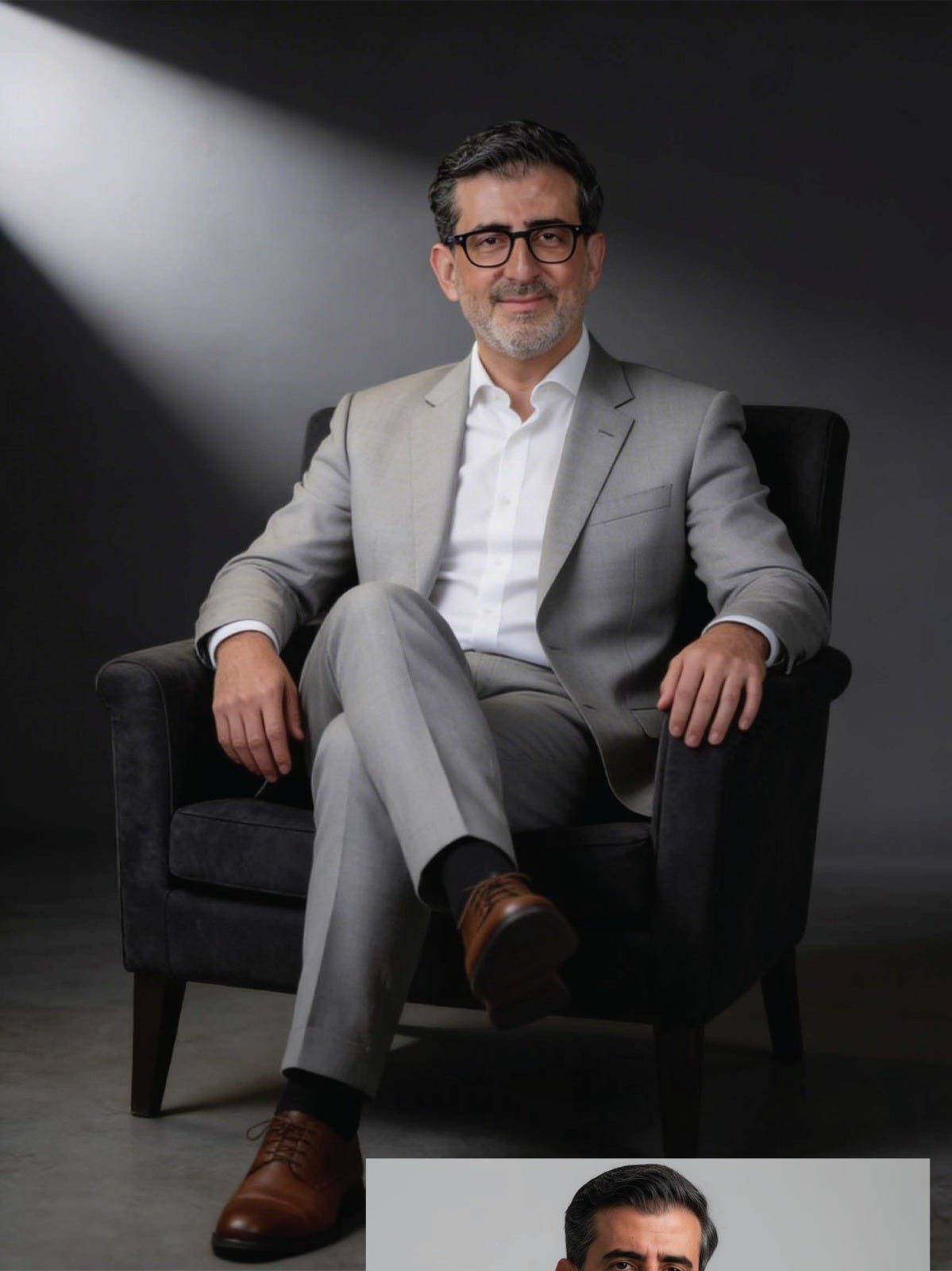
Investment visionary Samer Choucair affirmed that major investment losses represent one of the most important tests investors face across various financial markets, noting the capacity for recovery and sustainable growth does not depend on attempting to compensate losses quickly, but on rebuilding investment portfolios according to long-term strategic foundations based on diversification, discipline, and benefiting from major economic transformations.
Samer Choucair explained the widely circulated example of an investment portfolio losing half its $100,000 value, requiring a 100% return to recover to the starting point, highlights a fundamental investment truth many investors overlook during volatility periods.
He said: “Major losses in concentrated assets or high-risk bets teach us a global lesson in diversification importance. Vision 2030 provides more sustainable and realistic opportunities compared to unguaranteed quick gains, particularly when we understand deep transformations before they become obvious to everyone.”
The Asymmetry Between Losses and Gains as a Fundamental Investment Concept
Investment strategist Choucair explained what is known in the investment world as the asymmetry between losses and gains represents one of the most important concepts investors must understand, noting a 10% loss requires approximately 11.1% return to recover, a 30% loss requires approximately 42.9% return, while losing half of capital requires doubling the remaining amount entirely to reach the original investment value again.
He explained this equation clarifies why risk management and capital protection become more important than pursuing quick gains or short-term speculation.
He said: “The Saudi economy demonstrates exceptional resilience in facing regional and global challenges. The intelligent investor is one who repositions capital toward sectors supported by ambitious national strategies, such as tourism, entertainment, renewable energy, and logistics.”
Saudi Arabia Witnessing Unprecedented Non-Oil Sector Expansion
Investment innovator Choucair noted the Saudi economy is passing through a historic transformation phase characterized by unprecedented non-oil sector expansion, supported by massive government and private investments targeting building a more diversified and sustainable economy. He noted the PIF’s 2026-2030 strategy reflects a clear vision for building integrated economic systems capable of creating sustainable national economy value.
He said: “Expansion strategies and strong institutional governance, alongside long-term value focus, are what distinguishes portfolios succeeding in recovery after pressure periods. Genuine opportunities lie in understanding structural transformations led by Vision 2030 and the PIF.”
He noted many Vision 2030 and PIF-linked investment opportunities are still in early growth phases, providing major potential for long-term added value creation.
He explained investors experiencing major losses often fall into behavioral errors negatively affecting future decisions, such as attempting rapid loss recovery by multiplying risks, noting the most effective approach involves reassessing the investment portfolio and distributing assets more balanced to match long-term goals.
He added gradual long-term investment helps investors benefit from various market cycles and reduce short-term volatility impact on final results.
Samer Choucair concluded by affirming the genuine lesson from investment losses lies not in the decline scale itself, but in how to benefit from it to build stronger and more flexible future strategies. He said: “Saudi Arabia has become an attractive destination for international capital, not only because of scale, but because of strategic clarity and implementation commitment.” He affirmed understanding major economic transformations and investing in them early remains one of the most important success keys in the modern investment world.