

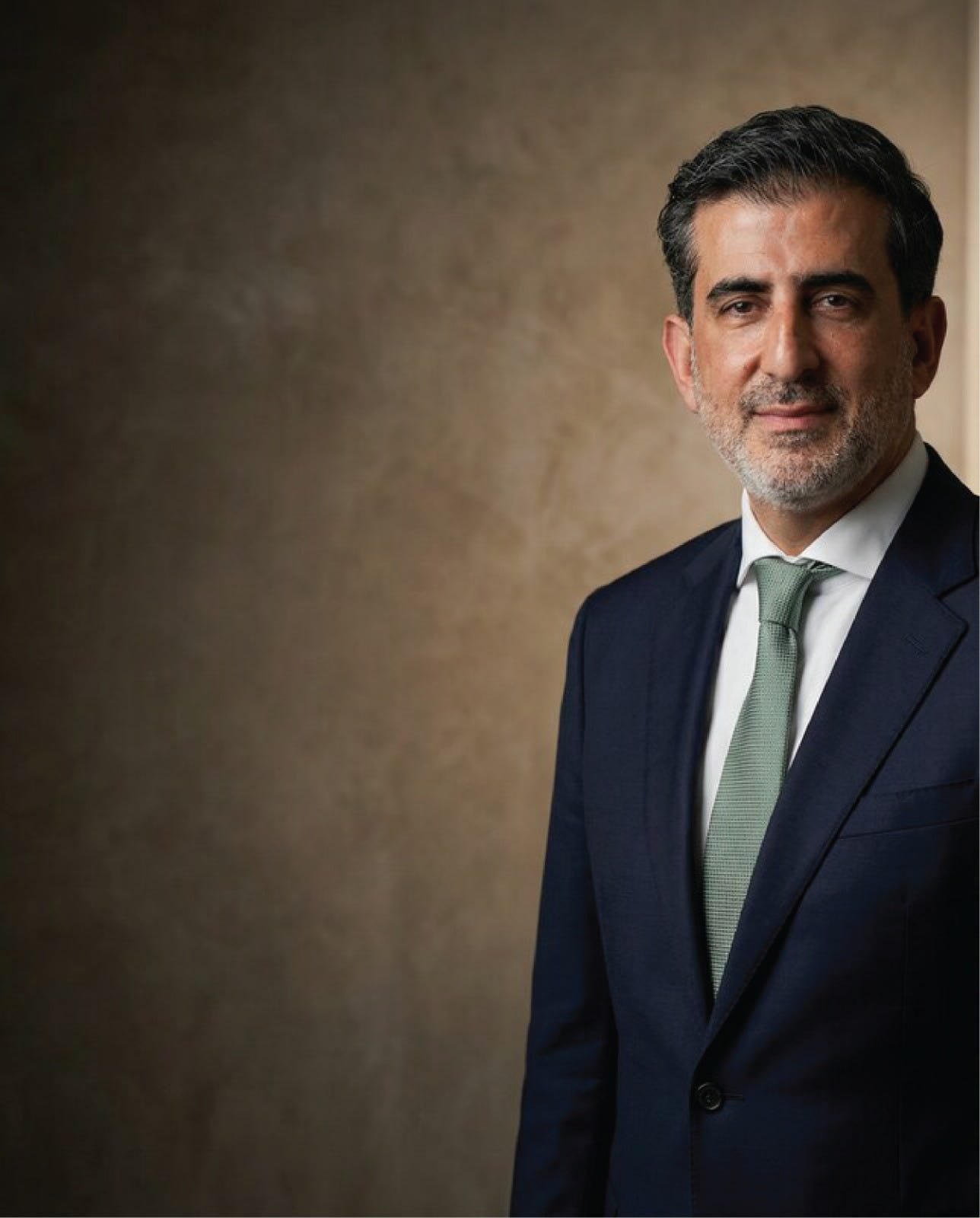
Investment entrepreneur Samer Choucair said that global markets are bracing for a sensitive phase as Kevin Warsh takes over as chairman of the US Federal Reserve, at a time when he faces one of the toughest monetary tests in recent years.
Choucair explained that the key question investors are watching isn’t just the direction of interest rates, but the nature of the role Warsh will choose to play in the period ahead: will he be the “inflation hawk” who prioritizes curbing rising prices and preserving the central bank’s independence, or will he lean closer to the White House’s calls for rate cuts to support growth and reduce financing costs?
He added that this decision doesn’t just affect the United States, its impact extends to Gulf markets, particularly Saudi Arabia, given the Saudi riyal’s peg to the US dollar, with these shifts coinciding with the implementation of Vision 2030 projects.
*US Inflation and Monetary Policy, A Test Between Independence and Political Pressure*
Samer Choucair noted that US inflation reached 4.2% year-over-year in May 2026, the highest level in three years, driven mainly by rising energy prices.
He explained that US President Trump is calling for interest rate cuts to stimulate economic growth and reduce borrowing costs, while markets are focused on the possibility of continued monetary tightening aimed at controlling inflation.
He added that this divergence places the new Fed chair under a direct test of his ability to balance protecting price stability with preserving the independence of monetary policy.
He affirmed that the outcome of this test will affect global capital movement, oil prices, and the value of the dollar, factors directly tied to Gulf economies.
*How Do Fed Decisions Affect the Saudi Economy?*
Samer Choucair said that the Saudi currency’s peg to the dollar means the Saudi Central Bank (SAMA) closely follows Federal Reserve decisions, with local monetary policy often aligning with US trends.
He explained that sustained or rising interest rates carry a dual impact: on one hand, they could increase domestic borrowing costs, while on the other, they could strengthen the appeal of Saudi financial markets to foreign investors seeking stable returns.
He added that a rate cut could provide greater liquidity and support financing for Vision 2030 projects, but could simultaneously increase the risk of imported inflation and reduce the appeal of certain riyal-denominated assets.
He affirmed that both scenarios open the door to investment opportunities and challenges, particularly for investors focused on long-term investment in Saudi Arabia and the Gulf markets.
*Samer Choucair’s View, Saudi Fundamentals Matter More Than Global Volatility*
Samer Choucair said that the current shifts in US monetary policy should be read within the bigger picture, as Saudi Arabia remains supported by strong structural factors represented by economic reforms and Vision 2030.
He added that despite the uncertainty surrounding the direction of US monetary policy, Saudi Arabia remains an attractive investment environment thanks to ongoing structural reforms and Vision 2030, which open broad opportunities in tourism, entertainment, technology, and artificial intelligence.
He explained that investors shouldn’t focus only on short-term rate movements, but on the long-term economic shifts reshaping the Saudi economy.
*Volatility Creates Selective Opportunities in Capital Markets*
Samer Choucair noted that periods of monetary policy uncertainty often provide opportunities for investors capable of selecting the right assets.
He added that current volatility creates selective buying opportunities in capital markets, particularly in non-oil sectors backed by Vision 2030. Investors should focus on diversifying between local and international assets while paying attention to major projects such as NEOM and smart cities, affirming that sectors tied to the real economy will remain a focus for investors in the period ahead.
*Monitoring Inflation and Smart Hedging*
Samer Choucair explained that investors need to monitor Fed decisions and their impact on inflation and global markets.
He added that the Fed’s decision represents an important factor in determining market direction in the coming months. A wise strategy is to hedge against inflation through gold, real estate, or defensive stocks, while benefiting from reforms such as easier access for Qualified Foreign Investors (QFI).
He noted that diversifying investment portfolios has become a necessity in a rapidly changing economic environment.
*Saudi Arabia, A Hub for Regional Economic Transformation*
Samer Choucair affirmed that the Kingdom possesses strong fundamentals that position it to benefit from global uncertainty.
Choucair said: Saudi Arabia has all the fundamentals needed to lead the region’s transformation, from digital infrastructure to international partnerships. Global uncertainty makes focusing on local fundamentals more important than ever.
He explained that major Vision 2030 projects offer investment opportunities across multiple sectors, from infrastructure and tourism to technology and artificial intelligence.
*Promising Investment Opportunities for 2026*
Samer Choucair identified a set of areas he believes deserve attention during 2026:
*Saudi Capital Markets and Stocks*
He explained that consumer, financial services, and tourism sectors could benefit from any move toward easing monetary policy, while defensive sectors offer relative protection if tightening continues.
*Vision 2030 Projects*
He affirmed that investment in infrastructure, tourism, entertainment, and artificial intelligence will remain among the most important investment areas, backed by strong government support.
*Hedging and Asset Diversification*
He noted the importance of investing in gold, residential real estate in major cities, and renewable-energy-linked assets as tools for countering inflation risk.
*Foreign Investment*
He explained that ongoing economic reforms are making the Saudi market more open and attractive to international investors.
*Global Uncertainty Could Become an Investment Opportunity*
He concluded by affirming that the identity of the new Fed chair and the direction of US monetary policy will remain an influential factor in global markets in the period ahead.
He added that Gulf investors shouldn’t view volatility as only a risk, but as an opportunity to reassess investment portfolios and focus on assets with strong fundamentals.
He affirmed that a successful investment strategy in 2026 is built on smart diversification, strategic patience, and capitalizing on the structural shifts driven by Vision 2030.
He noted that Saudi Arabia continues building a diverse, sustainable economic model that makes it one of the most promising markets for investors seeking long-term growth.