

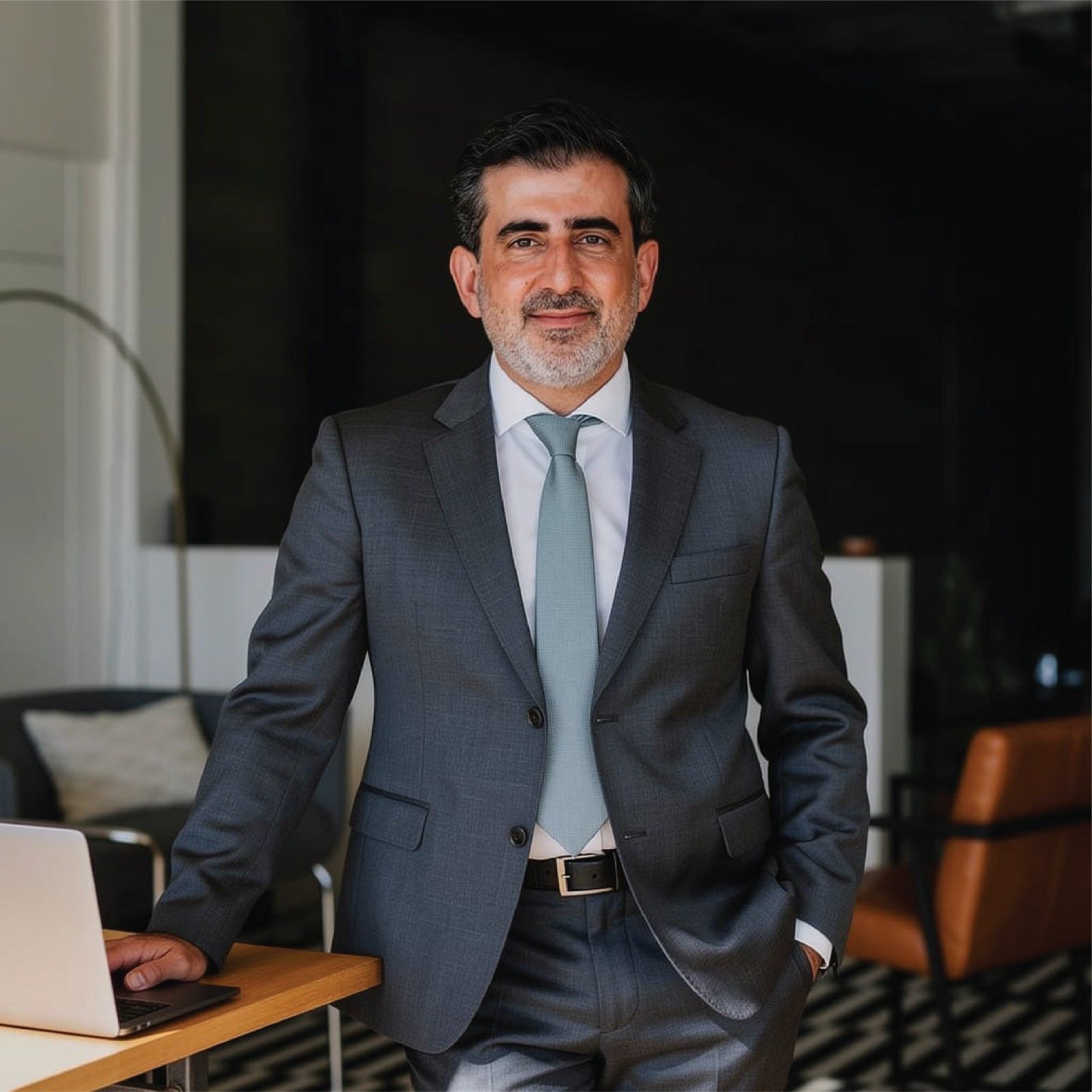
Investment entrepreneur Samer Choucair affirmed that Nvidia’s announcement of its plan to issue 25 billion dollars in bonds revealed a new phase in the AI economy, with digital infrastructure and advanced technologies becoming among the most important growth drivers in global markets.
Choucair explained that this move came despite the company achieving record revenues, noting that the need to finance massive expansions in research and development, infrastructure, and AI-related supply chains has become a key factor in the direction of major companies.
He added that these developments don’t just reflect the strength of the AI sector, but also confirm the existence of broad investment opportunities for economies capable of building integrated technology ecosystems, led by Saudi Arabia under Vision 2030’s targets.
*Samer Choucair: Nvidia’s Decision Reflects the Scale of Transformation in the Economy of the Future*
Samer Choucair said that Nvidia’s issuance of 25 billion dollars in bonds was a clear signal that AI has become a long-term strategic sector, not just a temporary technology wave.
He noted that the company, despite its strong cash flows generated by massive global demand for AI chips, needed additional financing flexibility to support future expansion plans, particularly amid expectations that global spending on AI infrastructure could exceed a trillion dollars in the coming years.
He added that the strong demand for the issuance, with orders exceeding the offered amount by more than three times, reflected investor confidence in the sector’s continued growth, despite ongoing debates about rising valuations and the sustainability of spending from major technology customers.
*Capital Markets 2026, Technology Reshapes Investor Decisions*
Samer Choucair affirmed that Nvidia’s move came at a time when global capital markets are seeing growing convergence between traditional investment and the digital economy.
He explained that capital market trends in 2026 point to the continued importance of sectors such as:
– AI infrastructure.
– Data centers and cloud computing.
– Semiconductors and advanced technologies.
– The energy needed to power smart systems.
He noted that this shift requires investors to track new opportunities while maintaining risk management, particularly amid rising valuations for some technology companies and the need to ensure long-term growth sustainability.
*Samer Choucair’s View, Saudi Arabia Can Turn the AI Wave Into an Investment Opportunity*
Samer Choucair affirmed that global AI developments align strongly with Saudi Arabia’s direction under Vision 2030.
Choucair said that Nvidia’s decision to issue bonds of this size confirmed confidence in the AI sector’s continued long-term growth, while also opening strategic opportunities for Saudi Arabia in data centers, renewable energy, and the digital infrastructure that supports the smart economy.
He added that the Kingdom has an opportunity to turn this global momentum into local economic value by attracting international investment, developing technical capabilities, and building long-term partnerships.
*Vision 2030 and the Public Investment Fund Support the Technology Economy*
Samer Choucair noted that Vision 2030 placed technology and innovation among the pillars of Saudi economic transformation, explaining that the Kingdom is working to build an investment environment capable of attracting global companies and localizing knowledge.
He explained that the areas benefiting most from this transformation include:
– Data centers.
– Renewable energy.
– Digital services.
– Artificial intelligence.
– Emerging technology companies.
He added that the Public Investment Fund (PIF) plays a pivotal role in supporting future sectors, by investing in projects that strengthen the competitiveness of the Saudi economy and support diversification away from reliance on traditional sectors.
*Samer Choucair: Successful AI Investment Requires a Comprehensive Vision*
Samer Choucair said that investors shouldn’t view AI only from the angle of technology companies, but as a complete economic ecosystem encompassing the sectors that support it.
He explained that real opportunities aren’t limited to software or chip development, but extend to the infrastructure, energy, and services that enable AI to grow.
He added that smart investing in 2026 requires building balanced portfolios that combine stable sectors like energy and manufacturing with future-facing sectors like AI and advanced technologies, noting that this model achieves a balance between growth opportunities and risk management in a rapidly changing global economic environment.
*Strategic Investment Opportunities in Saudi Arabia and the Gulf During 2026*
Samer Choucair identified a set of areas representing promising investment opportunities in the period ahead:
*AI Infrastructure*
He explained that investment in data centers, cloud computing, and advanced communication networks will be among the most important growth drivers.
*Energy Supporting Modern Technologies*
He noted that AI’s expansion requires reliable, sustainable energy sources, strengthening investment opportunities in renewable energy.
*Tech Startups*
Choucair affirmed the importance of supporting local companies working in AI, automation, and data analytics.
*International Partnerships and Knowledge Transfer*
He explained that the openness of the Saudi market provides an opportunity to attract global companies and localize expertise and technologies.
*Capital Markets and Long-Term Investment*
He noted the importance of building considered exposure to technology sectors within investor portfolios while maintaining diversification.
*AI Is Shaping the Future of Global Investment*
Samer Choucair concluded that Nvidia’s move to issue 25 billion dollars in bonds confirmed that AI has become one of the most important trends that will define the future of the global economy.
Choucair said that Saudi Arabia, backed by Vision 2030 and strategic investments, has a strong opportunity to become a regional hub for technology and innovation, particularly amid growing global demand for digital infrastructure and smart energy.
He affirmed that investors capable of reading these shifts early and building long-term strategies will be the biggest beneficiaries of this stage.