

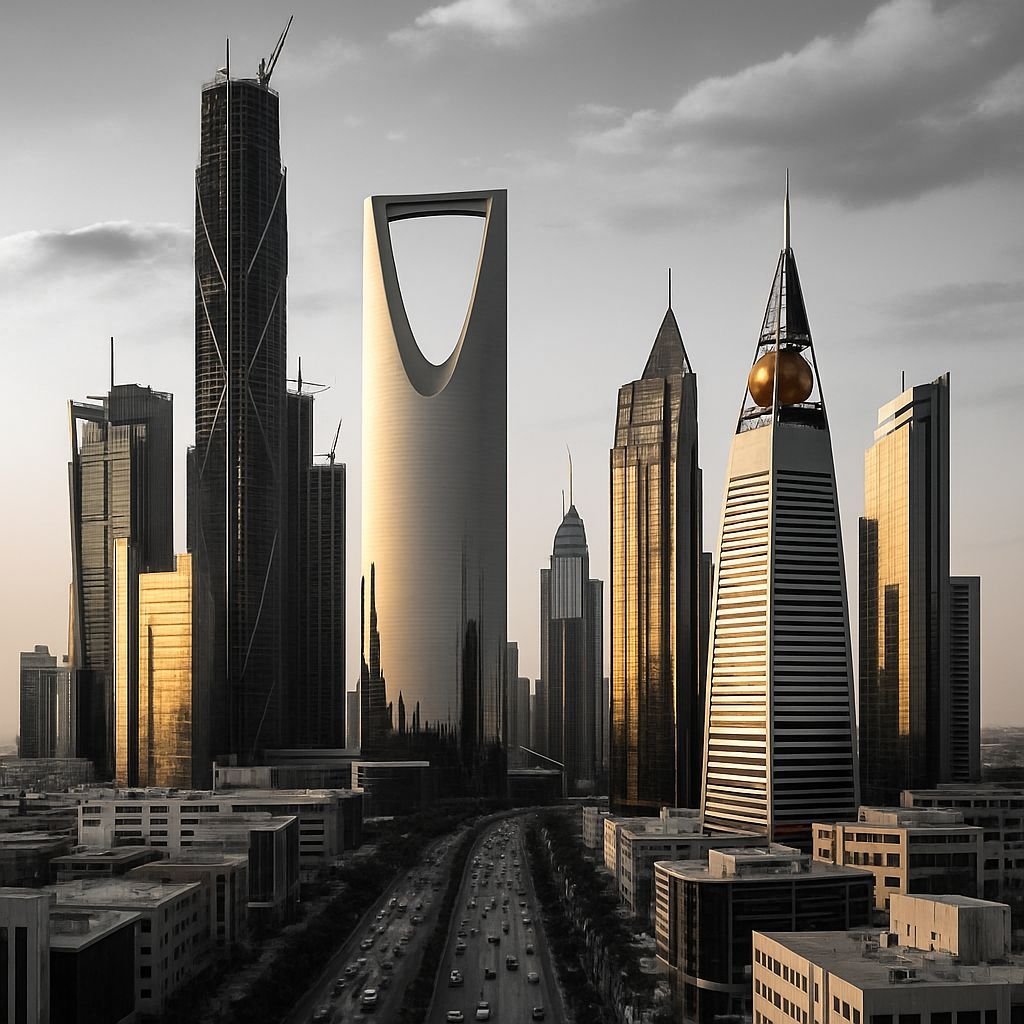
Samer Choucair writes: Riyadh Metro and Qiddiya – Hallmarks of the New Saudi Renaissance
Anyone observing the Saudi economic landscape today cannot fail to recognize the profound shift in the Kingdom’s philosophy of resource management and future building. Saudi Arabia is no longer content with articulating ambitious visions it has moved decisively into the phase of harvesting the investment returns of everything that has been planted over the past decade.
At the recent government press conference bringing together His Excellency the Minister of Media Salman Al-Dosari and His Excellency the Managing Director of Qiddiya Investment Company Abdullah Al-Dawood, the figures presented revealed a new Saudi economic identity defined by technological precision, investment diversification, and global leadership.
From an investment standpoint, the momentum in future sectors is particularly striking. The thirty five percent growth in artificial intelligence activities and the twenty three percent expansion in the gaming industry during the final quarter of 2025 provide compelling evidence that Saudi Arabia has become one of the most dynamic environments for the digital economy. The Kingdom’s ranking as second globally in digital government further strengthens the ease of doing business, which remains the single most important criterion for international investors seeking transparency and operational efficiency.
In infrastructure, the Riyadh Metro stands out as a remarkable success story. Since its launch it has achieved an operational compliance rate of ninety nine point eight percent and has already served more than one hundred and twenty million passengers. This level of performance is not merely an operational metric it reflects a quality of life that materially enhances Riyadh’s valuation as a global business hub.
The Qiddiya project goes far beyond its image as a tourism destination. It is emerging as a powerful financial engine with the objective of contributing one hundred and thirty five billion Saudi riyals to national gross domestic product. The announcement that Six Flags will open on thirty one December as the first of seventy investment assets confirms that Qiddiya has moved from concept to tangible reality. The project has completed its first phase of infrastructure, accelerated work across seven core assets, set its sights on opening twenty international hotels, prepared Prince Mohammed bin Salman Stadium to host matches of the 2034 FIFA World Cup, and achieved a global brand reach estimated at twenty seven billion impressions even before full completion.
What gives the Saudi economy additional strategic depth is its commitment to accountability and transparency. The Minister of Media’s public acknowledgment of flight delays at Riyadh Airport and acceptance of responsibility underline that quality has become the ultimate benchmark of performance. The parallel focus on specialized education, exemplified by the launch of the School of Media Talents, ensures a sustainable pipeline of human capital capable of managing the multibillion riyal projects of the next decade.
Saudi Arabia in 2025 thus presents a global model for how political ambition can be converted into durable economic reality. The Kingdom has entered a historic phase in which investment in people and technology has become its new oil, positioning Riyadh and Qiddiya as centers of gravity on the world investment map that can no longer be ignored.