

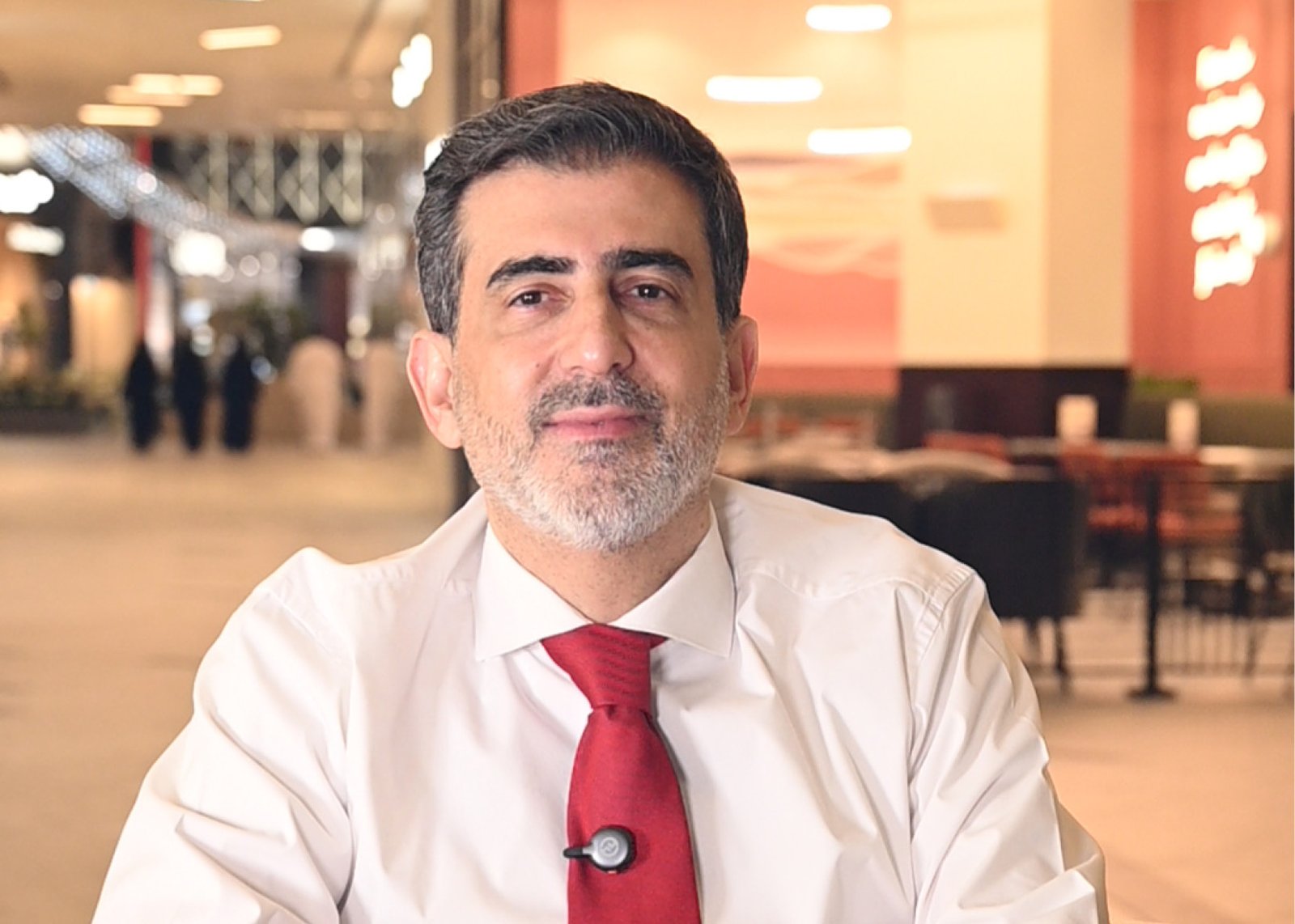
Investment entrepreneur Samer Shoucair affirmed that what appears today as a paradox in the Saudi investment landscape, between the Public Investment Fund reducing its holdings of United States equities while Saudi individual investors and private institutions increase their exposure to American markets, does not reflect a contradiction. Instead, it reveals a strategic transition in the movement of Saudi capital.
Shoucair explained that the Public Investment Fund reduced its holdings of United States equities to approximately 13 billion dollars, while Saudi individual investors and private institutions increased their foreign investments to approximately 253.8 billion Saudi riyals, representing nearly 97.9 percent of their total external investments.
Shoucair stated:
“The question is not who is right. The more important question is what role each party is playing at this stage of the Saudi economy’s evolution.”
—
A Sovereign Fund Does Not Invest Like an Individual, It Invests Like a State
Samer Shoucair emphasized that understanding the current landscape requires distinguishing between the logic of an individual investor and that of a sovereign wealth fund. An individual investor seeks to maximize returns over a defined time horizon, while a sovereign wealth fund seeks to redistribute capital globally, support national economic transformation, and manage risk across cycles that extend for decades.
Samer Shoucair referenced the experience of 2020, when the Public Investment Fund entered United States markets aggressively during the peak of the market downturn, investing in major companies such as Boeing, Citigroup, Meta Platforms, and The Walt Disney Company.
Shoucair added:
“When markets declined by more than 30 percent, the fund was buying. Today, when it reallocates some of its positions after gains exceeding 80 percent in the following years, it is not exiting the market. It is successfully managing an investment cycle.”
—
Why Saudi Investors Continue to Buy
According to Samer Shoucair, Saudi individual investors operate under a different logic that reflects the structure of the new global economy.
He explained that the world’s largest companies are no longer traditional industrial firms, but technology and innovation leaders such as NVIDIA, Microsoft, and Apple.
Samer Shoucair noted that NVIDIA’s market capitalization rose from approximately 10 billion dollars in 2014 to more than 2 trillion dollars, reflecting the magnitude of the transformation attracting global capital.
He stated:
“The individual investor is moving toward the global growth curve. The sovereign fund is moving toward balancing the Saudi economic system. Both are correct, but each operates from a different position.”
—
The Historical Lesson, This Is What Rising Nations Did
Samer Shoucair believes that what Saudi Arabia is experiencing today mirrors the historical trajectory of rising economic powers.
Japan in the 1980s invested globally to acquire expertise and financial depth.
South Korea in the 1990s supported the global expansion of its companies before building domestic technological industries.
China in the early 2000s invested globally and later built global giants such as Alibaba Group and Tencent.
Shoucair explained:
“Saudi Arabia is following a similar path. It acquires returns and expertise globally, then redeploys capital to build a more diversified domestic economy.”
—
Vision 2030, Capital Reallocation Is Strategic, Not Random
Samer Shoucair affirmed that this movement aligns with the objectives of Saudi Vision 2030, which aims to transform the economy from oil dependence into an investment driven and productive sector based system.
He explained that the current phase represents a transition from global investment for return and expertise acquisition toward redeploying capital into strategic domestic projects. These include major initiatives such as NEOM, as well as infrastructure, energy, and industrial transformation projects.
The investment entrepreneur stated:
“What we are witnessing is not a withdrawal from global markets. It is a repositioning of capital to support a new growth cycle within the Saudi economy.”
—
A Unique Monetary Advantage, The Riyal’s Peg to the Dollar
Samer Shoucair pointed out that the Saudi riyal’s peg to the United States dollar since 1986 provides Saudi investors with a strategic advantage. It allows them to invest in the world’s largest economy without bearing currency volatility risk, which explains the continued flow of individual and private institutional capital into United States equities.
—
What Each Party Sees
According to Shoucair, the sovereign fund sees national economic balance, long term stability, and strategic risk distribution. The individual investor sees innovation, growth opportunities, and companies shaping the new global economy.
He added:
“There is no contradiction between the two. There is a distribution of roles.”
—
A New Stage of Saudi Investment Power
Samer Shoucair concluded by emphasizing that what is happening today reflects the maturation of Saudi investment power.
He stated:
“When the sovereign fund repositions and Saudi investors continue capturing global growth opportunities, it means the entire investment system has become more mature. We are not leaving global markets. We are moving from being participants to becoming influential players.”
He added:
“This is not the end of an investment cycle. It is the beginning of a phase where Saudi capital becomes part of shaping the global map of wealth.”