

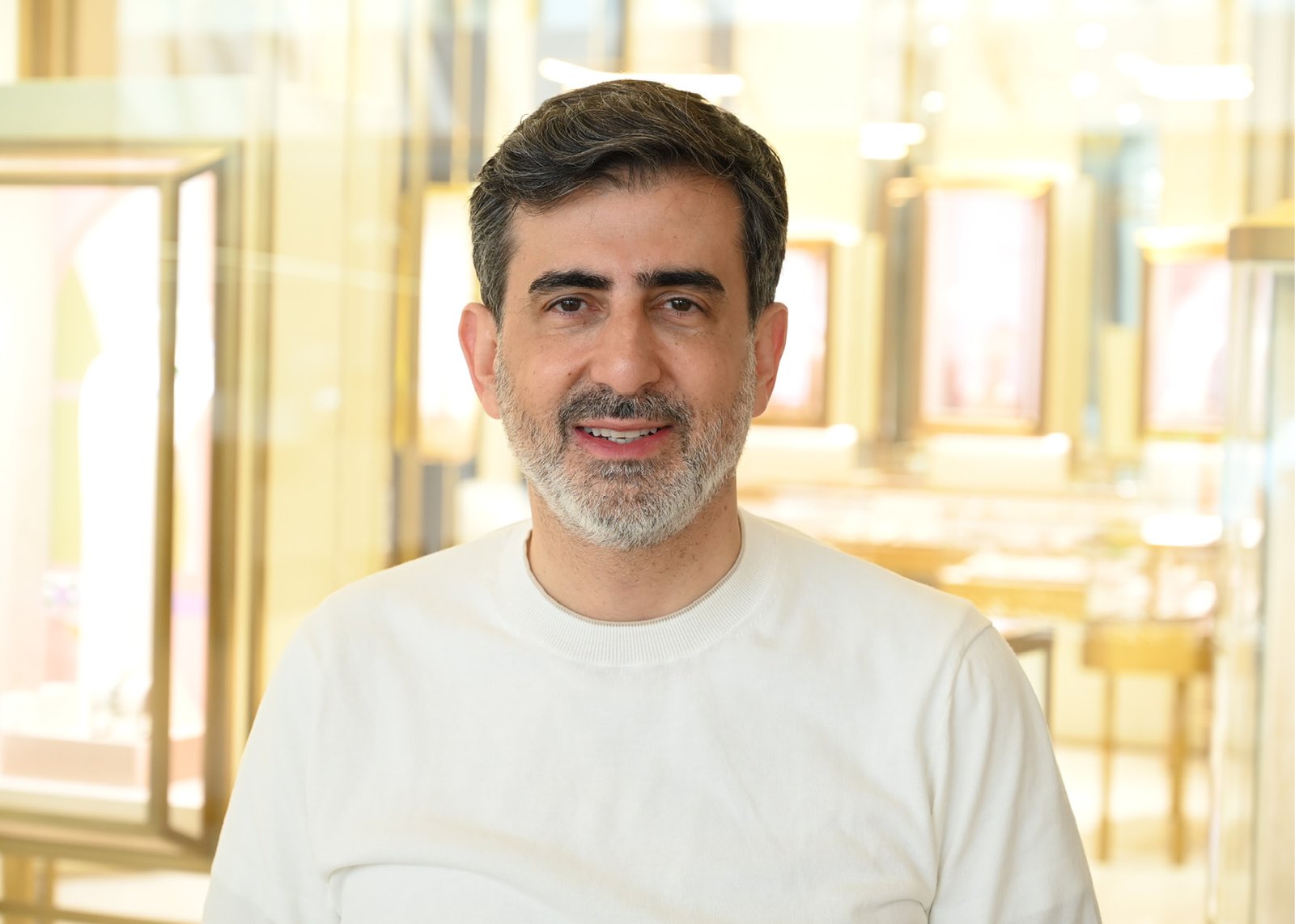
Samer Choucair, a leading investment strategist, stated that major transformations in history are not measured by time alone, but by a nation’s ability to compress time and reshape reality. He emphasized that the nine years since Mohammed bin Salman was appointed Crown Prince represent an exceptional phase in the history of Saudi Arabia.
Choucair explained that this period cannot be described as conventional reform. It is a comprehensive re engineering of the state across economic, social, administrative, and international dimensions.
From Planning to Execution
Choucair highlighted that what distinguishes the Saudi experience is the shift from planning to rapid execution. Saudi Vision 2030 is no longer a strategic document, but a daily operating framework.
He pointed to official data indicating that 93 percent of Vision 2030 targets have either been achieved or are on track, with 299 indicators fully completed and 674 initiatives delivered. These figures reflect not just progress, but a transition toward cumulative, high speed execution.
A Model Beyond Traditional Comparisons
Choucair noted that the Saudi model cannot be understood through conventional comparisons. While Singapore focused on efficiency, Dubai on services, and China on manufacturing, Saudi Arabia has built a hybrid model that integrates elements of each without replicating any.
According to Choucair, the Kingdom is not copying models. It is reconstructing them to match its scale, resources, and strategic weight.
From Rent Based Economy to Value Creation
Choucair emphasized that Saudi Arabia has successfully moved beyond the traditional rent based model by transforming oil wealth into long term investments.
He highlighted the role of the Public Investment Fund, whose assets reached approximately 913 billion dollars by the end of 2024. The fund is not focused solely on financial returns, but on generating domestic economic impact and building future industries.
Mega Projects as Economic Systems
Choucair explained that projects such as NEOM, Qiddiya, and AlUla are not simply urban developments. They are integrated economic systems designed to create new sectors and diversify growth.
He noted that Saudi Arabia is building a multi dimensional tourism economy, supported by rising visitor numbers that reached approximately 122 million in 2025. The Kingdom is not competing within a single model, but constructing its own.
Human Capital at the Core of Transformation
Choucair stressed that the true transformation begins with people. Female labor force participation has risen to 36.2 percent, reflecting a structural shift in the labor market.
He added that this transformation has increased productivity and expanded the economic base, positioning citizens as active participants in national development.
Digitalization and Logistics as Structural Advantages
Choucair pointed to the Kingdom’s rapid progress in digital transformation, describing speed itself as an institutional advantage.
Saudi Arabia has advanced significantly in global logistics rankings, reinforcing its ambition to become a major global connectivity hub. At the same time, capital markets have opened more broadly to international investors, strengthening financial integration.
An Emerging Global Role
Choucair emphasized that Saudi Arabia has evolved into an influential global actor. It is no longer defined solely by its role as an oil producer, but as a platform for global economic balance.
Sovereign investments are playing a central role in this shift, positioning the Kingdom as both a capital exporter and a strategic partner in global markets.
The Drivers of Success
Choucair summarized the foundations of Saudi Arabia’s success in several key elements: clarity of vision, speed of execution, long term investment discipline, human capital empowerment, and the integration of economic and political strategy.
He stressed that the most important factor is originality. Saudi Arabia has built its own model rather than replicating others.
Strategic Conclusion
Choucair concluded that Saudi Arabia has redefined the concept of the modern state. It has transitioned from a country dependent on oil to one that uses oil as a tool to build the future.
In his view, the Saudi model represents a state that is fast, adaptive, and globally competitive, offering a blueprint for how nations can transform themselves in an increasingly complex world.
Samer Choucair: Why Smart Investors Win When Markets Fear War
Samer Choucair, a leading investment strategist, explains that every time geopolitical tensions escalate, particularly in sensitive regions like the Middle East, markets tend to follow a familiar pattern. Headlines turn alarmist, forecasts grow increasingly pessimistic, and investors often react emotionally, making rushed decisions.
However, historical evidence and disciplined investment analysis tell a very different story. Markets do not ultimately move based on fear. They move based on economic cycles and long term growth trajectories.
What History Actually Shows
Choucair notes that regional conflicts rarely leave a lasting impact on global financial markets. The typical pattern begins with a spike in volatility and oil prices as worst case scenarios are priced in. This is often followed by a short period of heightened pressure once tensions escalate.
Yet, as events unfold, markets gradually stabilize. In many cases, equities begin to recover even before conflicts end, as investors recognize that the broader economic impact is limited and that global growth continues.
The key takeaway is clear. The greatest risk to investors is not the conflict itself, but their reaction to it. Selling under pressure or following media driven narratives often turns temporary volatility into permanent losses. In contrast, investors with a long term perspective understand that such periods create opportunities for repositioning rather than reasons to exit.
Emerging Markets and the Gulf Opportunity
Shifting focus to emerging markets, particularly Gulf Cooperation Council economies, Choucair highlights a more nuanced reality. The region, led by Saudi Arabia, is no longer a traditional oil driven story. It is rapidly evolving into a global investment platform supported by deep structural reforms.
Saudi Vision 2030 is no longer a slogan. It is an operational framework transforming the economy through private sector expansion, foreign investment inflows, and accelerated adoption of advanced technologies such as artificial intelligence and asset tokenization.
In this context, geopolitical tensions do not necessarily weaken these markets. In some cases, they redirect global capital toward them. Smart investors are not only looking for stability. They are searching for underpriced opportunities.
Markets Price the Future, Not the Fear
Choucair emphasizes that what we are witnessing in 2026 is a textbook example of this dynamic. Oil prices may surge temporarily due to geopolitical risks, but they often normalize as markets digest reality.
Equities, on the other hand, quickly shift back to pricing future expectations rather than present uncertainty. This is where the distinction becomes clear between those who trade headlines and those who invest in long term trends.
Smart capital does not wait for complete clarity. It moves early, building positions during periods of uncertainty and market noise, taking advantage of attractive valuations before the broader market recognizes the opportunity.
This is not speculation. It is a strategy grounded in understanding how markets behave over time.
Strategic Message for Investors
Choucair’s message to investors is straightforward. Do not allow headlines to dictate your decisions. Focus instead on real economic fundamentals, long term growth, and markets that are actively redefining themselves.
He advises avoiding short lived “war trades” and instead allocating capital toward future oriented sectors such as technology, artificial intelligence, and advanced infrastructure.
Conclusion
Choucair concludes that markets do not reward speed of reaction, but depth of thinking. Geopolitics may create noise, but it rarely defines direction. The true direction of markets, he argues, is consistently shaped by growth.
For investors who understand this principle, periods of fear are not moments of retreat. They are moments of opportunity.
Samer Choucair: Why Smart Investors Win When Markets Fear War
Samer Choucair, a leading investment strategist, explains that every time geopolitical tensions escalate, particularly in sensitive regions like the Middle East, markets tend to follow a familiar pattern. Headlines turn alarmist, forecasts grow increasingly pessimistic, and investors often react emotionally, making rushed decisions.
However, historical evidence and disciplined investment analysis tell a very different story. Markets do not ultimately move based on fear. They move based on economic cycles and long term growth trajectories.
What History Actually Shows
Choucair notes that regional conflicts rarely leave a lasting impact on global financial markets. The typical pattern begins with a spike in volatility and oil prices as worst case scenarios are priced in. This is often followed by a short period of heightened pressure once tensions escalate.
Yet, as events unfold, markets gradually stabilize. In many cases, equities begin to recover even before conflicts end, as investors recognize that the broader economic impact is limited and that global growth continues.
The key takeaway is clear. The greatest risk to investors is not the conflict itself, but their reaction to it. Selling under pressure or following media driven narratives often turns temporary volatility into permanent losses. In contrast, investors with a long term perspective understand that such periods create opportunities for repositioning rather than reasons to exit.
Emerging Markets and the Gulf Opportunity
Shifting focus to emerging markets, particularly Gulf Cooperation Council economies, Choucair highlights a more nuanced reality. The region, led by Saudi Arabia, is no longer a traditional oil driven story. It is rapidly evolving into a global investment platform supported by deep structural reforms.
Saudi Vision 2030 is no longer a slogan. It is an operational framework transforming the economy through private sector expansion, foreign investment inflows, and accelerated adoption of advanced technologies such as artificial intelligence and asset tokenization.
In this context, geopolitical tensions do not necessarily weaken these markets. In some cases, they redirect global capital toward them. Smart investors are not only looking for stability. They are searching for underpriced opportunities.
Markets Price the Future, Not the Fear
Choucair emphasizes that what we are witnessing in 2026 is a textbook example of this dynamic. Oil prices may surge temporarily due to geopolitical risks, but they often normalize as markets digest reality.
Equities, on the other hand, quickly shift back to pricing future expectations rather than present uncertainty. This is where the distinction becomes clear between those who trade headlines and those who invest in long term trends.
Smart capital does not wait for complete clarity. It moves early, building positions during periods of uncertainty and market noise, taking advantage of attractive valuations before the broader market recognizes the opportunity.
This is not speculation. It is a strategy grounded in understanding how markets behave over time.
Strategic Message for Investors
Choucair’s message to investors is straightforward. Do not allow headlines to dictate your decisions. Focus instead on real economic fundamentals, long term growth, and markets that are actively redefining themselves.
He advises avoiding short lived “war trades” and instead allocating capital toward future oriented sectors such as technology, artificial intelligence, and advanced infrastructure.
Conclusion
Choucair concludes that markets do not reward speed of reaction, but depth of thinking. Geopolitics may create noise, but it rarely defines direction. The true direction of markets, he argues, is consistently shaped by growth.
For investors who understand this principle, periods of fear are not moments of retreat. They are moments of opportunity.
Samer Choucair: Strategic Capital Has Left the Sidelines and Saudi Arabia Is Now the Center of the Game
Samer Choucair, a leading investment strategist, argues that in global markets there are pivotal moments that are not loudly announced, but quietly revealed through signals from major institutional players. The recent remarks by Henrik Raber are not casual optimism, but an early indication of a new capital cycle that could reshape global investment flows, with a clear center of gravity forming around Saudi Arabia.
When a senior banking executive speaks of “years of massive growth,” Choucair explains, it reflects positioning rather than opinion. Historically, such signals have preceded deep structural shifts, including surges in foreign direct investment, expansion in private credit markets, and broad repricing across asset classes. In practical terms, institutions are already moving, while much of the wider market remains in a phase of observation.
Beyond Oil Driven Expansion
To understand the significance of this shift, Choucair emphasizes that Saudi Arabia is no longer experiencing traditional growth tied to oil cycles. Instead, it is undergoing a structural transformation driven by Saudi Vision 2030.
This transformation has repositioned the Kingdom from a resource dependent economy into a multi dimensional investment platform. Capital is not only entering the country, but being actively recycled into emerging sectors, including infrastructure, advanced manufacturing, logistics, tourism, and artificial intelligence.
The New Engineering of Capital
Choucair highlights what he describes as a fundamental shift in how capital operates within the Saudi ecosystem. Sovereign entities, led by the Public Investment Fund, are no longer passive allocators of capital. They are architects of markets.
Opportunities are not being discovered after they emerge. They are being designed, funded, and scaled through mega projects, strategic partnerships, and innovative financial structures. This changes the rules of investment entirely, as capital is actively engineered within the domestic economy rather than simply deployed into existing opportunities.
Geopolitics and the Saudi Advantage
At the same time, geopolitical dynamics are reinforcing Saudi Arabia’s position. While parts of Europe face economic stagnation, the United States operates under complex monetary conditions, and segments of Asia contend with supply chain disruptions, Saudi Arabia stands out as a relative anchor of stability.
Choucair describes this as a geopolitical premium, where the Kingdom offers investors a rare combination of scale, policy clarity, and macroeconomic stability. This positioning makes it an increasingly attractive destination for capital seeking balanced exposure between risk and return.
A Structural Shift in Global Markets
Choucair also points to a deeper transformation in global market behavior. The traditional balance between equities and bonds has weakened, pushing investors to search for alternative sources of yield and diversification.
In this context, Saudi Arabia offers access to asset classes that are becoming central to modern portfolios, including infrastructure, private credit, and large scale development platforms. These are no longer peripheral opportunities, but core components of long term capital allocation strategies.
The Timing Gap Where Wealth Is Built
According to Choucair, the market is entering an early stage of repricing. These phases are rare and are typically defined by a timing gap between the actions of institutional capital and the participation of individual investors.
It is within this gap that significant wealth is often created. Opportunities are not concentrated in a single sector, but across an interconnected ecosystem that includes energy, technology, tourism, logistics, and financial services.
Strategic Clarity Over Market Noise
Choucair cautions against misinterpreting this momentum as excessive optimism. Its strength lies precisely in its grounding in risk awareness. Markets remain volatile, and economic cycles are inherently uneven, but the distinction between short term noise and long term direction has become clearer.
What is unfolding is not a temporary surge, but a re engineering of global capital flows, with Saudi Arabia positioned at the center of this transition. The gradual shift of investment gravity toward the Gulf is being reinforced by increasing commitments from global banks and institutions, alongside the rise of new financial tools shaped by technology and artificial intelligence.
Conclusion
Choucair concludes that the real question for investors is no longer whether opportunities exist, but whether they have the conviction to act before those opportunities become fully visible.
In financial markets, those who wait for certainty often arrive too late. Those who interpret early signals define their position before the cycle fully unfolds.
Markets do not reward those who follow. They reward those who move early. What we are witnessing today is the opening of a rare window, where strategic capital is quietly repositioning itself for what may become one of the most significant investment cycles in decades.
Samer Choucair: Strategic Capital Has Left the Sidelines and Saudi Arabia Is Now the Center of the Game
Samer Choucair, a leading investment strategist, argues that in global markets there are pivotal moments that are not loudly announced, but quietly revealed through signals from major institutional players. The recent remarks by Henrik Raber are not casual optimism, but an early indication of a new capital cycle that could reshape global investment flows, with a clear center of gravity forming around Saudi Arabia.
When a senior banking executive speaks of “years of massive growth,” Choucair explains, it reflects positioning rather than opinion. Historically, such signals have preceded deep structural shifts, including surges in foreign direct investment, expansion in private credit markets, and broad repricing across asset classes. In practical terms, institutions are already moving, while much of the wider market remains in a phase of observation.
Beyond Oil Driven Expansion
To understand the significance of this shift, Choucair emphasizes that Saudi Arabia is no longer experiencing traditional growth tied to oil cycles. Instead, it is undergoing a structural transformation driven by Saudi Vision 2030.
This transformation has repositioned the Kingdom from a resource dependent economy into a multi dimensional investment platform. Capital is not only entering the country, but being actively recycled into emerging sectors, including infrastructure, advanced manufacturing, logistics, tourism, and artificial intelligence.
The New Engineering of Capital
Choucair highlights what he describes as a fundamental shift in how capital operates within the Saudi ecosystem. Sovereign entities, led by the Public Investment Fund, are no longer passive allocators of capital. They are architects of markets.
Opportunities are not being discovered after they emerge. They are being designed, funded, and scaled through mega projects, strategic partnerships, and innovative financial structures. This changes the rules of investment entirely, as capital is actively engineered within the domestic economy rather than simply deployed into existing opportunities.
Geopolitics and the Saudi Advantage
At the same time, geopolitical dynamics are reinforcing Saudi Arabia’s position. While parts of Europe face economic stagnation, the United States operates under complex monetary conditions, and segments of Asia contend with supply chain disruptions, Saudi Arabia stands out as a relative anchor of stability.
Choucair describes this as a geopolitical premium, where the Kingdom offers investors a rare combination of scale, policy clarity, and macroeconomic stability. This positioning makes it an increasingly attractive destination for capital seeking balanced exposure between risk and return.
A Structural Shift in Global Markets
Choucair also points to a deeper transformation in global market behavior. The traditional balance between equities and bonds has weakened, pushing investors to search for alternative sources of yield and diversification.
In this context, Saudi Arabia offers access to asset classes that are becoming central to modern portfolios, including infrastructure, private credit, and large scale development platforms. These are no longer peripheral opportunities, but core components of long term capital allocation strategies.
The Timing Gap Where Wealth Is Built
According to Choucair, the market is entering an early stage of repricing. These phases are rare and are typically defined by a timing gap between the actions of institutional capital and the participation of individual investors.
It is within this gap that significant wealth is often created. Opportunities are not concentrated in a single sector, but across an interconnected ecosystem that includes energy, technology, tourism, logistics, and financial services.
Strategic Clarity Over Market Noise
Choucair cautions against misinterpreting this momentum as excessive optimism. Its strength lies precisely in its grounding in risk awareness. Markets remain volatile, and economic cycles are inherently uneven, but the distinction between short term noise and long term direction has become clearer.
What is unfolding is not a temporary surge, but a re engineering of global capital flows, with Saudi Arabia positioned at the center of this transition. The gradual shift of investment gravity toward the Gulf is being reinforced by increasing commitments from global banks and institutions, alongside the rise of new financial tools shaped by technology and artificial intelligence.
Conclusion
Choucair concludes that the real question for investors is no longer whether opportunities exist, but whether they have the conviction to act before those opportunities become fully visible.
In financial markets, those who wait for certainty often arrive too late. Those who interpret early signals define their position before the cycle fully unfolds.
Markets do not reward those who follow. They reward those who move early. What we are witnessing today is the opening of a rare window, where strategic capital is quietly repositioning itself for what may become one of the most significant investment cycles in decades.
Samer Choucair: OpenAI Nears $850 Billion Valuation as MGX Enters the AI Power Race
Samer Choucair, a leading investment strategist, stated that the world is witnessing one of the most defining moments in modern technology, as OpenAI approaches the completion of a new $10 billion funding round led by MGX.
The round includes participation from major global investors such as Coatue Management, Thrive Capital, Andreessen Horowitz, TPG, T. Rowe Price, and D.E. Shaw Ventures, alongside Microsoft.
Choucair explained that this round pushes total funding beyond $120 billion, lifting OpenAI’s valuation to approximately $850 billion, up from around $730 billion prior to the new capital injection.
The Era of Heavy Capital in Artificial Intelligence
Choucair emphasized that this is not merely a record breaking funding deal. It signals the transition of artificial intelligence into what he describes as the “heavy capital era,” where computing infrastructure, data centers, energy capacity, and strategic alliances are becoming more critical than the models themselves.
He noted that over the past decade, AI was largely perceived as a software and algorithms driven story. Today, it has evolved into a sovereign scale infrastructure play, requiring massive investments in advanced chips, hyperscale data centers, and energy systems.
In this context, OpenAI’s valuation does not simply reflect the success of ChatGPT. It reflects the market’s recognition of the company as an operating layer for the global economy, rather than just an application developer.
A Multi Phase Evolution of AI
Choucair outlined the evolution of artificial intelligence across distinct phases.
It began with theoretical academic research, followed by the rise of deep learning and big data. This was then succeeded by mass adoption, driven by products like ChatGPT. Today, the industry has entered a new phase, where AI is being built as core infrastructure, comparable in scale and strategic importance to energy and telecommunications.
A Complex Global Alliance
According to Choucair, the current funding round reflects a highly sophisticated alignment of capital and capabilities.
OpenAI has successfully transitioned from a research lab into a globally deployed technology platform, supported by its strategic partnership with Microsoft, which provides cloud infrastructure through Azure and enterprise level distribution.
At the same time, MGX represents a rising Gulf based investment force focused on artificial intelligence, with ambitions to build a portfolio exceeding $100 billion. Its investments span leading AI players, including OpenAI and competitors such as Anthropic and xAI, positioning it at the center of global competition.
SoftBank’s High Conviction Strategy
Choucair also highlighted the role of SoftBank, led by Masayoshi Son, which is deploying a familiar strategy of concentrated, high conviction bets.
A $40 billion bridge loan has been secured to expand its exposure to OpenAI, following a prior commitment of approximately $30 billion through Vision Fund 2. Choucair noted that this reflects a deep belief that OpenAI could become a central node in the global economy.
While such leveraged strategies carry inherent risks, they also accelerate returns if long term theses materialize.
The Gulf’s Strategic Shift
Choucair stressed that MGX’s participation should not be viewed as a financial investment alone. It represents a structural shift in the role of the Gulf, from external capital provider to active architect of the global digital economy.
He added that diversification across multiple AI companies is not fragmentation, but a deliberate strategy to maintain optionality in a rapidly evolving sector.
Winning the AI Era
Choucair concluded that success in this new era is no longer determined by building the best model alone. The real advantage lies in combining four elements: computing power, capital, distribution, and strategic alliances.
These factors explain the scale and complexity of the partnerships emerging across the AI ecosystem today.
Conclusion
Choucair emphasized that what we are witnessing is the beginning of a new phase in the global economy, where artificial intelligence has become a heavy capital industry, structurally similar to energy and oil.
He noted that through MGX, the Gulf has positioned itself as a central player in this transformation. The real winners, he argued, will be those who control not only innovation, but also the infrastructure, capital flows, and distribution networks that define the future.
In this new landscape, power will not accumulate at the surface, but deep within the structural layers of the global economy.
Samer Choucair: Saudi Arabia Is the Smartest Investment Destination in 2026 Driven by Clarity and Record Growth
Samer Choucair, a leading investment strategist, stated in a comprehensive economic analysis that recent global political developments reaffirm a fundamental principle: economics ultimately governs politics. He pointed to the outcome of the Italian judicial referendum held on March 23, 2026, which resulted in a setback for the government of Giorgia Meloni, as a clear example of this dynamic.
Choucair explained that the result was not merely a domestic legal matter, but a broader public verdict on economic performance, declining purchasing power, and structural inefficiencies.
Italy as a Signal: Economics Drives Political Outcomes
Choucair noted that the rejection of proposed reforms by 54 percent of Italian voters reflects what he described as “economic punishment.” Persistent inflation, slow judicial processes that hinder foreign investment, and public debt exceeding 140 percent of GDP have collectively eroded public confidence.
He emphasized that voters prioritized economic stability over political messaging, making the Italian case an early warning signal of potential political shifts across Europe.
History Confirms the Pattern
Choucair highlighted that economic crises have historically been the primary drivers of political transformation. From hyperinflation in Germany in 1923 to the Great Depression in the United States and the rise of Franklin D. Roosevelt, economic stress has consistently reshaped political systems.
He added that more recent events, including Brexit in the United Kingdom, political shifts in Argentina, and uprisings in parts of the Middle East, all share a common root: economic pressure and the search for financial stability and opportunity.
Investor Strategy: Focus on Fundamentals, Not Noise
Choucair advised investors and decision makers to focus on core economic indicators such as inflation, growth, and employment, rather than being driven by political rhetoric.
He noted that political volatility often creates opportunities for asset repricing. In Italy’s case, he suggested that the country could eventually attract renewed investment in real estate and industry if it successfully addresses its structural challenges.
Saudi Arabia: A Contrasting Model
Choucair drew a sharp contrast between Italy and Saudi Arabia, describing the Kingdom as a model where policy is designed to serve economic growth and attract investment.
He outlined several key factors supporting Saudi Arabia’s investment appeal in 2026.
Non oil growth ranging between 4.5 percent and 5.4 percent annually, among the highest in the G20
Large scale investments exceeding 1.5 trillion dollars across mega projects such as NEOM, The Line, and Red Sea Project
A new investment law allowing 100 percent foreign ownership and tax incentives of up to 10 years
Growing international participation, including more than 150 Italian companies entering the Saudi market
Expanding bilateral trade, reaching approximately 10.3 billion euros, alongside major agreements between the Public Investment Fund and SACE
Activation of over 22 strategic agreements across infrastructure, healthcare, and sports sectors
These developments, Choucair noted, are closely aligned with the execution of Saudi Vision 2030, reinforcing the Kingdom’s position as a long term investment hub.
Conclusion
Choucair concluded with a clear message: politicians may win with words, but they lose with numbers. In today’s environment, global capital is flowing toward destinations that offer clarity, speed, and sustainable growth.
He emphasized that Saudi Arabia, by aligning its political direction with its economic ambitions, has positioned itself as one of the most attractive and resilient investment destinations for 2026, offering both stability and strong long term returns in an increasingly uncertain global landscape.
Samer Choucair: Gold at $4,550 Is Not the Peak, It Is the Beginning of a Financial Fear Era
Samer Choucair, a leading investment strategist, argues that what is unfolding in the gold market today is not a temporary rally, but a structural transformation in the role of gold within the global financial system. The move above $4,550 per ounce cannot be explained by seasonal demand or short term speculation, particularly following the end of Ramadan and Eid, which typically support consumption.
What is taking place, according to Choucair, is a full scale repricing driven by geopolitics and global liquidity shifts, as gold transitions from a “consumption asset” into a “crisis asset.”
From Consumption to Strategic Demand
During the final days of March 2026, gold traded within a wide range, reflecting a clear tug of war between market forces. Prices initially softened as seasonal demand faded, then faced temporary pressure from a stronger dollar and rising yields, before sharply reversing as defensive capital entered the market.
This surge to record levels was not random. It marked a transition from traditional consumer driven demand to highly sensitive, risk driven investment flows.
Geopolitics as the Primary Driver
Choucair emphasized that geopolitics has become a direct pricing mechanism. Rising tensions in the Middle East, particularly those affecting energy flows and supply chains, have pushed investors toward hedging instruments that operate outside traditional financial systems.
Gold, by its nature as an asset relatively independent from currencies and monetary policy, has become the primary refuge in an environment increasingly defined by systemic risk.
Breaking the Traditional Link with Oil
One of the most important signals, Choucair noted, is that gold’s rise has occurred despite volatility in oil prices. This confirms that the historical relationship between the two commodities has weakened.
Oil continues to reflect supply, demand, and logistics. Gold, however, is pricing uncertainty itself. It can rise even when oil declines, because it captures fear of economic instability rather than economic activity alone.
The Role of Global Liquidity
Global liquidity conditions are also playing a decisive role. The Federal Reserve has maintained interest rates at moderate levels with a cautious tone, creating an unstable environment for real yields.
This “gray zone” between monetary tightening and easing typically favors gold. In the absence of a clear direction for currencies and yields, investors turn to assets that offer stability outside the traditional framework.
Institutional Positioning and Capital Flows
Choucair pointed to rising cash allocations among global fund managers as an early signal of a broader shift toward defensive assets. Gold has been a primary recipient of these flows, explaining both the speed and strength of the recent breakout.
This is not retail driven momentum. It is institutional repositioning that is reshaping the structure of the market.
Gold as a Systemic Risk Hedge
Choucair stressed that gold’s role has fundamentally evolved. It is no longer just an inflation hedge, nor a temporary safe haven as seen during the COVID-19 period.
Today, gold has become a core component of systemic risk management. It is being used to protect portfolios against complex scenarios, including geopolitical shocks, currency volatility, and even potential restructuring of the global economic order.
Market behavior supports this view. Corrections are no longer seen as weakness, but as buying opportunities. New highs reflect institutional entry rather than speculative excess. Even volatility has become an attractive feature, reinforcing gold’s role as a balancing asset within portfolios.
A Strategic Shift for Investors
For investors, Choucair emphasized that gold now requires a different mindset. The objective is no longer short term profit from price swings, but strategic positioning within a portfolio.
Accumulating during corrections, avoiding chasing peaks, and diversifying exposure across physical gold and financial instruments are essential elements of managing this asset effectively.
What Comes Next
Choucair identified three key drivers for the next phase: the trajectory of geopolitical tensions, the direction of the US dollar, and central bank policies.
If tensions persist, gold could move to even higher levels in the coming weeks. A sudden de escalation may trigger a temporary correction, but would not alter the broader trend as long as structural factors remain in place.
Conclusion
Choucair concluded that what is happening in gold extends far beyond the market itself. It reflects a gradual re engineering of the global financial system, where confidence in long term stability is weakening and reliance on independent assets is increasing.
Capital is no longer searching only for growth. It is searching for protection.
In this context, the current price level is not the end of the rally, but the beginning of a new phase. Gold is no longer just an investment opportunity. It has become financial insurance in a world of rising uncertainty.
Those who treat it as a short term trade may already be late. Those who understand it as a long term strategic asset are reading the moment correctly.
Samer Choucair: $463,000 a Day Is Not a Shipping Deal — It’s a Declaration of War on the Global Energy Map
By Samer Choucair – Investment Strategist
March 29, 2026
In a moment where geopolitics collides directly with the nervous system of the global economy, maritime shipping contracts are no longer operational agreements—they have become sovereign tools for managing risk.
The decision by Bahri to charter a VLCC at a record $463,000 per day is not just a pricing anomaly.
It is a clear signal that the world has entered a new phase, where logistics is priced as a component of energy security—not transportation.
—
Logistics Is No Longer a Cost — It Is a Strategic Asset
This extraordinary rate reflects a fundamental shift in market logic.
The question is no longer:
How much does it cost to ship oil?
But rather:
How much does it cost to guarantee delivery in a high-risk environment?
The difference between historical shipping rates and today’s pricing represents what Choucair defines as a:
> “Geopolitical risk premium.”
In this environment:
A vessel becomes a scarce asset
Shipping capacity becomes insurance
Logistics becomes power
—
Hormuz Is No Longer Reliable — And Markets Know It
The timing is not coincidental.
Disruptions in the Strait of Hormuz are no longer perceived as temporary volatility.
They reflect a structural erosion of trust in one of the world’s most critical energy corridors.
Reduced flows, elevated risk, and selective passage have forced major players to rethink not just routes—but the entire system.
And here, Saudi Arabia emerges not as a reactive player—but as a system architect.
—
The Real Shift: From Routes to Networks
The most important transformation is not the shipping deal itself—but what sits behind it:
The redirection of oil flows through the East–West pipeline
The activation of Yanbu as a primary export hub
The creation of a multi-route energy network
This marks a critical shift:
> Oil is no longer tied to a single corridor —
it is part of a flexible, risk-managed network
Geography is no longer destiny.
Infrastructure is.
—
Bahri: From Shipping Company to Geopolitical Operator
Within this new framework, Bahri is no longer just a logistics provider.
It is evolving into a geopolitical operator.
Its strategy is not based solely on asset ownership, but on:
balancing chartering and ownership
maintaining operational flexibility
deploying capital dynamically during volatility
This combination creates what Choucair calls:
> “Strategic return” — where timing, capital, and geopolitical awareness converge
—
A Structural Repricing of Global Shipping
What we are witnessing is not a temporary spike.
Unlike previous crises:
1970s oil shocks
COVID-era supply chain disruptions
Today’s environment is different.
It is a multi-layered crisis involving:
geopolitics
logistics
energy
This leads to:
real scarcity in shipping capacity
structurally higher pricing
integration of shipping into economic security
Ships are no longer commodities.
They are strategic assets within national security frameworks.
—
Saudi Arabia’s Competitive Advantage: Integration
Many countries are attempting to build alternative routes.
But Saudi Arabia stands out due to system-level integration:
Energy infrastructure (pipelines, ports)
Maritime capacity (Bahri fleet + chartering strategy)
Decision-making speed
This integration creates a competitive edge at a time when the global logistics system is being rewritten.
—
Investment Implications: A New Asset Layer Emerges
For investors, the implications are profound.
Opportunities are no longer limited to oil prices.
They now extend to an entire ecosystem:
Maritime shipping
Energy logistics
Strategic storage
Infrastructure networks
These sectors were once secondary.
Today, they form a new investment layer driven by structural transformation.
—
Risk Has Not Disappeared — It Has Been Redistributed
Choucair cautions that:
The shift toward the Red Sea reduces dependency
But does not eliminate risk
What is changing is not the presence of risk—
but its distribution across routes and systems
This makes flexibility and diversification essential.
—
Final Insight: Control the Route, Control the Market
The real takeaway goes far beyond a single deal.
We are witnessing a redefinition of energy itself:
Price is no longer the only variable
The route of delivery has become equally critical
> The countries that control the flow of energy—through infrastructure and logistics—will define the rules of the market.
The key question is no longer:
What is the cost of shipping today?
But:
Who can guarantee delivery tomorrow?
Because in 2026:
Whoever controls the route, controls the market.