

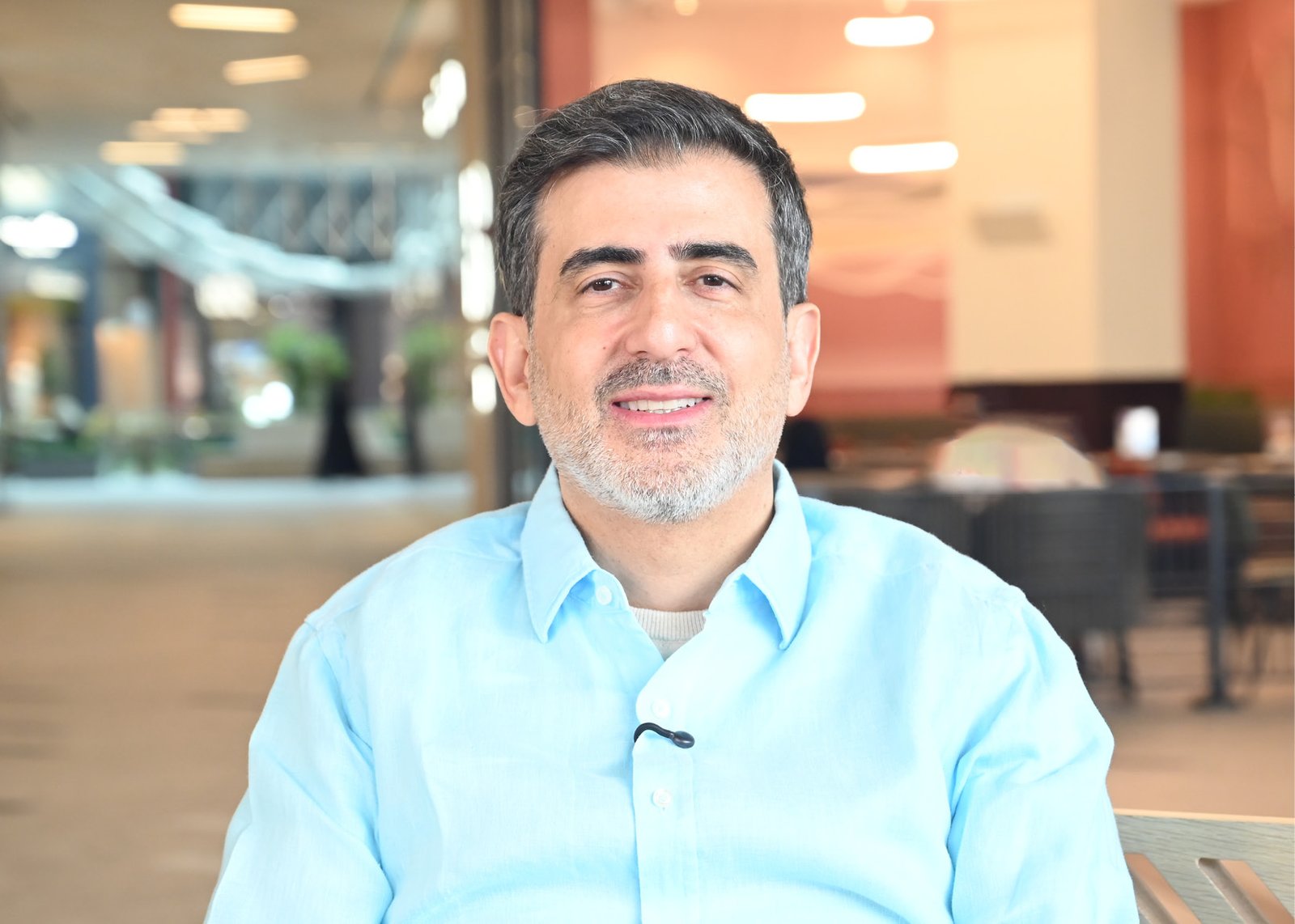
Investment strategist Samer Choucair argues that the recent warnings from Alex Karp, CEO of Palantir Technologies, represent a fundamental turning point in how we understand the global labor market and the digital economy.
Choucair emphasizes that this perspective—coming from a leader of a technology powerhouse valued at over $329 billion—goes far beyond a media soundbite. Instead, it constitutes a practical survival framework in the age of artificial intelligence.
Karp, often described as a “philosopher-billionaire,” with an estimated personal net worth exceeding $14 billion (as of March 2026), has stated that only two categories of people will maintain long-term security in the AI-driven economy:
Skilled trade professionals
Neurodivergent thinkers
—
The Two “Survivor Classes” in the AI Era
- Skilled Trade Workers: The Irreplaceable Layer
According to Choucair, the first category includes:
Electricians
Mechanics
Builders
Plumbers
These roles are fundamentally anchored in the physical world, making them extremely difficult to automate.
> “While AI can replace analytical and office-based tasks, it still struggles with real-world precision, adaptability, and physical interaction,” Choucair explains.
In essence, as automation advances, manual intelligence becomes more valuable—not less.
—
- Neurodivergent Thinkers: The Innovation Core
The second category consists of individuals with non-linear, unconventional thinking patterns—often referred to as neurodivergent talent.
Choucair highlights that Karp himself overcame dyslexia, reinforcing his belief that:
> “AI cannot replicate human intuition, abstract reasoning, and lateral thinking.”
These individuals are increasingly becoming the innovation engine inside leading technology firms, including Palantir.
—
A Global Workforce Reset Is Already Underway
Choucair notes that Karp’s statement—widely discussed in global outlets—raises urgent questions for:
Governments
Education systems
Generation Z
With projections suggesting that up to 40% of jobs could be impacted by AI by 2030, the traditional model of university-based career pathways is being challenged.
> “The real question is no longer what degree you hold—but whether your skills are defensible in an AI-driven economy.”
—
Investment Implications: Where Capital Is Moving
Choucair outlines three major investment opportunities emerging from this shift:
- AI Infrastructure and Platform Leaders
Companies like Palantir Technologies remain long-term growth opportunities due to their role in:
Defense systems
Healthcare infrastructure
Energy intelligence
—
- Blue-Collar Technology (Trade-Tech)
Choucair predicts a surge in:
Funds focused on vocational training
Hybrid technologies that augment (not replace) skilled workers
Robotics-assisted manual industries
> “The next wave of innovation will not replace workers—it will upgrade them.”
—
- Neurodiversity as an Investment Asset
Companies that actively recruit and integrate neurodivergent talent are expected to:
Accelerate innovation cycles
Achieve higher long-term returns
Choucair points to firms like Palantir as early examples of this model.
—
Beyond Jobs: A Structural Shift in Society
Choucair stresses that this transformation is not limited to employment—it represents a restructuring of economic value itself.
Degrees lose monopoly power
Skills become currency
Creativity becomes capital
> “We are entering an era where value is defined by adaptability, not credentials.”
—
Conclusion: The New Definition of Security in 2026
Choucair concludes that the AI era is no longer theoretical—it is operational, and it demands immediate adaptation.
> “Future dominance will belong to those who either master the physical world—or think beyond conventional boundaries.”
He frames Karp’s insight as a clear call to action:
Build practical, irreplaceable skills
Cultivate non-linear thinking
Align investments with structural, not cyclical, change
> “This is not just a shift in jobs—it is a shift in how wealth is created, preserved, and scaled.”
In 2026, the winners will not be those who follow the system—but those who understand where it is breaking, and position ahead of it.