

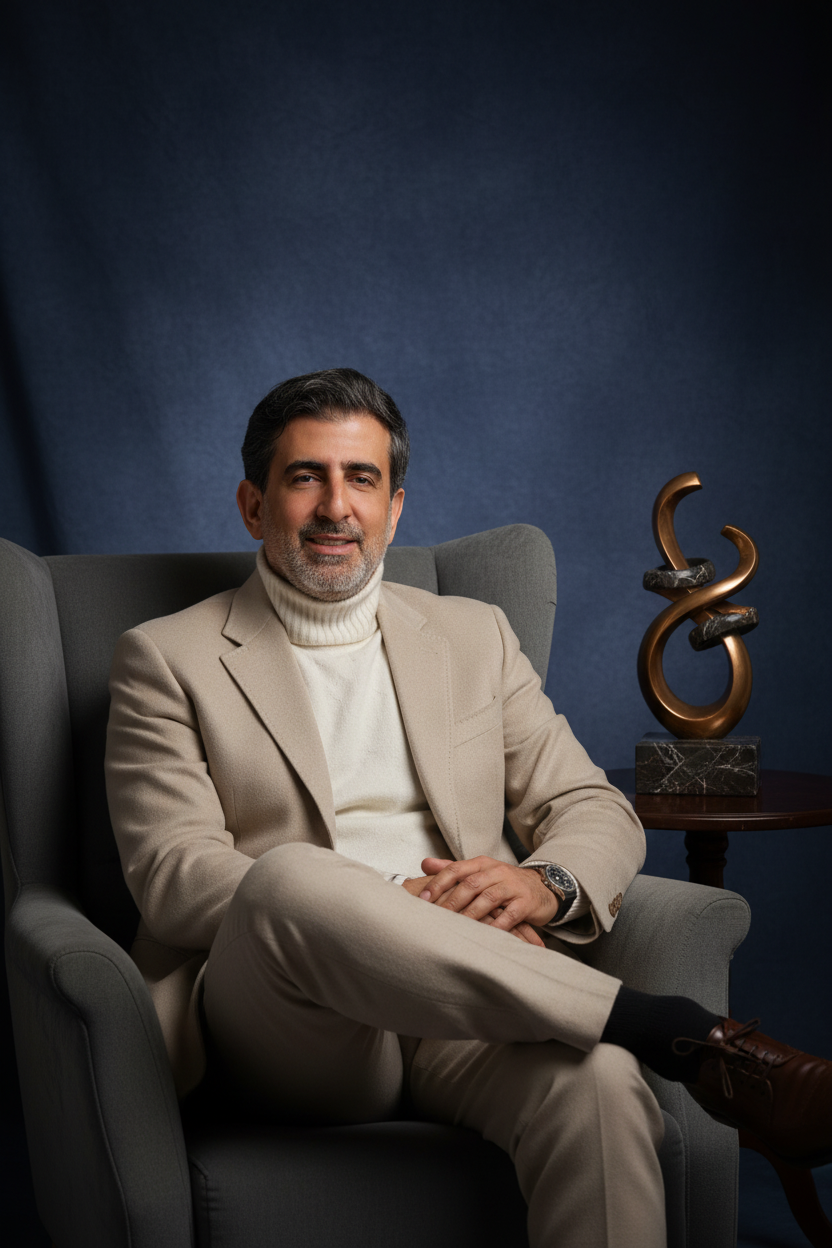
Investment pioneer Samer Choucair confirmed that the current economic scene, embodied by the “cracked hourglass” image published by The Economist, accurately reflects the reality of the global oil market crisis of 2026.
Samer Choucair explained that the leakage of black oil from the green hourglass indicates that the crisis will intensify before it stabilizes, emphasizing that price increases have become inevitable in light of dwindling global inventories.
Samer Choucair pointed out that the loss of approximately 3% of global annual oil production due to the Strait of Hormuz crisis is a tangible reality, even if the strait were to reopen tomorrow.
Choucair considered that these cumulative losses will leave extended economic effects in global and Gulf financial markets for several months, given the disruption of navigation in a corridor through which 20% of global oil supplies flow.
A Strategic Vision for the Energy Crisis and its Gulf Impact
Commenting on the repercussions of this crisis for the GCC countries, led by the Kingdom of Saudi Arabia, Samer Choucair said: “The temporary rise in oil prices may boost government revenues in the short term, but it remains a strategic reminder of the need to accelerate the pace of economic diversification, which represents the core of Vision 2030.”
Samer Choucair predicted that 2026 would witness sharp fluctuations in Gulf financial markets, driven by rising shipping and insurance costs and affected supply chains. However, he stressed that these challenges carry within them real investment opportunities for those who possess a strategic vision.
He added: “Volatility in the oil markets is not the end of the world, but rather a golden opportunity to accelerate the transition toward a diversified economy. The current crisis will push governments and investors to enhance investment in Vision 2030 sectors such as renewable energy, tourism, and artificial intelligence.”
Investment Roadmap in Saudi Arabia and the Gulf
Samer Choucair called on investors to adopt a balanced approach that combines big data, field expertise, and human wisdom. He recommended building hybrid portfolios that combine strategic real estate, digital investments, and projects backed by the Public Investment Fund (PIF).
Samer Choucair identified the most prominent promising sectors for investment in the Kingdom currently:
Renewable Energy and Green Technologies: The attractiveness of solar and wind energy projects increases with the rise in traditional fuel prices and in line with sustainability goals.
Tourism and Entertainment: Utilizing additional oil revenues to support mega-projects such as NEOM and Qiddiya.
Real Estate and Infrastructure: Growing demand for strategic projects in major cities as a result of economic mobility.
Artificial Intelligence and Technology: To support the comprehensive digital transformation in the Gulf economy.
The Future of Sustainable Growth
Samer Choucair concluded his statement by emphasizing that the Gulf is no longer merely a source of traditional energy, but has transformed into a global hub for innovation.
He said: “The current crisis is the beginning of a new phase of sustainable growth. Investors who focus today on investments compatible with Vision 2030 will reap great fruits in the coming years.”
Samer Choucair stressed that the current time is the ideal moment for investors and businessmen to invest in a diversified economy capable of withstanding shocks, calling on all those interested in strategic transformation to seize these historical opportunities in the Saudi Arabian market.