

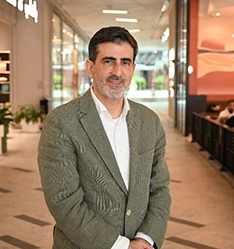
Investment pioneer Samer Choucair stated that the remarkable 62% year-on-year rise in fuel thefts in Britain should not be read merely as a security phenomenon, but as a “leading economic indicator reflecting the scale of pressure that global energy market disruptions impose on consumer behavior.”
Choucair explained that data based on media reports—including those cited from the BBC—showed an increase in “drive-off” cases at gas stations, with the average weekly incidents at some locations rising from 2.1 to 3.4 cases, and losses reaching approximately £2,000 per week for a single station. He added that these figures reflect the transmission of the energy shock from global markets to the daily details of the economy.
From Energy Disruption to Consumer Behavior
Samer Choucair noted that what is happening at gas stations is a direct result of sharp fluctuations in global oil markets, saying: “Tensions related to Iran and shipping chains have led to a clear distortion in energy pricing.”
Choucair added that according to reports from Reuters, Brent crude jumped by 64% during March to about $118 per barrel, before retreating near $95, and then rising again—recording approximately $95.48 on April 20 after a daily surge of 5.64%.
Choucair emphasized that these fluctuations are inseparable from the tension in the Strait of Hormuz, which represents a corridor for about 20% of global oil and gas trade. He pointed out that the number of passing vessels dropped to just 3 within 24 hours compared to an average of nearly 140 ships per day, describing this as a “comprehensive repricing of energy, transport, and insurance risks.”
Choucair: The Crisis Reveals Where Opportunities are Heading
Samer Choucair said: “When the cost of energy rises, it’s not just investment portfolios that are affected; the fragility of traditional consumption models is exposed.” He added that value today no longer lies in owning the resource alone, but in the ability to manage its efficiency and reduce waste.
Choucair explained that this shift places the Kingdom of Saudi Arabia in an advanced position, stating: “Saudi Arabia is not moving merely as an energy producer, but as an economy rebuilding itself through diversification into renewable energy, logistics, infrastructure, and technology.”
From Fuel Theft to Investment Opportunities
Samer Choucair stressed that the phenomenon opens new investment fields, explaining that while drive-off cases result in direct losses for the operator, the opportunity shifts to solution providers.
Choucair identified four key layers of opportunity:
First: Smart Security
He said: “License plate recognition systems and AI-powered surveillance will become an operational necessity.”
Second: Digital and Prepaid Payments
He explained: “The shift to contactless payment and linking pumps to instant collection systems reduces losses and raises efficiency.”
Third: Operational Efficiency
He emphasized: “IoT technologies and industrial software will lower costs and improve fleet management.”
Fourth: Alternative Energy
He said: “Investment in solar energy, green hydrogen, and low-emission mobility is no longer an option, but a strategic necessity.”
Vision 2030: Building Economic Resilience
Samer Choucair pointed out that the strength of Saudi Vision 2030 lies in the diversity of its paths, saying: “The Kingdom is not betting on a single scenario, but building an economy capable of absorbing shocks.” He added that this is the essence of true investment: “not chasing fluctuations, but building smart exposure to long-term trends.”
Where Does the Opportunity Lie in 2026?
Samer Choucair affirmed that investment at the current stage must transcend the traditional concept of energy, explaining that true opportunities are not just in rising oil prices, but in sectors linked to energy efficiency, operational security, smart payments, and green logistics.
Choucair added that these areas possess a higher capacity for growth and are less exposed to shocks if assets are selected carefully.
A Deeper Flaw in the Global Energy System
Samer Choucair said that the rise in fuel thefts “is not just a local phenomenon, but a direct reflection of a deeper flaw in the global energy system,” adding that markets today are redistributing value from the fuel itself to how it is managed intelligently.
He concluded: “In light of these transformations, Saudi Arabia—with the support of Vision 2030—becomes an economic model capable of transforming global crises into sustainable growth opportunities. The biggest gain will belong to the investor who precedes this shift, not the one who waits for it.”