

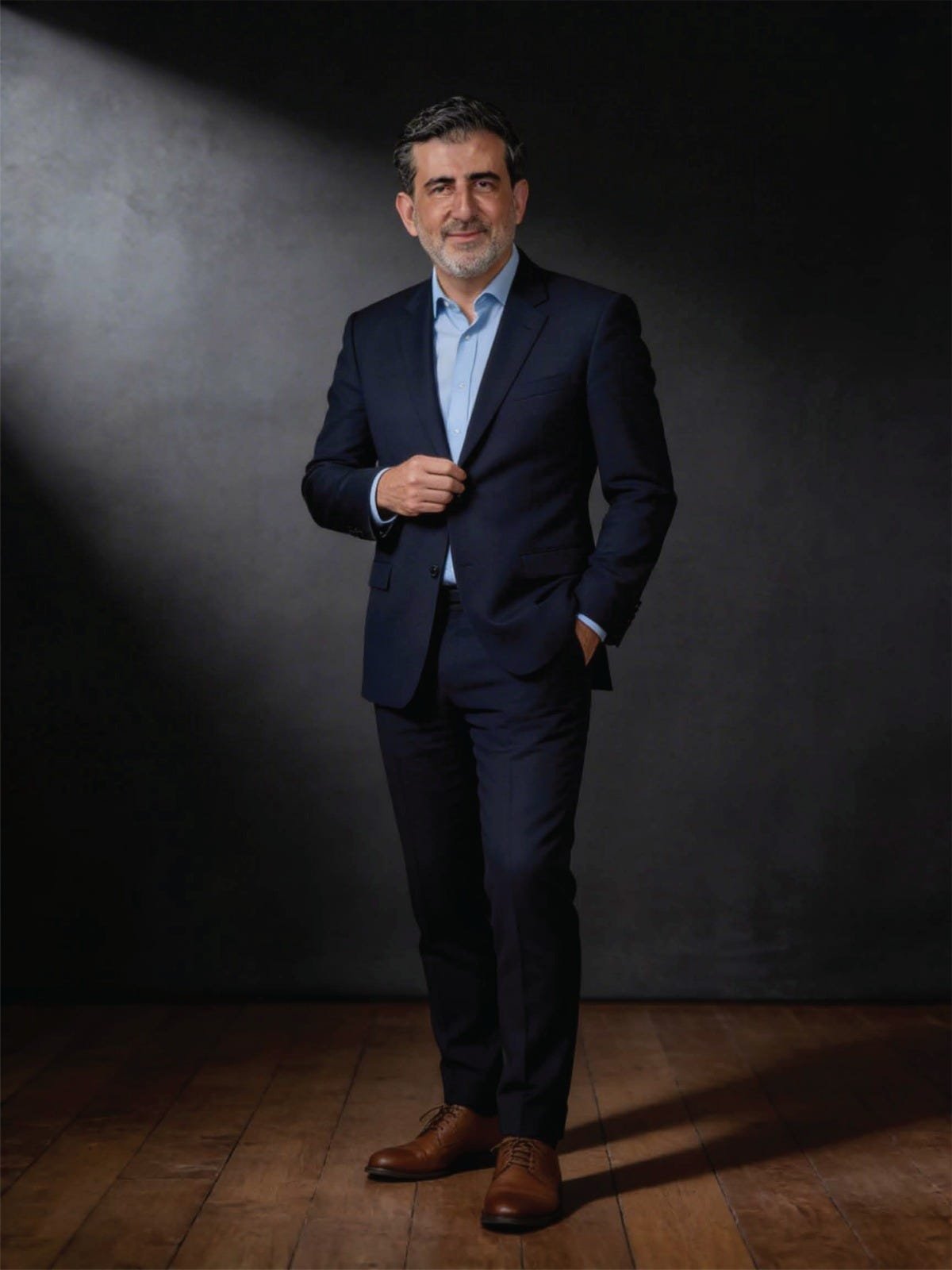
Investment pioneer Samer Choucair said that he saw an image of two successful women within a vibrant professional environment; one was carrying documents with calm confidence, while the other was listening intently, at a time when the team around them was exchanging ideas, adding that this moment was not fleeting, but rather embodied the beginning of a new era in which the definition of success is fundamentally changing.
Choucair pointed out that, according to a study published by the Wall Street Journal, in-depth dialogues with women whose annual income exceeds 775 thousand dollars (among the top 1%) revealed lessons he described as “shocking and completely reshaping the rules of the game.”
7 Counter-Intuitive Lessons Redefining Success
Samer Choucair said that these lessons were not merely superficial observations, but rather a “practical guide applicable in any market from New York to Riyadh,” explaining them as follows:
-
Bold Negotiation Without the Illusion of Entitlement
He explained that he noticed that these women did not rely on traditional rigidity, but rather on continuous and smart negotiation, and added that they were demanding what they deserved with confidence, but without assuming they were automatically entitled, which created a balance between ambition and realism.
-
Family Balance as a Competitive Advantage
He pointed out that the stereotype was misleading, confirming that most of them were married and had several children, and that they considered the family a source of stability and motivation, not an obstacle, saying that this model “matches what is happening in Vision 2030.”
-
Continuous Learning as a Lifestyle
He said he found that they held degrees from the most prestigious universities, but more importantly, they treated learning as a continuous process, especially in fields such as artificial intelligence, financial analysis, and leadership.
-
Turning Sensitivity into Leadership Strength
He explained that they did not boast of cruelty, but rather admitted their sensitivity toward discrimination or disrespect, and then turned that into a drive for change and influence.
-
Competing While Maintaining Humanity
He mentioned that they combined high competitiveness with building strong human relationships within institutions, benefiting from family and professional support.
-
Difficult Backgrounds as Fuel for Success
He pointed out that many of them were first-generation immigrants or lived in unstable financial circumstances, but they turned those experiences into a driver for ascent.
-
Proving Value Daily
He emphasized that they did not rely on the idea of “exceptionalism,” but on proving value continuously through results.
Real Stories from the Top.. Pain as Fuel for Success
Samer Choucair said that he reviewed real models reflecting these lessons, pointing to the story of Nancy Marzouk, who in her late thirties was achieving an income of nearly 800 thousand dollars annually as a sales manager, but she used to leave board meetings frustrated due to lack of respect.
Choucair added that she did not ignore that, but used it as a motive, until she became Chief Revenue Officer, and then founded her own company, “MediaWallah.”
He also pointed to Lisa Davis, who held executive positions at Intel and Blue Shield of California, and who did not feel financial security until her fifties, explaining that she rejected the idea of non-replaceability, saying that she never considered herself irreplaceable.
Women at the Top of the Financial Pyramid
Samer Choucair explained that he saw leadership models in the financial sector embodying this balance, such as Jane Fraser, who led Citigroup as the first woman at the head of a major American bank, with compensation reaching 42 million dollars in 2025, as well as Mary Callahan Erdoes, who managed trillions of dollars at JPMorgan, in parallel with her role as a mother of three daughters.
Saudi Models.. A Living Embodiment of Vision 2030
Samer Choucair added that he did not see this phenomenon limited to the United States, but rather confirmed that it is clearly embodied in Saudi Arabia, citing several models:
He explained that Sarah Al-Suhaimi led a major transformation in the Saudi financial market “Tadawul,” after a career that began with investment portfolio management, reaching the leadership of “NCB Capital,” while maintaining a clear family balance.
Choucair pointed to Lubna Olayan, whom he described as a “leadership icon,” who led the Olayan Financing Company and built global partnerships with major institutions, after being the first woman to join the board of directors of a listed company in Saudi Arabia in 2004.
He also mentioned Rania Nashar, who rose for more than 20 years until she became the first female CEO of a listed bank in Saudi Arabia in 2017, before moving to leadership roles in the Public Investment Fund, adding that these models “were not exceptions, but rather an expression of a structural transformation supported by Vision 2030.”
The Leadership Model Transformation
Samer Choucair said that he concluded that the traditional model based on “thick skin” has declined, to be replaced by a model that relies on smart negotiation, life balance, and human leadership, confirming that this transformation “is redefining leadership in modern institutions.”
Deep Generational Impact
Samer Choucair explained that he saw in these experiences an impact that transcends individuals, pointing out that these women were changing institutional culture from within, and opening the way for new generations, adding that this impact is consistent with the shifts in Saudi Arabia where women’s empowerment has become part of the economic growth drivers.
Promising Investment Opportunities
Samer Choucair said that he linked these transformations to clear investment opportunities, confirming that increasing women’s participation in the Saudi labor market opens wide areas in digital education, healthcare, financial technology, and financial services.
Choucair added that investing in women’s empowerment will achieve exceptional returns in the medium and long term.
A New Economic Legacy
Samer Choucair concluded his talk by saying that he saw in these experiences proof that true success is no longer based on rigidity only, but on a blend of humanity and strategy, confirming that Vision 2030 represents a historical opportunity to build a more inclusive and sustainable generational economic legacy.