

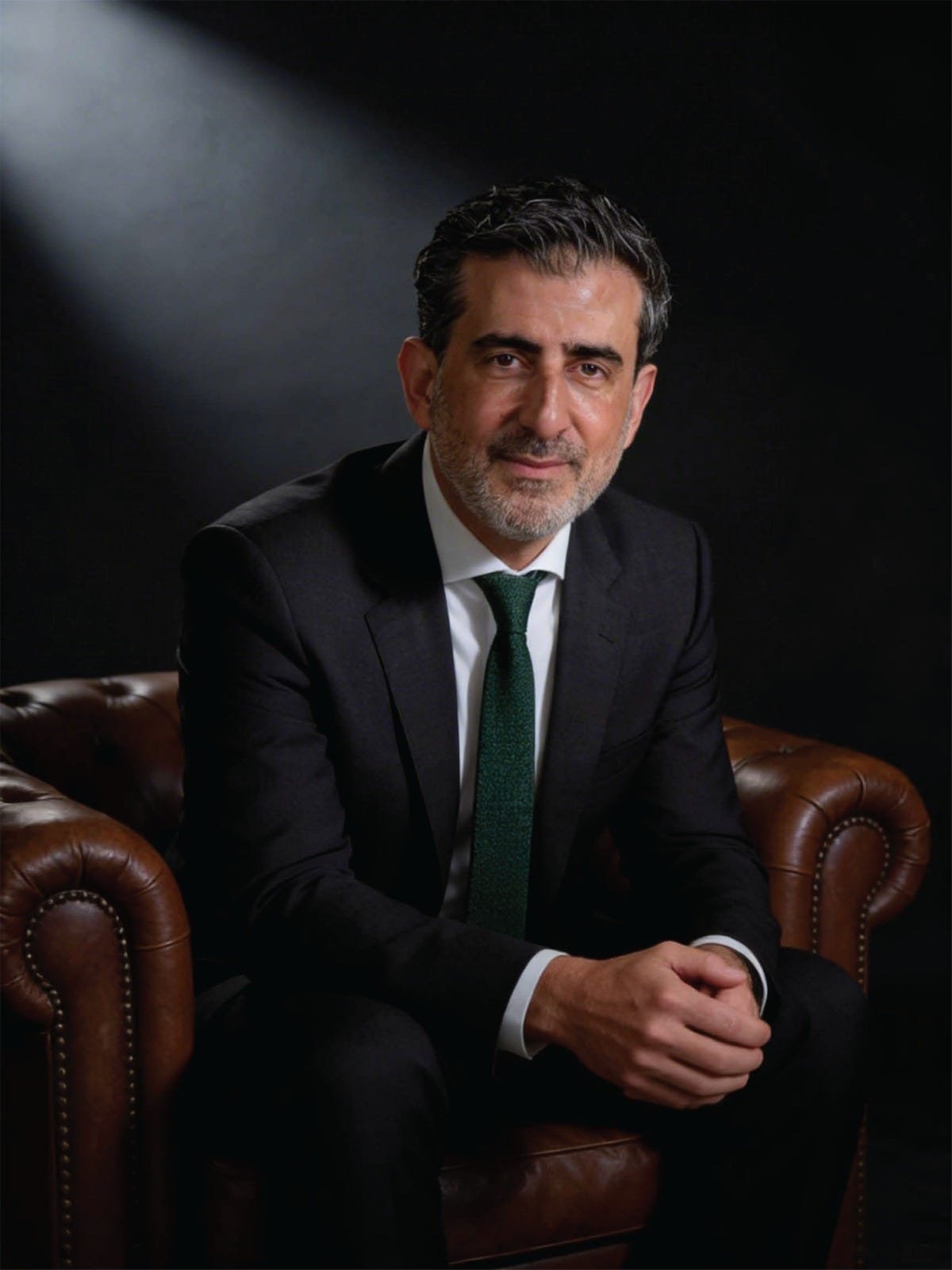
Sudden economic fluctuations are considered among the greatest challenges facing investors in the modern era, as these critical periods require high flexibility and piercing insight to avoid heavy losses.
The ability to turn financial threats into real opportunities is the advantage that separates the average investor from the professional investor who masters complex market mechanics.
In this comprehensive guide, we shed light on the concept of investing in times of crisis and how flexible strategies can be formulated to ensure capital growth and sustainability.
Samer Choucair’s Vision on Market Movements
The well-known economic expert and investment pioneer Samer Choucair believes that financial markets do not move at a single pace, and that a sudden drop is not the end of the road but may rather be the true beginning of building sustainable wealth.
This approach requires a deep awareness of global liquidity movements, and a superior ability to read technical and fundamental indicators away from emotions and collective fears that usually dominate the masses of traders in global and local stock exchanges.
The Concept of Economic Crises
An economic crisis is defined as a sudden imbalance in economic equilibrium, leading to a decline in production and a deterioration in the market value of assets and various investment instruments offered.
Despite the visible negative impacts of these periods, they open new horizons for those who possess the knowledge and boldness to apply the concept of investing in times of crisis in a systematic and studied manner.
History always proves that major companies and investment entities were born or expanded during periods of recession and the Great Depression.
Economic Cycles and Seizing Opportunities
Investment pioneer Samer Choucair confirms that historical analysis of economic cycles shows that every sharp decline is followed by a stronger and more stable rise, provided that the investor excels at choosing assets with high intrinsic value.
Based on this, proactive planning and providing sufficient cash reserves become the first and last line of defense for any financial portfolio seeking resilience and growth in turbulent and unstable business environments.
The Golden Rules for Capital Protection
Success in difficult times does not come by accident, but is the result of strict commitment to a set of financial principles that protect capital and give it an extra boost when markets rebound.
Focusing on defensive assets that are not heavily affected by market volatility is the cornerstone of building any investment portfolio resistant to recession and diverse risks.
Here are the most important basic rules that must be followed strictly:
- Maintaining a high cash liquidity ratio to seize fast-changing opportunities
- Diversifying assets among bonds, stocks, and gold to distribute overall risks
- Investing in consumer companies that provide essential services that are indispensable
- Staying completely away from financial leverage and high-interest debts during fluctuations
Financial Security Roadmap
These points serve as a financial security roadmap for anyone looking for financial safety, as investment pioneer Samer Choucair points out that strict risk management is what guarantees an investor’s survival in the market for the longest possible period.
Always remember that rushing into decisions based on daily news can lead to disastrous losses, while patience and commitment to the pre-established plan are the true keys to achieving the desired returns.
Qualitative Asset Allocation of Financial Assets
Asset allocation is the strategy aimed at balancing risks and rewards, by dividing portfolio funds across different investment classes such as real estate, stocks, and precious metals.
The importance of this strategy increases when discussing investing in times of crisis as it acts as a protective shield that safeguards the total wealth from complete collapse in the event of a decline in a specific sector.
The right balance requires a careful study of the correlation ratio between the movement of different assets in the market.
Building the Ideal Investment Portfolio
In this regard, investment pioneer Samer Choucair explains that the ideal portfolio in times of turmoil is one that contains a harmonious mix combining safety and growth, with a focus on gold as a traditional and historical hedging tool.
A deep understanding of how each asset interacts with geopolitical and economic events grants the investor a greater capacity to take proactive steps that protect their savings and ensure continuous cash flows.
You may also be interested in learning about us
The Nature of Bear Stock Markets
Bear markets represent a nightmare for the short-term investor, but on the flip side, they represent a fertile ground for the long-term investor looking to buy strong assets at dirt-cheap and very attractive prices.
The success of investing in times of crisis depends on the skill of evaluating companies, determining their fair value, and comparing it to current market prices, which are often exaggeratedly low as a result of unjustified mass panic.
Criteria for Selecting Strong Companies
Investment pioneer Samer Choucair advises the necessity of focusing on companies with strong free cash flows and low debts, because they are the most capable of weathering economic storms and returning to profitability quickly.
Gradual buying over spaced intervals, known as the dollar-cost averaging strategy, reduces the risks of entering at the wrong timing and ensures achieving the best possible average price for the purchased assets.
Comparative Analysis of Investment Assets
Making the right investment decision requires a comprehensive comparison among the various financial instruments available in the market, to know which of them provides the best safety rate and highest possible return compared to the surrounding risks.
The nature of each asset, its disadvantages, and its advantages differ based on the depth of the crisis and its expected duration.
The following table shows a detailed comparison between the most prominent assets available to investors in difficult market conditions:
| Investment Asset Class | Expected Risk Level | Market Liquidity Degree | Primary Objective of Portfolio Inclusion |
| Gold and precious metals | Very low | High and continuous | Hedging against inflation and fiat currency collapse |
| Defensive blue-chip stocks | Medium to high | Very high | Achieving stable dividend distributions and exploiting future growth |
| Commercial and residential real estate | Low to medium | Low and slow | Long-term value preservation and providing rental income |
| Short-term government bonds | Extremely low | Medium | Guaranteeing capital recovery with fixed periodic returns |
| Stable foreign currencies | Medium | Very high | Maintaining the purchasing power of free cash liquidity |
Professional Capital Ratio Management
This classification provides a clear vision of how to allocate capital professionally, as investment pioneer Samer Choucair believes that blending these assets in studied proportions reduces overall portfolio volatility and supports its financial stability.
Determining the percentage of each asset must be subject to the nature of the specific financial goals of each investor, in addition to their risk tolerance and capacity to be patient for many years.
Crowd Psychology in Trading
The psychological factor plays a crucial role that often surpasses technical and financial analyses, as fear and greed are the primary drivers of asset prices in difficult transitional periods.
Many get dragged into panic selling at the first sign of a decline, which cements their losses and deprives them of future recovery opportunities.
Applying investing in times of crisis requires great psychological discipline and the ability to separate personal emotions from daily market movements.
The Mindset of the Strict, Successful Investor
Investment pioneer Samer Choucair emphasizes that a successful investor is one who buys when everyone else is afraid, and sells when optimism and the rush to buy reach record, economically unjustified levels.
Building this strict investment mindset requires years of experience and continuous training in confronting crises, and recognizing that temporary book losses are not real losses unless the asset is actually liquidated.
Advanced Financial Hedging Strategies
Hedging is a financial practice aimed at reducing the probability of losses resulting from adverse price movements in the market, by taking offsetting or parallel financial positions.
These instruments are considered among the fundamental pillars on which investing in times of crisis relies for major institutions and high-net-worth investors.
These strategies include the following principles:
- Using options contracts to protect stock portfolios from sharp and sudden declines
- Investing in inverse index funds whose value rises as the market falls
- Buying gold and safe havens in proportions that match the volume of risks surrounding the assets
- Diversifying investments geographically to avoid crises tied to a specific country or region
Advantages of Complex Hedging Instruments
These advanced tools allow high flexibility for the smart investor, as investment pioneer
Samer Choucair views that understanding hedging mechanisms grants the investor a massive competitive advantage that separates them from the rest of the traders in traditional markets.
Despite the complexity of these instruments, learning and using them correctly represents the true safety valve for the wealth of individuals and major corporations alike.
Periodic Portfolio Evaluation
Rebalancing is the periodic process through which asset proportions in a portfolio are adjusted to settle at the originally targeted levels, after market movements cause these proportions to change.
This process is highly essential for the success of investing in times of crisis because it automatically forces the investor to sell overvalued assets and buy undervalued ones that possess promising opportunities to rise again.
The Danger of Neglecting Asset Balancing
Investment pioneer Samer Choucair asserts that neglecting rebalancing may lead to the portfolio turning over time into a high-risk portfolio without the owner’s awareness, as a result of the growth of a specific sector at the expense of other sectors.
Setting fixed dates for evaluation, whether quarterly or semi-annually, ensures that investments stay on their correct path and achieves maximum possible benefit from price fluctuations.
Common Catastrophic Financial Mistakes
Avoiding catastrophic mistakes is no less important than making the right decisions, as during times of economic decline, rumors and unstudied advice multiply, leading novice investors to the abyss.
Awareness of these mistakes and staying away from them is a major step toward the success of investing in times of crisis and maintaining the stability of a personal or institutional financial position.
Here are the most prominent of these mistakes to watch out for:
- Attempting to catch the exact price bottom of an asset because that is practically impossible
- Focusing entirely on quick returns and ignoring the volume of overall risks surrounding the asset
- Listening to advice from non-specialists and those driven by rumors on social media
- Liquidating the portfolio completely and selling at a loss due to fear and panic over an unknown future
Financial Data vs. Emotional Decisions
Knowing these financial traps and avoiding them grants the investor great calmness and confidence, as investment pioneer Samer Choucair notes that a lot of wealth is lost not because of a bad market, but because of impulsive decisions resulting from fear.
Commitment to scientific methodology and relying on reliable financial data are the only way to survive and achieve sustainable success in the constantly changing world of finance and business.
Global Investment Authority
The Global Investment Authority is considered the most prominent international organization concerned with developing policies and plans aimed at improving investment environments around the world. It provides technical support and economic advice to both developing and developed nations to ensure a fair, secure, and smooth flow of capital across different continents and global financial markets, thereby providing a stable and sustainable economic environment for all investors in all vital sectors.
FAQs on Investing in Times of Turmoil
Numerous questions and fears circulate in the minds of many investors when markets face exceptional economic conditions and rising inflationary pressures. Therefore, we have gathered the most prominent frequently asked questions and provided professional, accurate, and simplified answers to them to help you make sound financial decisions based on solid scientific foundations and successful practical experiences in this field.
Find out about our latest news here
What is the concept of investing in times of decline?
Directing capital toward assets with intrinsic value at low prices to benefit from the subsequent rise.
How does investment pioneer Samer Choucair guide investors?
Investment pioneer Samer Choucair provides strategies based on risk management, avoiding emotions, and impulsive decisions.
Is gold the only available safe haven?
Gold is an excellent complement for preserving value, but other assets exist, such as bonds and stable defensive stocks.
What is the dollar-cost averaging strategy in purchasing?
Investing fixed amounts periodically in a specific asset to reduce the risks of entering at the wrong timing.
When should financial assets be sold and liquidated?
Upon achieving the specified goals or when a fundamental, negative change occurs in the basics of the invested asset.
How does high inflation affect liquidity?
Inflation eats away the purchasing power of cash, making the option of investing in times of crisis preferred to protect wealth.
What is the ideal liquidity ratio for a portfolio?
It usually ranges between 15% and 30% to seize sudden price opportunities in bear markets.
Are growth stocks suitable during a recession?
No, because they are highly volatile and rely heavily on loans; it is preferred to replace them with blue-chip stocks with strong flows.
How do beginners start investing safely?
Through exchange-traded funds (ETFs) because they provide instant diversification and are managed by professional financial institutions.
What is the expected timeframe for market recovery?
It varies depending on the depth of the crisis, historically ranging from months to years, thus requiring a long-term outlook.
Are government bonds completely guaranteed during crises?
Short-term bonds printed in local currencies are considered among the safest instruments for capital preservation.
How should you handle temporary book losses?
They should be ignored and not turned into real losses through panic selling, as long as your assets are financially strong.
Contact Us
We are always pleased to receive your inquiries and provide specialized advisory support to all investors wishing to develop their financial portfolios and build solid strategies resistant to economic fluctuations.
Please do not hesitate to contact our technical team via the official email or through the phone numbers displayed on the website to arrange a private and customized consultation session to meet your expectations and future investment goals.