

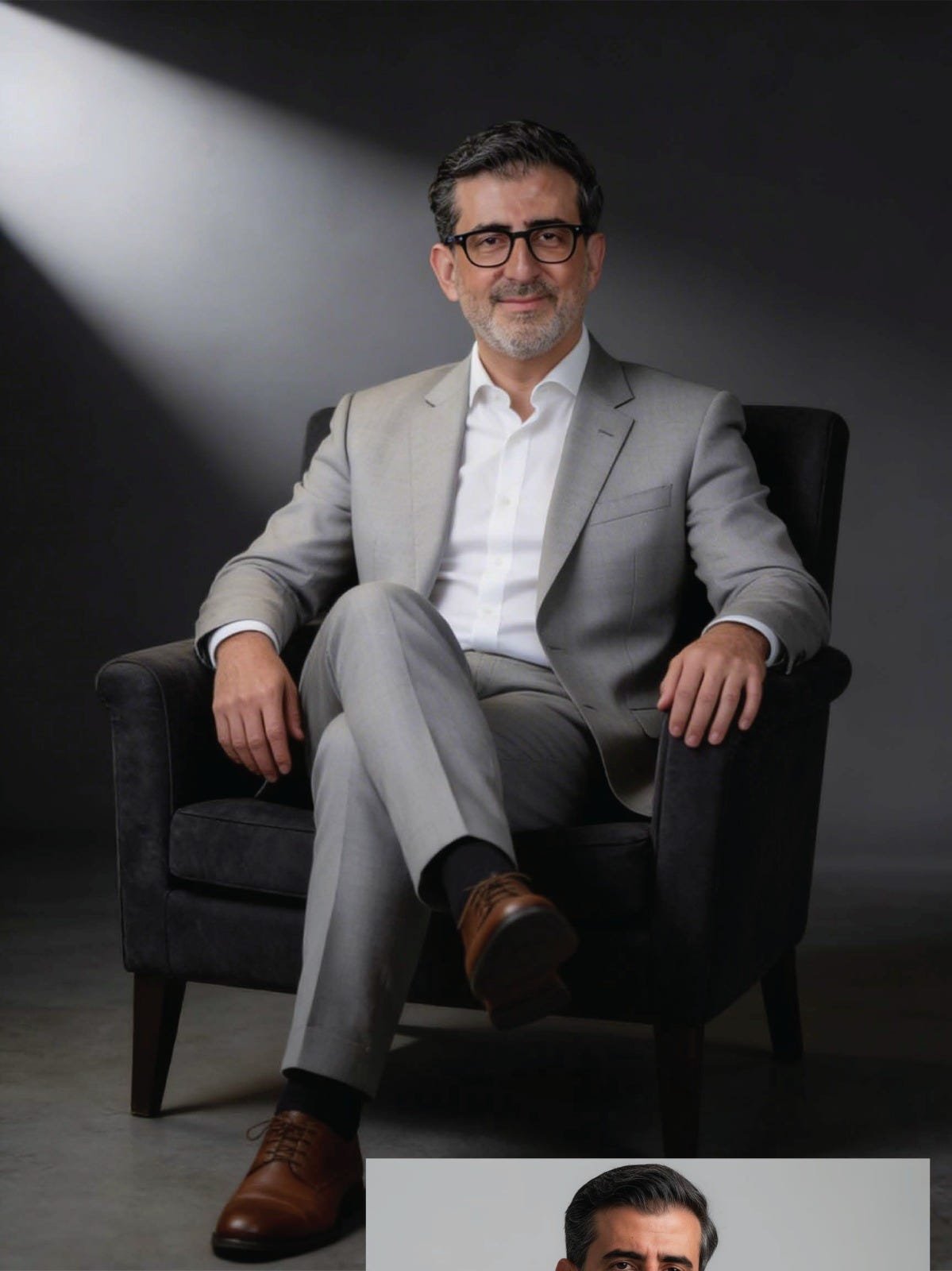
Investment entrepreneur Samer Choucair affirmed that the detention of American researcher Dr. Yulin Chen in China highlights a fundamental shift in the nature of risk institutional investors factor into their calculations when assessing global markets, noting that geopolitical risk is no longer a secondary factor in investment decisions, but has become a core element affecting the cost of capital, asset allocation, and the regional expansion strategies of companies and major investment funds.
Choucair explained that Dr. Chen’s detention case, an American researcher specializing in monitoring and analyzing North Korean nuclear tests, reflects the growing overlap between research activity and security considerations in the current international environment, particularly amid continued tensions between the United States and China in technology, national security, and trade.
Choucair noted that these developments are pushing investors to reassess the level of risk associated with operational and research presence in certain markets, particularly when human assets, data, and technical knowledge form a core part of the business model.
Choucair said that capital allocation decisions no longer depend solely on growth indicators and expected returns, but now include a market’s ability to provide a stable legal and regulatory environment that protects investments, human assets, and intellectual property, affirming that rising geopolitical uncertainty directly affects asset valuations and the criteria institutions use when building their long-term portfolios.
Choucair added that institutional investors, including sovereign wealth funds, pension funds, and private equity firms, are now expanding their risk-assessment models to include scenarios such as sudden regulatory restrictions, risks tied to dealing with government entities, and the possibility of operational disruption resulting from unexpected political or legal changes.
Choucair noted that detaining a researcher working in a field relying on publicly available data raises broader questions about the boundaries between scientific research and national security, which could push global companies to review policies for sending employees and experts to certain markets, alongside strengthening internal compliance and risk management systems.
Choucair explained that these developments could affect capital flows toward more sensitive sectors, particularly advanced technology, artificial intelligence, scientific research, and cybersecurity-related industries, saying that companies relying on international supply chains or globally distributed research teams will need to reassess their operational strategies to ensure business continuity and reduce reliance on regions with elevated political risk.
Choucair affirmed that the escalation of these risks strengthens trends toward redistributing global supply chains, including the concept of diversifying production and R&D locations toward countries with a higher degree of regulatory stability and the ability to provide a predictable investment environment.
Choucair added that the trend among global companies toward reducing geopolitical risk does not necessarily mean full withdrawal from major markets, but reflects a shift toward more flexible models based on risk distribution rather than intense geographic concentration, explaining that this approach has become a core part of modern portfolio management, particularly amid continued strategic competition between major economic powers.
On investment opportunities, Samer Choucair noted that economies offering clear governance frameworks, regulatory stability, and the ability to attract global talent could benefit from a redirection of part of international investment.
Choucair added that Gulf states, particularly Saudi Arabia, hold an opportunity to strengthen their position as a regional investment hub by continuing to develop the business environment, investing in digital infrastructure, and attracting global companies within economic diversification paths.
Choucair said that in an investment environment marked by rising uncertainty, the ability to provide institutional confidence and regulatory transparency becomes a genuine competitive advantage, as markets that succeed in building an integrated system for protecting investment and attracting talent will be better positioned to draw long-term capital.
Choucair added that investors will continue, in the coming period, to monitor developments in U.S.-China relations and their impact on trade, technology, and supply chains, as factors influencing global investment decisions, while companies with a greater ability to adapt to geopolitical shifts will remain more attractive to investors seeking sustainable growth.
Choucair noted that the coming years could see an acceleration in restructuring global investment portfolios, such that geographic diversification and the ability to manage regulatory risk become a core part of the capital allocation process, not merely a precautionary tool.
Samer Choucair concluded his remarks by affirming that the coming phase will require investors to combine traditional financial analysis with a deep understanding of political and regulatory shifts, explaining that building portfolios capable of adapting to global shifts will be a decisive factor in preserving value and achieving sustainable long-term returns.