

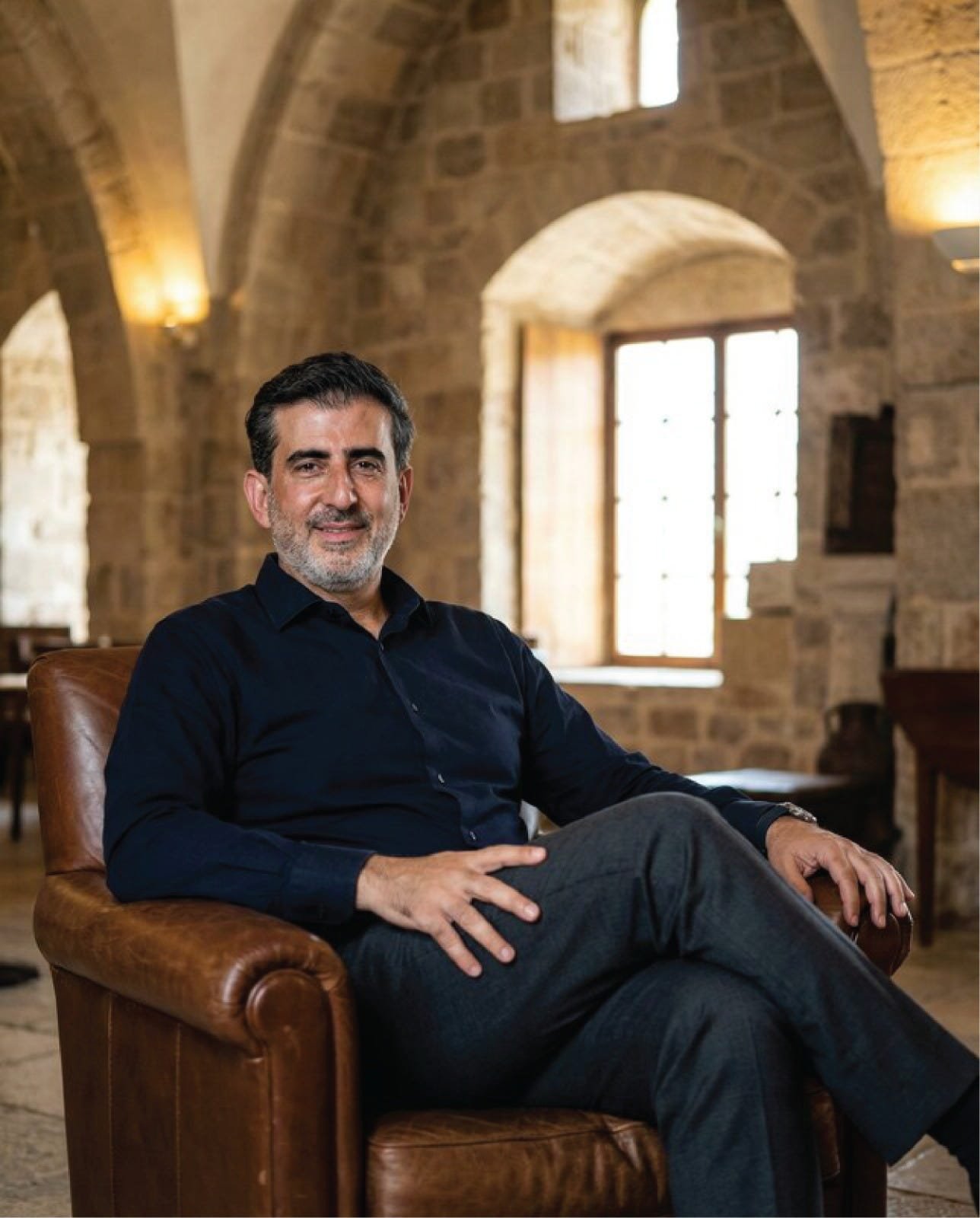
Investment pioneer Samer Choucair said that when contemplating a scene inside a luxurious meeting room overlooking a modern city skyline, where businessmen sit in anticipation before a small intelligent robot sharing decisions with confidence, he realized that what is happening is no longer just technical evolution, but a complete transition from the concept of a tool to the concept of a partner. Choucair explained that the viral video “Our Names Will Soon Be AI” was not entertainment content, but a clear reflection of a historical shift in the business world, where artificial intelligence has become an active party in decision-making.
From Claude Shannon to Interactive Intelligence.. Roots That Made the Future
Samer Choucair pointed out that choosing names for intelligent models such as “Claude” was not random, but a tribute to Claude Shannon, the founder of information theory, who laid the scientific foundation for the modern digital revolution. Choucair clarified that Shannon, through the concept of the Bit and the theory of entropy, provided the framework upon which the internet, big data, and artificial intelligence were built, adding that the paradox today is that we are moving from the era of information analysis to the era of “interacting with it” as if it were a human entity.
Shared Intelligence.. From Human vs. Machine to Human with Machine
Samer Choucair said that the future is no longer based on the idea of competition between humans and machines, but on the integration between them. He cited the concept of “Co-Intelligence” proposed by researcher Ethan Mollick, explaining that artificial intelligence is no longer a substitute for humans, but has become a colleague, consultant, and coach. Choucair emphasized that the companies that will succeed in the next stage are not only those that possess the most data, but those most capable of transforming artificial intelligence into a partner in decision-making.
Saudi 2030.. AI as Sovereign Infrastructure
Samer Choucair explained that the Kingdom of Saudi Arabia did not deal with artificial intelligence as a passing technical trend, but as sovereign economic infrastructure. Choucair noted that the year 2026 represented a major acceleration point with the expansion of investments in data centers, cloud computing, and major projects such as NEOM, alongside the efforts of the Saudi Data and AI Authority (SDAIA) and the Public Investment Fund. Choucair added that artificial intelligence has become part of energy, tourism, and government services, rather than a separate sector from them.
Investment Opportunities.. AI as the Language of the New Economy
Samer Choucair said that artificial intelligence cannot be viewed as a single sector, but as a layer extending over all economic sectors. Choucair identified the most prominent investment opportunities in four main paths, starting with infrastructure such as data centers, cloud computing, and processor farms, which he described as the “new oil of the digital economy.” He then pointed to the applications layer, which includes fintech, healthcare, and smart cities, where the highest growth margins are achieved. Choucair added that the third path consists of asset tokenization and linking artificial intelligence with blockchain technologies to redefine the concept of financial liquidity, while the fourth path is early investment in startups and partnerships with advanced international companies in this field.
Why Now? The Moment of Entering the Smart Market
Samer Choucair explained that the current moment represents an exceptional opportunity to enter the Saudi market, in light of regulatory facilities, the attractiveness of qualified investors, and increasing global competition for AI leadership between the United States, China, and the Gulf states, stressing that the current time gap between development and saturation represents a rare investment window.
Risks.. What Optimism Alone Does Not Say
On the other hand, Samer Choucair warned of a set of risks that cannot be ignored, such as inflated company valuations, increasing cyber threats, and the radical reshaping of the labor market without its disappearance, in addition to over-reliance on intelligent systems. Choucair stressed that the real danger does not lie in artificial intelligence itself, but in its misuse or the absence of a strategic understanding of it.
Who Reads the Moment Writes the Future
Samer Choucair concluded his analysis by emphasizing that the ongoing transformation is not just a technical evolution, but a complete reshaping of the way of thinking about investment and business. Choucair explained that the future will not be managed through traditional commands, but through a direct dialogue with artificial intelligence, where the decision becomes the result of a partnership between the human and the intelligent system, adding that investors in Saudi Arabia and the Gulf are facing a decisive moment, either to be part of this transformation or to be late for it, emphasizing that artificial intelligence is no longer an auxiliary tool, but the partner that will determine who leads the next economy and who falls behind.