

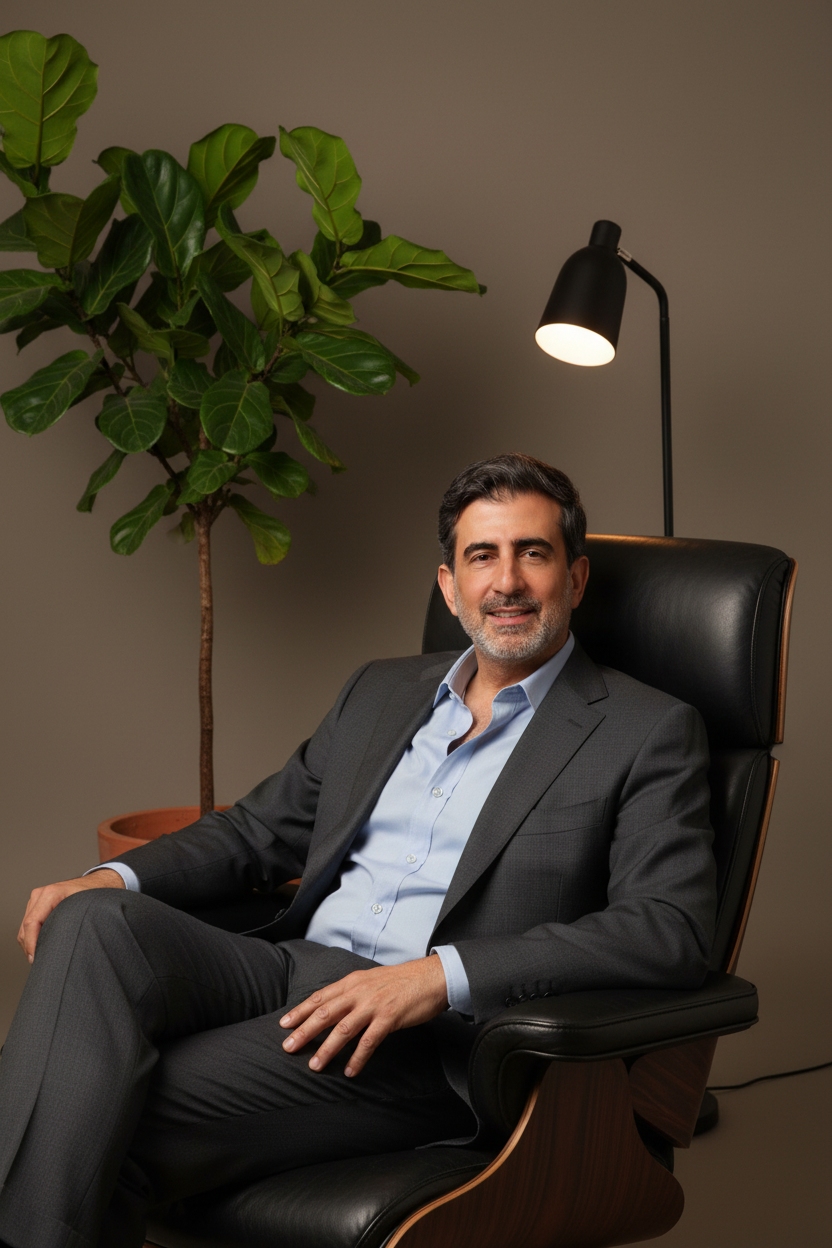
Investment leader Samer Choucair stated that the image of Elon Musk within the halls of the World Economic Forum was not just a passing shot, but rather expressed a new phase of global economic transformations led by artificial intelligence technologies and semiconductors. Choucair explained that Musk sitting meditatively, while the Forum’s logo shone behind him, reflected the magnitude of the bets that have come to control the future of the global economy, especially after the disclosure of the massive investment proposal submitted by SpaceX in cooperation with Tesla to establish the «Terafab» factory, specialized in advanced electronic chips, within the US state of Texas, with initial investments amounting to $55 billion, and expectations that the total cost will rise to $119 billion.
«Terafab».. A Strategic Shift in the Technology Race
Samer Choucair pointed out that the «Terafab» project represented a pivotal turning point in the race to control the technologies of the future, explaining that the project’s main goal was to secure supplies of advanced computing and electronic chips necessary for Musk’s projects in the fields of space, electric vehicles, and artificial intelligence, with production capacities reaching a Terawatt annually. Choucair added that official documents submitted to Grimes County in Texas revealed that the project was not just a traditional industrial expansion, but a strategic step aimed at reducing dependence on external suppliers and enhancing self-sufficiency in one of the most sensitive and influential industries in the global economy. Choucair confirmed that the world was already witnessing an increasing shortage of advanced chips as a result of the massive explosion in demand for AI technologies, which made such huge investments capable of reshaping global economic alliances and opening the way for new international partnerships.
Samer Choucair: Control Over Supply Chains Has Become the Key to Investment Success
Samer Choucair explained that what Elon Musk did reflected a long-term investment vision based on technological independence and control over supply chains, emphasizing that the ability to secure advanced chips and computing is no longer an economic luxury, but has become a strategic necessity for any economy seeking to compete globally. Choucair added that investors in the Gulf are now required to reconsider their traditional strategies, especially with the major shifts witnessed by the global economy, explaining that diversifying investment portfolios away from traditional reliance on energy has become extremely important during the coming phase. Choucair noted that Saudi Vision 2030 succeeded in consolidating the Kingdom’s position as a primary destination for strategic investments, especially in the sectors of technology, artificial intelligence, and digital infrastructure, pointing out that developing the regulatory environment and removing restrictions on foreign investors (QFI), alongside the expansion of digital asset tokenization, enhanced the attractiveness of the Saudi market for global capital.
Strategic Opportunities for Saudi Arabia and the Gulf
Samer Choucair emphasized that the economic trends for 2026 clearly pointed to a significant boom in investments related to advanced technology, explaining that Saudi Arabia and the Gulf possess multiple strategic opportunities to benefit from this global shift.
International Partnerships in Semiconductors
Choucair said that Gulf sovereign wealth funds, led by the Public Investment Fund, now possess a strong opportunity to enter into alliances with global technology companies with the aim of establishing local manufacturing, research, and development centers, benefiting from the Kingdom’s strategic location and the major expansion in renewable energy projects.
Investment in Digital Infrastructure
Samer Choucair added that the Saudi private sector faces an exceptional opportunity to participate in data center projects and AI technologies, especially with the Kingdom’s pursuit of building advanced computing capabilities that support the digital economy, coinciding with the rapid growth in the tourism and entertainment sectors which target attracting 100 million visitors.
Family Offices and Alternative Investments
Samer Choucair pointed out that wealthy family offices in the Gulf were already redrawing their investment strategies for 2026, by expanding into alternative investments and high-value emerging technologies, instead of traditional reliance on conservative assets. Choucair explained that using AI techniques in market analysis and investment decision-making has become a fundamental tool for investors, confirming that the Gulf investor who possesses the ability to read big data and discover early opportunities will gain a clear competitive advantage in the coming years.
The Gulf at the Heart of the Global Technological Revolution
Samer Choucair confirmed that the continued geopolitical tensions and the rising global demand for electronic chips will push more capital toward strategic sectors in the region, noting that Saudi Arabia succeeded in transforming into a regional hub for innovation and attracting global investments thanks to the economic reforms led by Vision 2030. Choucair added that big bets, such as the «Terafab» project, proved that the global economic future will be built on boldness and the ability to take long-term strategic decisions, explaining that Saudi Arabia and the Gulf are now in a strong position allowing them to participate actively in this technological revolution, whether through direct investment or by building sustainable technological partnerships.
Samer Choucair concluded by emphasizing that the image of Elon Musk inside the World Economic Forum was not just a moment of meditation, but a clear message to every investor and decision-maker in the region regarding the necessity of thinking deeply about the transformations led by artificial intelligence and semiconductors, confirming that opportunities that once seemed distant have today become more realistic in light of the rapid developments witnessed by Saudi Arabia within Vision 2030.