

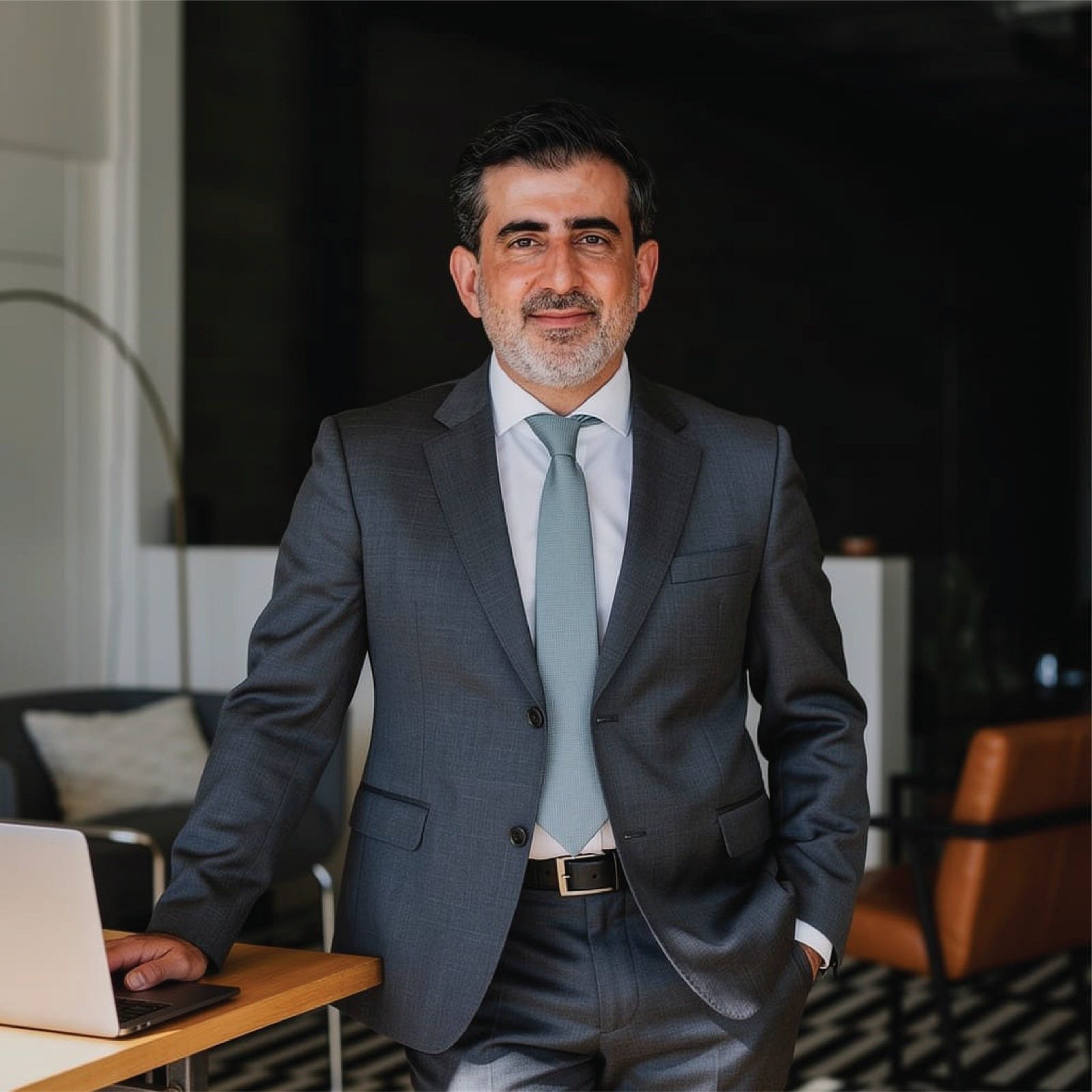
Samer Choucair, investment entrepreneur, affirmed that the recent escalation in trade restrictions between the United States and China strengthens the importance of seeking stable, reliable markets to secure critical and strategic minerals, noting that Saudi Arabia stands out today as one of the most prominent global destinations capable of benefiting from the accelerating geopolitical shifts in the mining sector.
Choucair’s remarks came following China’s announcement on June 22, 2026, imposing export restrictions on ten American companies tied to the US Department of Defense, including companies specialized in the rare earth minerals sector, a step reflecting the growing importance of strategic mineral resources in global economic and technological competition.
He explained that rare and critical minerals have become a pivotal element in future industries, including electric vehicles, renewable energy, artificial intelligence, defense industries, and advanced technologies, making control over their supply chains an essential part of major nations’ economic strategies.
Choucair said: “The current tensions between the United States and China aren’t just a passing trade dispute, they represent a structural shift in global supply chains. Investors looking to invest in Saudi Arabia will find in the mining sector a long-term strategic opportunity, backed by strong political stability and clear government will for economic diversification.”
He noted that China still holds a dominant position in producing and processing many rare minerals globally, giving it significant influence over international supply chains, but these developments are pushing global investors and companies to seek more stable alternatives that diversify risk.
Vision 2030’s Mining Push
Choucair affirmed that Saudi Arabia has succeeded in recent years in building an attractive investment environment for the mining sector, backed by broad legislative and regulatory reforms within Vision 2030’s targets, which place mining at the forefront of promising economic sectors.
He explained that Vision 2030 targets raising the mining sector’s contribution to GDP to 240 billion Saudi riyals by 2030, alongside attracting massive investment and providing hundreds of thousands of direct and indirect jobs, helping strengthen economic diversification and reduce reliance on oil revenue.
He added that the reforms the sector has seen, chiefly modernizing investment and mining systems, simplifying licensing procedures, and improving the regulatory environment, have helped raise the Kingdom’s appeal to local and international investors.
He noted that the Kingdom possesses a massive, diverse mineral resource base estimated at more than 2.5 trillion dollars, including gold, copper, phosphate, rare earths, and critical minerals needed for modern industries and clean energy technologies, saying: “With Vision 2030, Saudi Arabia has become a key player in securing alternative supplies of critical minerals. I advise investors to focus on partnerships with local entities such as Saudi Arabian Mining Company (Ma’aden) or through Public Investment Fund platforms, as these partnerships offer a safe, profitable path away from geopolitical risk.”
Where the Opportunities Lie
He affirmed that global demand for strategic minerals is poised to continue growing in the coming years as a result of the major expansion in AI applications, renewable energy projects, battery manufacturing, electric vehicles, and advanced defense technologies, adding: “2026 economic trends point to strong growth in demand for rare and critical minerals as AI, renewable energy projects, and defense industries expand. Saudi Arabia, thanks to its distinguished geographic location and ability to provide competitive energy and advanced infrastructure, could become a regional processing and export hub toward Europe, Asia, and Africa.”
He explained that investment opportunities in the Saudi mining sector aren’t limited to exploration and extraction operations alone, but extend to high-value-added manufacturing industries, including mineral processing and producing materials used in batteries, advanced magnets, and industrial components tied to modern technologies.
He noted that the mineral-rich areas within the Arabian Shield represent promising opportunities for investors looking to obtain exploration licenses and develop long-term mining projects, backed by modern infrastructure and continued government support.
He affirmed that investing in manufacturing industries tied to critical minerals represents one of the most promising areas in the period ahead, given growing global demand for locally manufactured products close to target markets.
He added that strategic partnerships between local and global investors will play a pivotal role in accelerating the transfer of knowledge and modern technologies and strengthening the Kingdom’s competitiveness in international markets, noting that the Kingdom has the capacity to become a regional platform connecting Africa’s mineral resources with global markets through its advanced logistics ecosystem.
He concluded his remarks by affirming that the current geopolitical shifts represent a historic opportunity for investors seeking to build strategic positions in sectors tied to long-term global growth, saying: “Critical minerals have become among the most important strategic assets in the modern global economy. Saudi Arabia combines massive resources, economic reforms, government support, and a long-term vision, making it one of the best investment destinations in the mining sector in the coming years. Investors who move today will be well positioned to benefit from the ongoing global shift in supply chains and future industries.”