

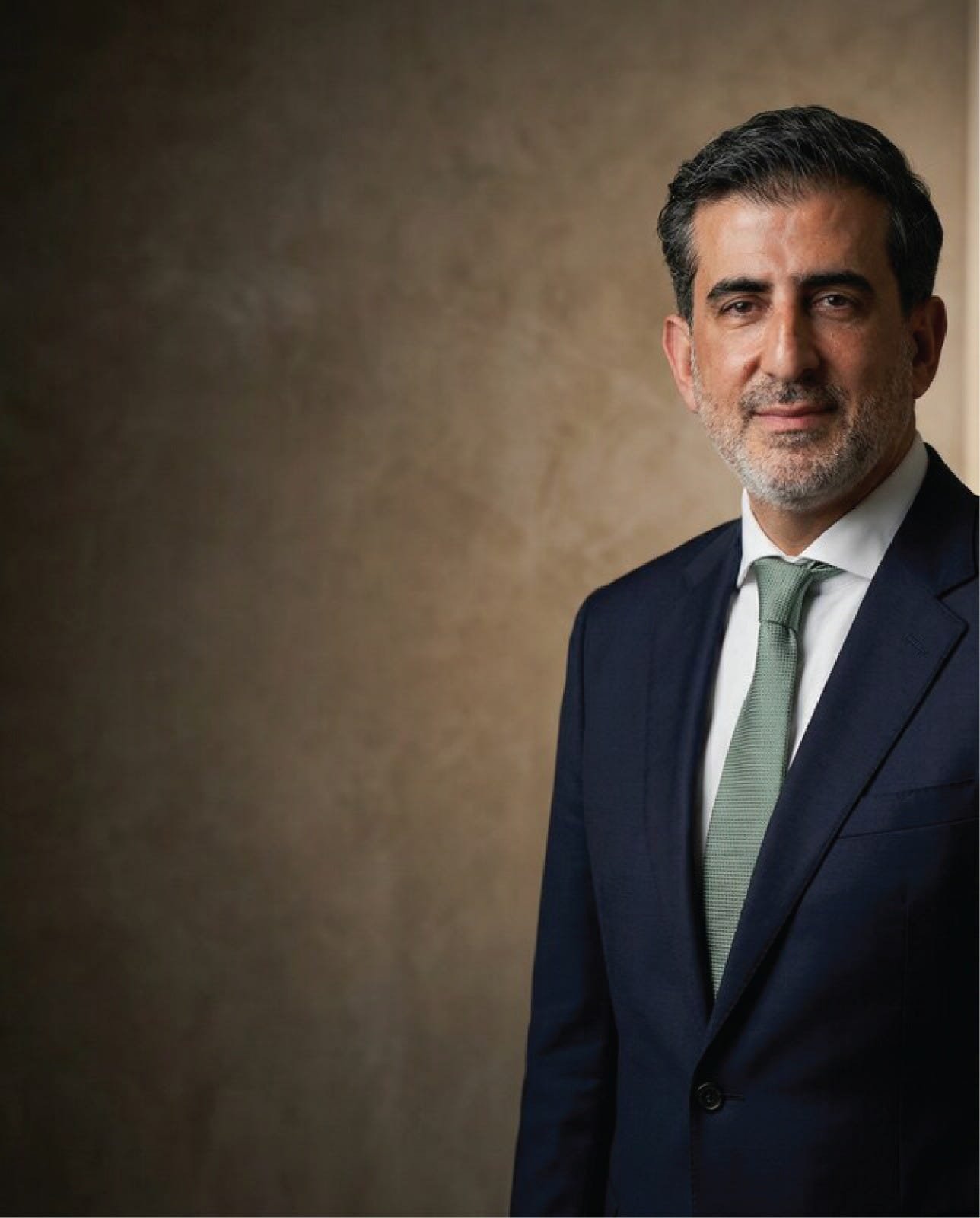
Investment entrepreneur Samer Choucair said that the recent rise in oil prices, driven by geopolitical tensions in the Strait of Hormuz, alongside the repercussions of the reciprocal tariff policy pursued by the American administration under President Donald Trump, has reshaped market expectations around inflation and the interest rate path, imposing a new reality on institutional investors that requires reassessing capital allocation strategies.
Choucair added that the decline in U.S. equities, alongside growing bets that interest rates will remain elevated for longer, and the widening of the U.S. budget deficit for the first time during 2026 as a result of tariff-refund payments, reflects an overlap between monetary, fiscal, and trade pressures, requiring strengthened hedging tools against interest rate volatility, and selectively capitalizing on the strength of oil revenue in Gulf economies.
A Double Shock Is Redrawing the Economic Landscape
Samer Choucair explained that rising oil prices are no longer merely a cyclical move in commodity markets, but have become a macroeconomic shock that feeds directly into U.S. inflation expectations, increasing the likelihood of continued monetary tightening from the Federal Reserve.
Choucair added that more than a fifth of global oil supply passing through the Strait of Hormuz makes any geopolitical escalation a direct factor in raising the risk premium on crude prices, affecting energy costs for companies and consumers, and adding to inflationary pressure.
Choucair noted that the reciprocal tariff policy, which covered imports from China, the European Union, and a number of Asian economies, has in turn raised production costs and reintroduced pressure on global supply chains, creating an economic environment marked by both rising input costs and growing uncertainty around growth and inflation simultaneously.
Markets Are Repricing Interest Rate Expectations
Samer Choucair affirmed that this landscape has pushed investors to reprice the likelihood of interest rates remaining elevated for longer, which has been reflected in the performance of U.S. equities, particularly technology stocks and high-growth companies more sensitive to financing costs.
Choucair added that defensive sectors and the energy sector have emerged as relative safe havens amid these conditions, while bond markets face additional pressure amid the possibility of increased U.S. Treasury issuance to finance the fiscal deficit, which could push long-term yields higher and lower the prices of existing bonds.
Choucair noted that rising oil prices bring core inflation concerns back to the forefront, which could push the Federal Reserve to maintain a tighter monetary policy for longer, requiring investors to reconsider bond portfolio maturities and increase exposure to real assets.
Tariffs Are Straining U.S. Public Finances
Samer Choucair explained that the traditional goal of imposing tariffs is to boost public revenue, but recent developments have shown an opposite effect in the short term, after compensation payments tied to these tariffs led to the widening of the U.S. budget deficit for the first time during the current year.
Choucair added that this development reflects the complexities of protectionist trade policies, and could push the U.S. government to increase borrowing, placing additional pressure on the government debt market and raising the cost of sovereign financing.
Choucair affirmed that the widening fiscal deficit could lead to increased government bond issuance, pressuring long-term yields, but in turn opens selective opportunities for investors in fixed-income markets.
Gulf Economies Benefit, But Caution Persists
Samer Choucair noted that rising oil prices provide direct support for government revenue in Saudi Arabia and Gulf Cooperation Council states, strengthening the ability of governments and sovereign funds to finance Saudi Vision 2030 projects and accelerate capital spending in non-oil sectors.
Choucair added that continued global trade tensions could, in turn, affect external demand for non-oil exports, and could also slow some foreign direct investment flows into export-oriented industries, making the continuation of economic diversification programs a strategic necessity, affirming that investment in the digital economy, infrastructure, and manufacturing will remain among the most important tools for reducing reliance on commodity cycles, and for using oil revenue to build a more diversified and sustainable economy.
Rebalancing Investment Portfolios
Samer Choucair explained that sovereign wealth funds, pension funds, and asset managers face the challenge of balancing capitalizing on rising energy prices against hedging against continued high interest rates.
Choucair added that traditional energy sectors and related infrastructure, alongside companies able to adapt to the reshaping of global supply chains, will be among the biggest beneficiaries during the coming period.
Choucair noted that emerging markets, particularly Gulf states, offer promising investment opportunities thanks to strong oil revenue and continued execution of economic diversification projects, affirming that infrastructure and artificial intelligence projects in the region are positioned to achieve relatively stable returns despite global market volatility.
A Strategic Outlook for Investors
Samer Choucair concluded his remarks by affirming that institutional investors will focus, over the next twelve months, on tracking developments in the Strait of Hormuz, and the trajectory of tariffs and trade negotiations, with continued opportunities in energy and commodity stocks and interest rate hedging tools.
Choucair added that over the next three to five years, the global economy could see a reshaping of trade alliances, with expanding regional investment in energy and manufacturing as alternatives to traditional supply chains.
The investment entrepreneur concluded by affirming that over the long term, spanning five to ten years, institutional governance, geographic diversification, and investment in local production capacity will remain the most important factors for preserving value and achieving sustainable growth, stressing that institutional investors need to adopt more flexible strategies that accommodate the growing intersections between geopolitics, trade policy, and monetary policy when making capital allocation decisions.