

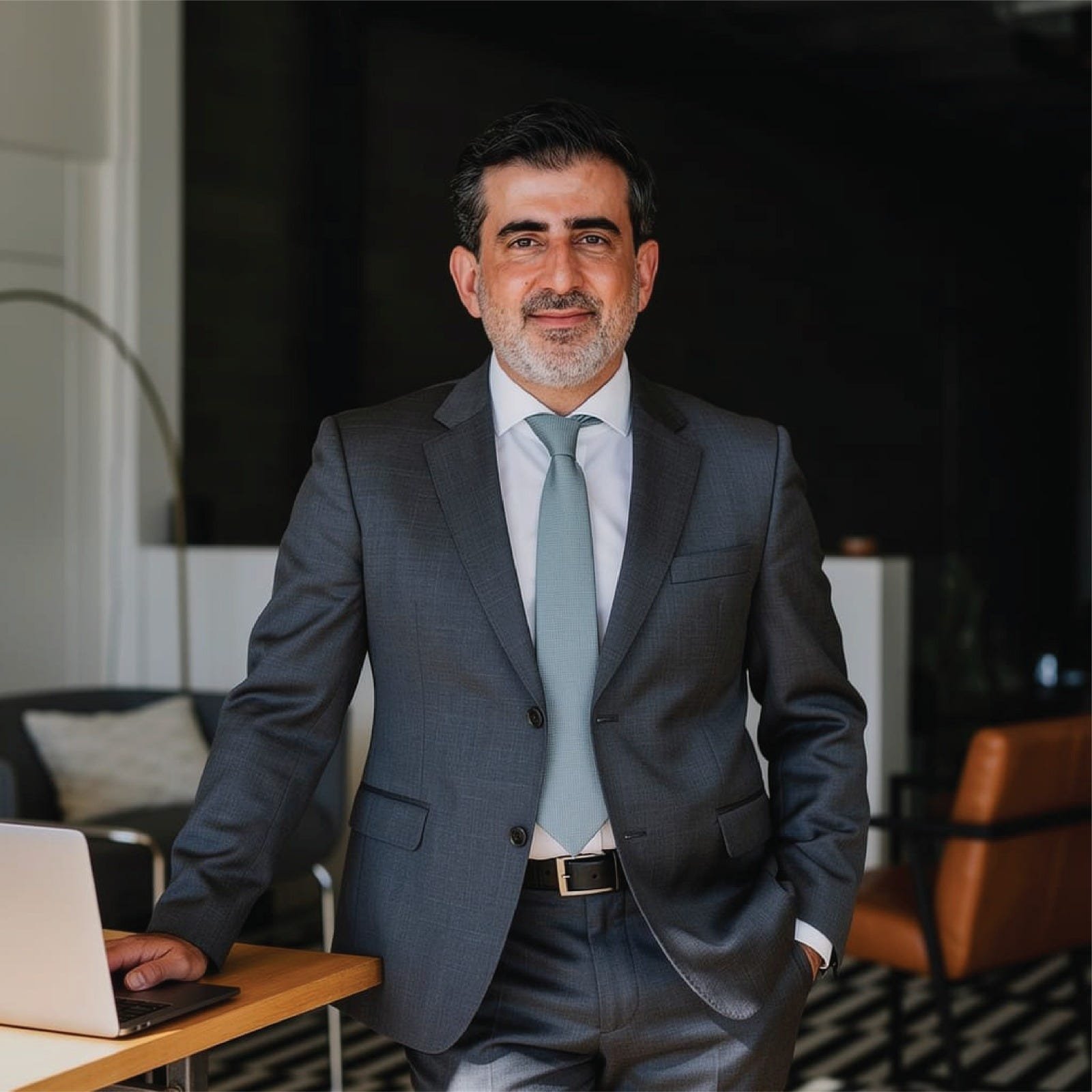
Investment leader Samer Choucair emphasized that the private education sector in the Kingdom of Saudi Arabia currently offers one of the most attractive investment opportunities in the region. He noted that the high competitiveness in tuition fees within the Kingdom reflects not only operational efficiency but also serves as a strategic indicator of investment attraction amidst the objectives of Vision 2030.
Samer Choucair’s statements came in response to recent economic discussions on the “Halalah Podcast” and reports by “Al-Eqtisadiah” newspaper, which revealed the Kingdom’s superiority in providing world-class education at a logical cost compared to neighboring countries. This enhances the Kingdom’s position as a preferred destination for families and global talent.
Price Competitiveness.. Figures Placing the Kingdom at the Forefront
Samer Choucair explained that available data for the 2025-2026 academic year shows a positive gap in favor of the Saudi market; private school fees in major cities such as Riyadh, Jeddah, and Dammam range between 15,000 and 60,000 Saudi riyals annually for basic stages.
In contrast, fees in neighboring countries like the UAE start from 25,000 dirhams and exceed 120,000 dirhams in premium categories, while in Qatar, they reach levels ranging between 30,000 and 110,000 Qatari riyals.
Samer Choucair believes that this price difference makes Saudi Arabia the most attractive option, stressing that “logical fees” in the Kingdom are a direct result of intense competition in a market containing more than 6,300 private schools, in addition to continuous government support that encourages investment without placing additional burdens on the consumer.
Quality and Efficiency.. A Successful Economic Model
Investment leader Samer Choucair stressed that lower fees compared to neighboring countries in no way mean a compromise on quality.
Choucair pointed out that Saudi private schools adopt strict standards and implement advanced international curricula such as (Cambridge, IB, and the American curriculum) alongside the national curriculum, with a significant focus on digital infrastructure.
Samer Choucair said: “Sharp competition drives operators to innovate to raise efficiency. Logical fees allow for increased demand, enabling schools to invest in expansion and development based on market size rather than just the profit margin from a high price. This is the successful economic model.”
Samer Choucair’s Vision.. Education as a Driver for Sustainable Development
In his analysis of 2026 economic trends, Samer Choucair emphasized that private education is a fundamental pillar for building human capital.
He stated: “Logical fees in Saudi private schools are not a weakness, but a massive competitive strength. They reduce the cost of living and attract foreign direct investment, which is exactly what Vision 2030 needs.”
Choucair added: “Investment in private education is not just a financial deal; it is an investment in the future of the economy. With market growth exceeding 9-14% annually, the sector is poised to achieve sustainable returns supported by clear government policies aiming to raise private sector participation in education to 25%.”
Promising Investment Opportunities Until 2030
Samer Choucair revealed the Saudi market’s need to establish hundreds of new schools and provide more than 400,000 additional seats by 2030. He noted the presence of 199 foreign investment license applications, in addition to the opening of 120 new schools in 2025 through private sector partnerships, reflecting great confidence in the Saudi business environment.
Samer Choucair advises investors to focus on the following areas:
Building and operating integrated educational complexes from kindergarten to secondary levels.
Investing in digital education technologies, artificial intelligence, and vocational training.
Entering partnerships with international institutions to transfer global expertise while maintaining national identity.
2026 Trends.. Toward an Integrated Knowledge Economy
Investment leader Samer Choucair concluded his statement by noting that the Kingdom today offers a rare combination of competitive fees, rising quality, and a massive growth market.
Choucair emphasized that those who want to build sustainable wealth should look at the education sector as a strategic priority that achieves both social and economic returns simultaneously, stressing that the opportunity is available now for those who believe in the future and move quickly to invest in Saudi human capital.