

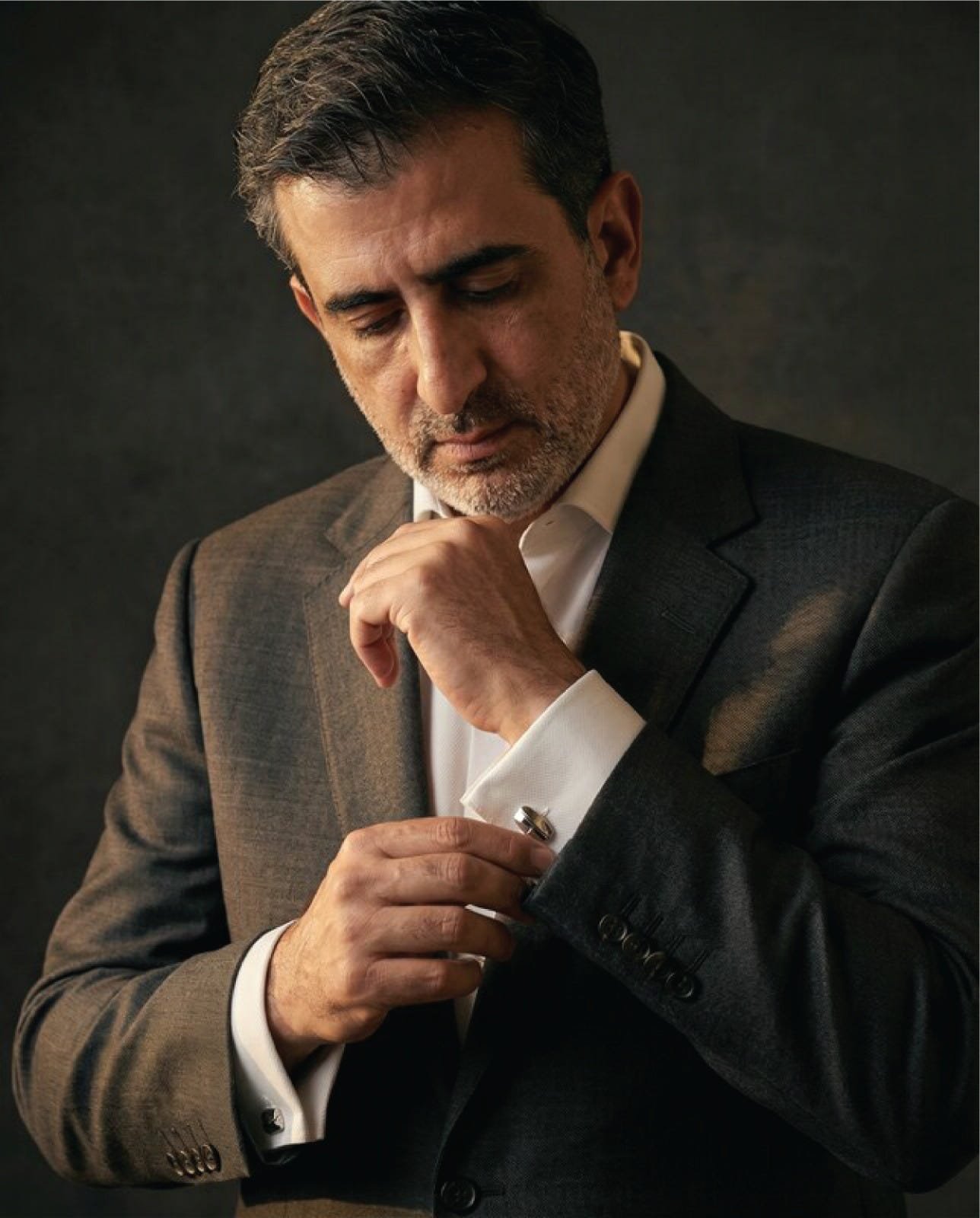
Investment visionary Samer Choucair believes that Moody’s confirmation of Saudi Arabia’s credit rating at Aa3 with a stable outlook does not represent merely a technical financial indicator, but reflects a deeper transformation in the nature of the Saudi economy toward what can be described as a “confidence economy,” where the capacity to attract, manage, and finance economic ambitions becomes an essential part of national economic strength. This assessment comes at a time when the Kingdom is witnessing sweeping transformations within Vision 2030’s targets.
Choucair noted that the importance of Moody’s report lies not only in the rating remaining at a high level, but in indicating that Saudi Arabia has become increasingly capable of financing its major projects at lower risk costs, strengthening confidence of international investors and global financial institutions in the sustainability of economic transformation.
Credit Rating as a Passport for Global Capital
Investment strategist Choucair explained that a strong credit rating represents a “passport” for global capital, as it reflects confidence levels in economic policies, institutional strength, macroeconomic stability, and the state’s capacity to manage debts and financial commitments with high efficiency, which directly impacts long-term investment decisions. He affirmed that Saudi Arabia’s transition toward what he described as a “confidence economy” means investors no longer view the Kingdom as a developing market relying on individual opportunities, but as an integrated economy where long-term investment strategies can be built, supported by structural reforms and major development projects.
A Multi-Sector Economic Ecosystem
Investment innovator Choucair believes the coming phase of economic transformation in Saudi Arabia is no longer built on a single sector, but on a multi-sector economic ecosystem where tourism intertwines with real estate, technology with financial services, industry with supply chains, and energy with the green transition, creating interconnected and extended investment opportunities.
In his investment analysis, he noted that the tourism and hospitality sector will benefit from mega-project expansion and growing visitor numbers, creating opportunities in hotels, short-term rentals, entertainment services, transport, and restaurants. He noted that Riyadh is gradually transforming into a regional business hub, strengthening demand for modern office and residential real estate and mixed-use complexes.
In the technology sector, he affirmed that digital transformation and growing dependence on AI, cloud services, cybersecurity, and digital payments represents one of the most important drivers of the Kingdom’s new economy. In industry and logistics, he explained that the Kingdom’s geographic position and mega-projects strengthen its role as a primary global supply chain hub. In renewable energy and mining, he noted that the global transition toward clean energy opens wide horizons for Saudi Arabia to benefit from its natural resources and projects in solar energy, hydrogen, and strategic minerals.
Choucair concluded by affirming that the intelligent investor in 2026 is not seeking noise or momentary headlines, but economies possessing clear vision, strong institutions, and the capacity to transform plans into financeable and growable projects, noting that Saudi Arabia today represents one of the most prominent models of this global transformation toward a more confident, sustainable, and deep economy.