

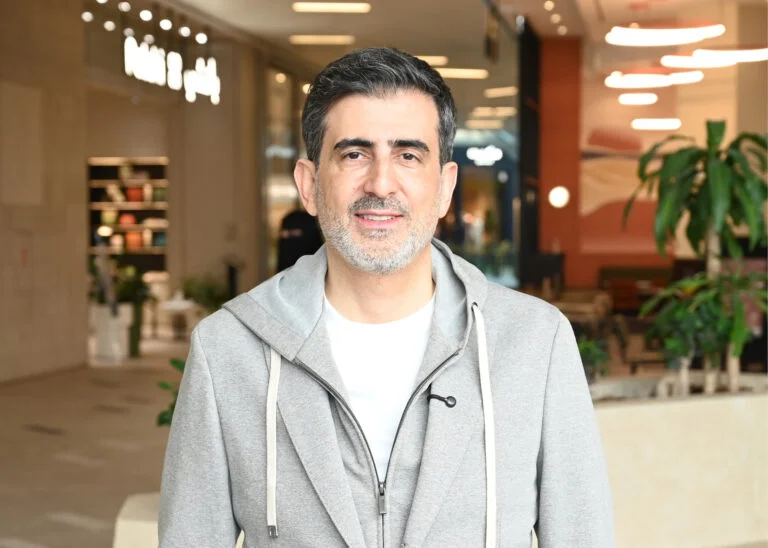
Investment strategist Samer Choucair stated that the remarkable transformation currently unfolding in Saudi Arabia’s tourism sector is far from an isolated domestic success. Rather, it represents a pivotal component of a broader global shift, led by emerging economies that are rapidly reinventing themselves and redefining the rules of economic growth.
Choucair highlighted that Saudi Arabia recorded 122 million domestic and international tourists, with total tourism spending exceeding $81 billion (approximately SAR 300 billion) in 2025 alone. This milestone comes at a time when nations worldwide are competing aggressively—investing hundreds of billions—to attract capital, experiences, and cultural relevance.
He raised critical questions regarding the Kingdom’s potential to surpass long-established tourism giants such as France and Spain within a single decade, while also examining why countries like the UAE, Vietnam, and Turkey are racing to replicate similar models. According to Choucair, the world is entering a “new golden age of tourism” in emerging markets—one where success is no longer anchored solely in historical heritage, but in the creation of modern, high-value, and immersive experiences.
Choucair emphasized that Saudi Arabia’s rapid growth is no coincidence. It is the direct outcome of Vision 2030, which has strategically positioned tourism as a cornerstone of economic diversification. Official 2025 figures reveal a 5% increase in tourist arrivals and a 6% rise in tourism expenditure compared to the previous year, underscoring the sector’s sustained momentum.
He further noted that since 2020, the Saudi market has attracted over 50 global brands and more than 40 major investors, while welcoming approximately 30 million international visitors, placing the Kingdom among the top ten most visited countries worldwide.
Commenting on these developments, Choucair stated:
“Saudi Arabia is not building a conventional tourism sector—it is constructing a fully integrated experience economy that seamlessly connects culture, entertainment, sustainability, and technology.”
He pointed to the Kingdom’s ambitious Giga Projects as some of the most transformative initiatives globally. These include NEOM, a futuristic city merging innovation with ultra-luxury tourism; the Red Sea Project, focused on regenerative tourism with a target of 50 hotels and 8,000 rooms by 2030; Qiddiya, envisioned as the global capital of entertainment; and Diriyah Gate, which reimagines heritage through a contemporary lens.
Choucair also provided a comparative analysis of Saudi Arabia’s model versus global competitors. He explained that while the UAE represents a model of rapid luxury maturity, Saudi Arabia is pursuing a scale-driven strategy, backed by massive investments and entirely new infrastructure. In contrast to Turkey, which capitalizes on existing demand, Saudi Arabia is creating demand from the ground up. Meanwhile, Vietnam focuses on cost-efficient tourism, whereas Saudi Arabia targets high-value tourism with greater spending per visitor.
When compared to traditional tourism powerhouses like France and Spain, Choucair noted that Saudi Arabia’s key advantage lies in its ability to design an integrated tourism ecosystem from scratch, supported by strategic government investment—unlike European destinations that rely heavily on established historical assets.
He identified three global tourism investment models:
- The heritage-based traditional model
- The fast-maturing luxury model
- The large-scale transformational model, exemplified by Saudi Arabia’s rapid sector development
Choucair stressed that the cornerstone of sustainability and profitability within the Saudi model lies in prioritizing visitor value over sheer volume.
He concluded by stating that Saudi Arabia currently represents the largest fully integrated tourism investment opportunity in the world, backed by unprecedented government support, with a target of 150 million visitors by 2030.
Choucair drew a parallel between this transformation and China’s industrial rise two decades ago—but with a modern focus on human experience and environmental sustainability. He emphasized that the Kingdom is not merely attracting tourists; it is creating a global investment destination that is reshaping the international economic map.
He urged investors to capitalize on emerging opportunities across hospitality, entertainment, tourism technology, and eco-tourism before the market reaches full maturity.