

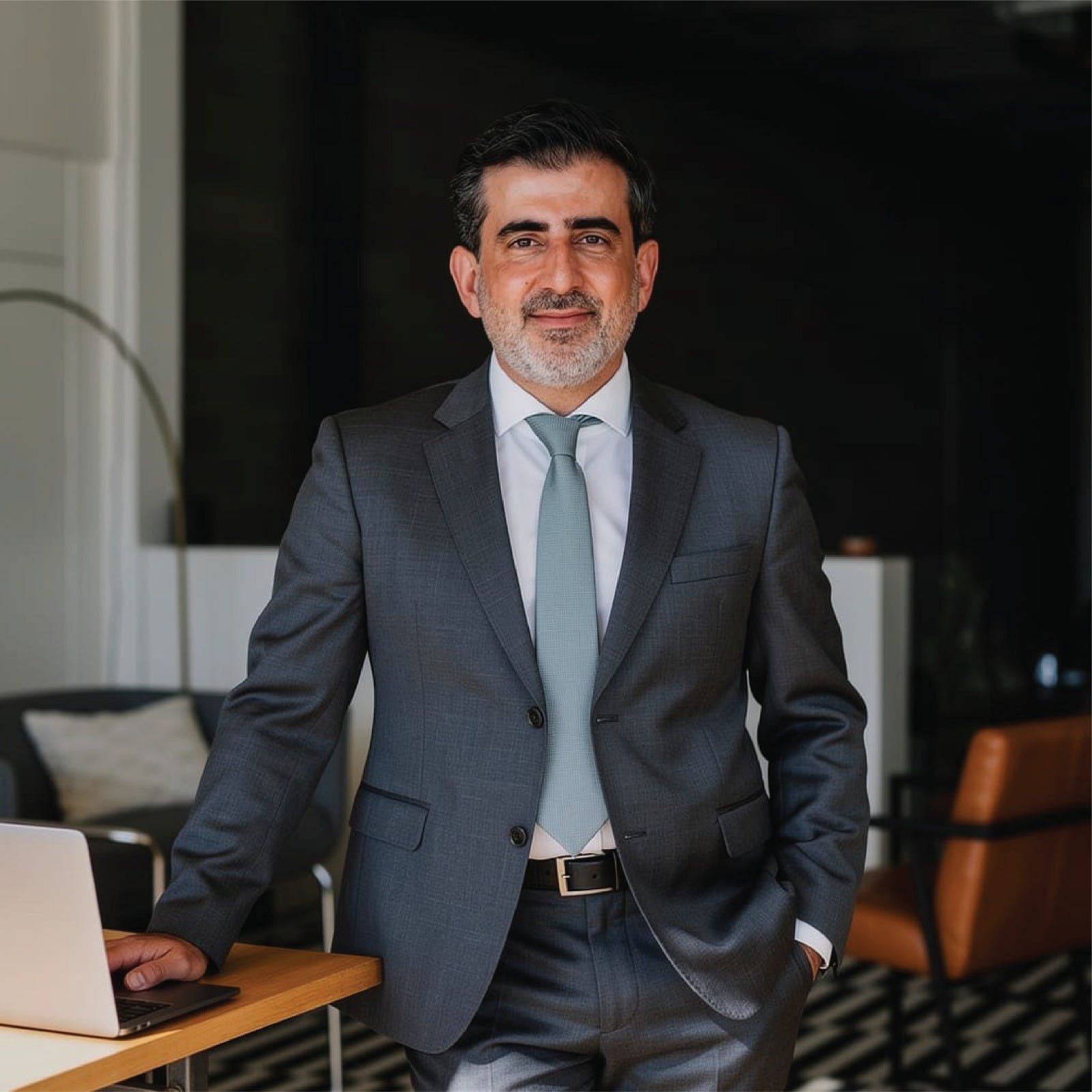
Investment entrepreneur Samer Choucair said that the recent developments in the US education sector, namely the resignation of Los Angeles Unified School District Superintendent Alberto Carvalho amid investigations tied to a 6.2 million dollar educational AI project, represent an important lesson for global markets about the necessity of combining technical innovation with effective governance when adopting AI solutions in educational institutions.
He explained that the case wasn’t just a technical setback for a chatbot project aimed at reducing student absenteeism, but revealed the importance of data protection and privacy and the need for clear regulatory frameworks before launching large-scale technical projects.
He added that this experience confirms that success in the educational AI sector doesn’t depend on speed of execution alone, but on governance quality, oversight, and the ability to build trust between educational institutions, students, and parents.
The Los Angeles Experience Offers Important Lessons for Global Markets
Samer Choucair noted that the investigations tied to AI startup “AllHere” have once again drawn attention to the potential risks educational institutions may face when relying on technical solutions not backed by adequate oversight frameworks.
He explained that challenges tied to data privacy and transparency have today become among the most important factors determining the success or failure of digital transformation projects in the education sector.
He added that these developments open the door for countries with strong regulatory structures to become attractive hubs for investment in safe, sustainable education technologies.
Saudi Arabia Advances With Steady Steps Toward AI-Based Education
Samer Choucair affirmed that Saudi Arabia offers a different model based on long-term strategic planning and clear institutional governance.
He explained that starting with the 2025-2026 academic year, artificial intelligence has become an essential part of the curriculum across various educational stages, from the early grades through secondary school, within a comprehensive national framework overseen by the Saudi Data and Artificial Intelligence Authority and the Ministry of Education.
He added that this initiative represents one of the core pillars of the human capability development program stemming from Saudi Vision 2030, which aims to prepare a generation capable of competing in the economy of the future.
He noted that the Kingdom has become among the first countries to implement AI education on a broad national scale, helping build an advanced knowledge and technical base supporting the targeted economic transformation.
A Fast-Growing Global Market and Increasing Investment Opportunities
Samer Choucair explained that the AI-in-education market is experiencing accelerating growth globally.
He added that the global market value currently exceeds 10 billion dollars, with expectations of reaching more than 40 billion dollars by 2030, at annual growth rates ranging between 30% and 40%.
He affirmed that Saudi Arabia possesses strong fundamentals to benefit from this growth, amid continued investment in digital infrastructure, curriculum development, national talent qualification, and support for startups operating in the education technology sector.
Exam Security and Smart Monitoring Represent a New Investment Opportunity
Samer Choucair noted that the widespread adoption of generative AI tools has created new challenges for educational institutions, particularly regarding academic integrity and electronic testing.
He explained that smart monitoring technologies, biometric identity verification, and plagiarism detection systems have today become capable of countering many forms of cheating and manipulation with increasing efficiency.
He added that this shift opens the door to major investment opportunities in developing technical solutions specialized in digital exam security and electronic test management.
He affirmed that demand for these solutions won’t be limited to the Saudi market, but will extend to Gulf markets and emerging markets seeking to build reliable, secure digital education systems.
Personalized Learning Platforms Support the Future of Education
Samer Choucair explained that one of the most important future trends involves developing AI-powered personalized learning platforms that provide educational content suited to each student’s abilities and educational needs.
He added that these platforms offer major opportunities for local and international technology companies, particularly if designed to align with national curricula and the cultural identity of target communities, noting that combining modern technology with local content will be a decisive factor in the success of digital education projects in the coming years.
Teacher Training Is a Core Pillar of Educational Transformation
Samer Choucair affirmed that technology alone isn’t enough to achieve the desired transformation in the education sector.
He explained that the teacher will remain the most important element in the educational process, making teacher training and qualification programs on using AI tools among the most prominent promising investment opportunities in the period ahead.
He added that investing in developing human talent achieves a long-term impact that exceeds investing in technology alone, because it ensures optimal use of these tools within the educational environment.
Artificial Intelligence as a Key Economic Driver Under Vision 2030
Samer Choucair noted that artificial intelligence has become one of the key drivers of global economic growth.
He explained that PwC estimates point to AI potentially contributing roughly 135 billion dollars to the Saudi economy by 2030, reflecting the scale of opportunities available to investors and companies operating in this field.
He added that education represents the core gateway to achieving this transformation, because building the knowledge economy begins with developing digital skills and technical capabilities among new generations.
He affirmed that the Kingdom possesses a strong investment environment backed by modern legislation, government support, and advanced digital infrastructure, making it one of the most attractive markets for investment in education technology and artificial intelligence.
Samer Choucair’s Recommendations for Investors in 2026
Samer Choucair explained that investors looking to benefit from the expected growth in the digital education sector should focus on several strategic areas including exam security and smart monitoring and digital verification solutions, personalized learning platforms aligned with Saudi curricula, teacher training and qualification programs for using artificial intelligence, education technology companies committed to the highest standards of privacy and data protection, and strategic partnerships with government entities and educational institutions.
He added that companies that succeed in combining technical innovation with regulatory compliance will be best positioned to achieve sustainable growth in the coming years.
Saudi Arabia Cements Its Position as a Regional Education Technology Hub
He concluded his remarks by affirming that what happened in Los Angeles represents a reminder of the importance of governance and transparency in AI projects, but doesn’t diminish the enormous potential this sector offers.
He explained that Saudi Arabia has succeeded in building a balanced model that combines technical expansion with effective regulation, strengthening its position as a regional and global hub for modern education technologies, affirming that investors who move early toward opportunities tied to educational AI will be well positioned to benefit from the major transformation underway in the sector during 2026 and beyond.