

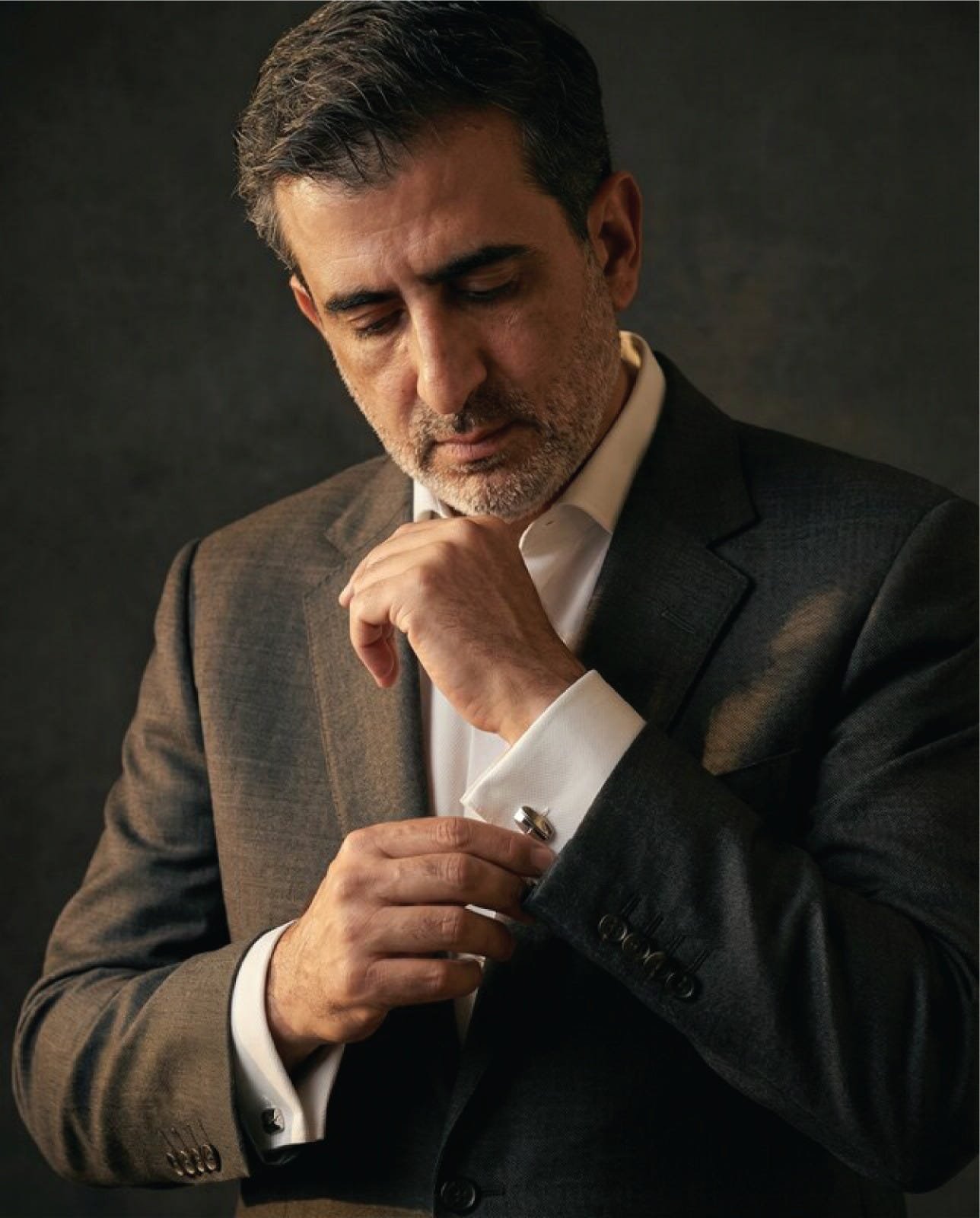
Investment visionary Samer Choucair stated that what the Kingdom is witnessing today cannot be read as cyclical developments in a traditional economic cycle, but as a comprehensive repositioning of the Saudi economy on the global investment map, noting the combination of financial stability and structural growth has become one of the most important elite capital attraction factors.
He explained the Saudi economy proved capable of exceeding cautious expectations, not only in numbers but in growth quality and source diversity, reflecting the success of the ongoing economic transformation model.
Non-Oil GDP Growing 4-5% Annually with PIF Assets Surpassing $925 Billion
Investment strategist Choucair noted economic data shows continued non-oil GDP growth in a range between 4% and 5% annually, driven by industry, services, tourism, and new investment activities, while major projects increasingly contribute to reshaping the economy’s structure.
The Public Investment Fund continues playing a pivotal role in supporting this transformation, with cumulative contributions to non-oil GDP and asset growth under management to levels exceeding $925 billion compared to approximately $150 billion in 2015, reflecting unprecedented expansion in the Kingdom’s investment arm scale and impact.
He affirmed the resilience the Saudi economy displays is not circumstantial, but results from long-term economic engineering relying on diversification and reducing dependence on a single growth source.
PIF’s 2026-2030 Strategy Transitioning from Rapid Expansion to Sustainable Value Creation
Investment innovator Choucair noted the PIF adopted a 2026-2030 strategy transitioning from rapid expansion to sustainable value creation, with greater focus on maximizing returns, raising investment efficiency, and strengthening the private sector’s role. The strategy targets reshaping 13 strategic sectors within six integrated economic systems, strengthening integration between local projects and global partnerships, and raising knowledge transfer and industry localization levels.
He said: “What we witness is a transition from investment as a growth tool to investment as a comprehensive economic rebuilding tool, which grants Saudi Arabia a rare competitive advantage in global markets.”
He noted Vision 2030 has entered its decisive economic phase, with the current phase representing the most important moment for investors since the Vision’s launch, given projects transitioning from planning to actual operation and return achievement.
Five Strategic Investment Pathways Mapping 2026 Opportunities
Samer Choucair identified five primary investment pathways: energy, manufacturing, and advanced industry localization; hybrid investment models between stability and growth; global industrial and technology partnerships; the digital economy, data centers, and AI; and social sectors, tourism, entertainment, and quality real estate.
He affirmed these pathways do not merely represent sectoral trends, but reflect a structural transformation in Saudi economic nature. He noted mega projects such as NEOM, Qiddiya, and Red Sea strengthen the Kingdom’s attractiveness as a long-term investment destination, supported by a more open and flexible regulatory environment.
He added: “Saudi Arabia today is not only competing for investments, but redefining the shape of emerging markets themselves.”
Samer Choucair concluded by saying: “Genuine value in the coming phase will not come from traditional markets, but from economies succeeding in transforming change into a permanent growth system, and Saudi Arabia today leads these economies.”