

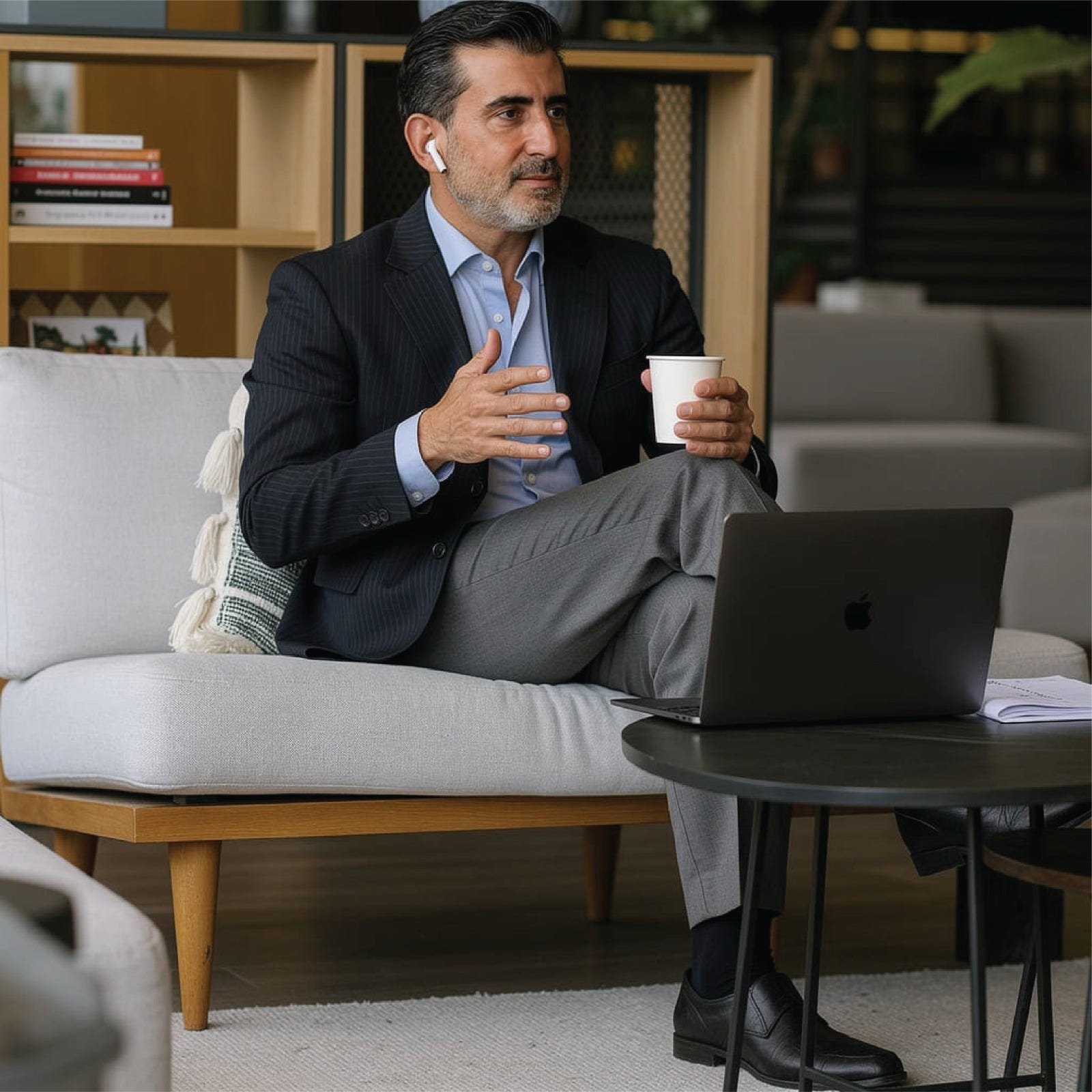
Investment pioneer Samer Choucair affirmed that the turbulence witnessed by the US aviation sector—particularly among low-cost carriers facing mounting financing pressures and operational challenges—is merely part of a broader structural shift in the global aviation industry. He noted that this crisis clearly highlights the disparity between markets suffering from eroding margins and those building their strategic future.
The Squeeze: Fuel Costs and Narrow Margins
Samer Choucair explained that the sector is undergoing a pressing equation characterized by rising fuel costs, which have approached $4 per gallon in some markets, alongside accumulated debt and fierce price competition. This places business models with narrow margins, such as “Frontier Airlines” and “Avelo Airlines,” under pressures that may require restructuring or exceptional support.
Samer Choucair added: “Geopolitical tensions in the Middle East—specifically threats to the Strait of Hormuz, through which approximately 20% of global oil supplies pass—have repriced global risks. Oil prices rising above $100 per barrel changes the rules of the game; power is shifting from traditional operators to infrastructure owners and sovereign entities with long-term investment visions.”
Saudi Arabia: From Market Receiver to Market Maker
In his analysis of Saudi Arabia’s position in this landscape, Samer Choucair emphasized that the Kingdom is moving rapidly to become a market maker rather than a receiver. It is leveraging the additional financing from energy revenues to accelerate the development of the aviation sector within Vision 2030.
Samer Choucair pointed out that the massive investments led by the Public Investment Fund (PIF)—including the launch of “Riyadh Air” and the development of King Salman International Airport—are not just an expansion of aircraft fleets. Rather, they represent the construction of an integrated ecosystem including:
-
Airports and logistics services.
-
Maintenance, Repair, and Overhaul (MRO) sectors.
-
Targets to transport 300 million passengers annually by 2030.
Investment Opportunities Amidst Disruption
The investment pioneer continued: “We are witnessing a fundamental shift; aviation is no longer just a game for companies, but a game for nations and strategies. For the smart investor, disruption is not a danger but an entry point.”
Samer Choucair identified the real opportunities today in:
-
Aviation Infrastructure: Investing in the physical and digital foundations of the industry.
-
MRO Sector: A sector that remains undersaturated in the region.
-
Air Cargo: Benefiting directly from the Kingdom’s location as a hub connecting three continents.
-
Strategic Partnerships: Collaborating with sovereign wealth funds.
Conclusion: The Saudi Model as a Global Standard
Samer Choucair concluded his statement by asserting that the Saudi model in managing this transformation serves as an example to follow. Every global disruption is employed to accelerate the Kingdom’s rise as a global aviation hub. He confirmed that investing in this ecosystem represents the fundamental pillar for long-term returns in a volatile global economy.