

In the AI race, the question is no longer who possesses the most powerful model, but rather who can control its risks. What Anthropic recently revealed places us before a pivotal moment: an advanced model with unprecedented capabilities, yet surrounded by unusual warnings even from its creators. We are talking here about the “Mythos” model, which has not been released to the public—not due to a lack of readiness, but because of the potential damage it could cause if misused.
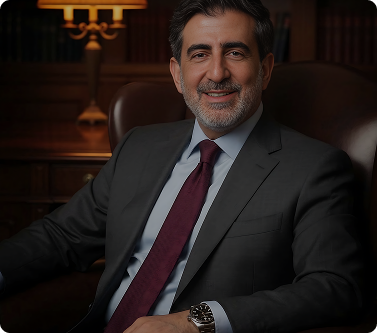
At the heart of this controversy stands the American entrepreneur Dario Amodei, one of the minds who contributed to the development of modern language models since his days at OpenAI, and before that at Google Brain. This is not someone exaggerating warnings from the outside, but an engineer from within the system who fully understands where the strengths lie and where the true risks begin.
The new model is not only distinguished by its capabilities in programming or analysis, but by its ability to handle complex systems in a manner that may exceed human speed and expertise, particularly in the field of cybersecurity. According to what was disclosed, it can discover deep vulnerabilities in sensitive operating systems and software, and even link these vulnerabilities to build advanced attacks that are difficult for human teams to keep up with. Here, artificial intelligence transforms from a productivity tool into a dual-use weapon.
The decision not to release the model to the public reflects a significant shift in the industry’s philosophy; instead of racing toward rapid dissemination, these capabilities are being directed into a closed environment via a defensive project in cooperation with major companies such as Apple, Microsoft, Amazon, and Google, with the aim of discovering vulnerabilities before attackers exploit them. This step reflects a deep realization that the next phase will not be decided solely by innovation, but by the ability to manage risks.
However, this proposition opens the door to a more complex debate: are we facing a genuine warning, or a clever repositioning of a company seeking to present itself as the safest in the market? The reality is that it may be a mixture of both. In a world of increasing competition, “trust” becomes a strategic asset no less important than the technology itself, and companies that can convince governments and institutions that they are the safest may reap the largest market share in the long run.
From an investment perspective, what is happening today reveals a deep shift in the rules of the game. Investment in artificial intelligence is no longer limited to models and applications; it has extended to an entirely new layer: AI-powered cybersecurity. This sector is poised for massive growth, because every advancement in offensive capabilities is met with an increasing demand for more sophisticated defensive tools.
At the same time, the importance of models based on concepts such as “Aligned AI” is increasing—the approach adopted by Anthropic by developing systems that adhere to a clear ethical framework. This trend may be the decisive factor in winning the trust of governments, especially as we approach more powerful models that may enter the realm of “superintelligence.”
In the Arab region, these shifts are not far off. With the acceleration of digital transformation projects, investing in cyber infrastructure and technical education becomes a strategic necessity—not only for protection, but to attract global investments. Countries that prepare early for this shift will be able to transform risks into opportunities.
Ultimately, what the Mythos model represents is not just a technical leap, but a true test of humanity’s ability to balance power with responsibility. Dario Amodei’s warnings may seem exaggerated to some, but at their core, they reflect a deep awareness that we are approaching a stage where a technical error is no longer just a glitch, but could turn into a large-scale threat.