

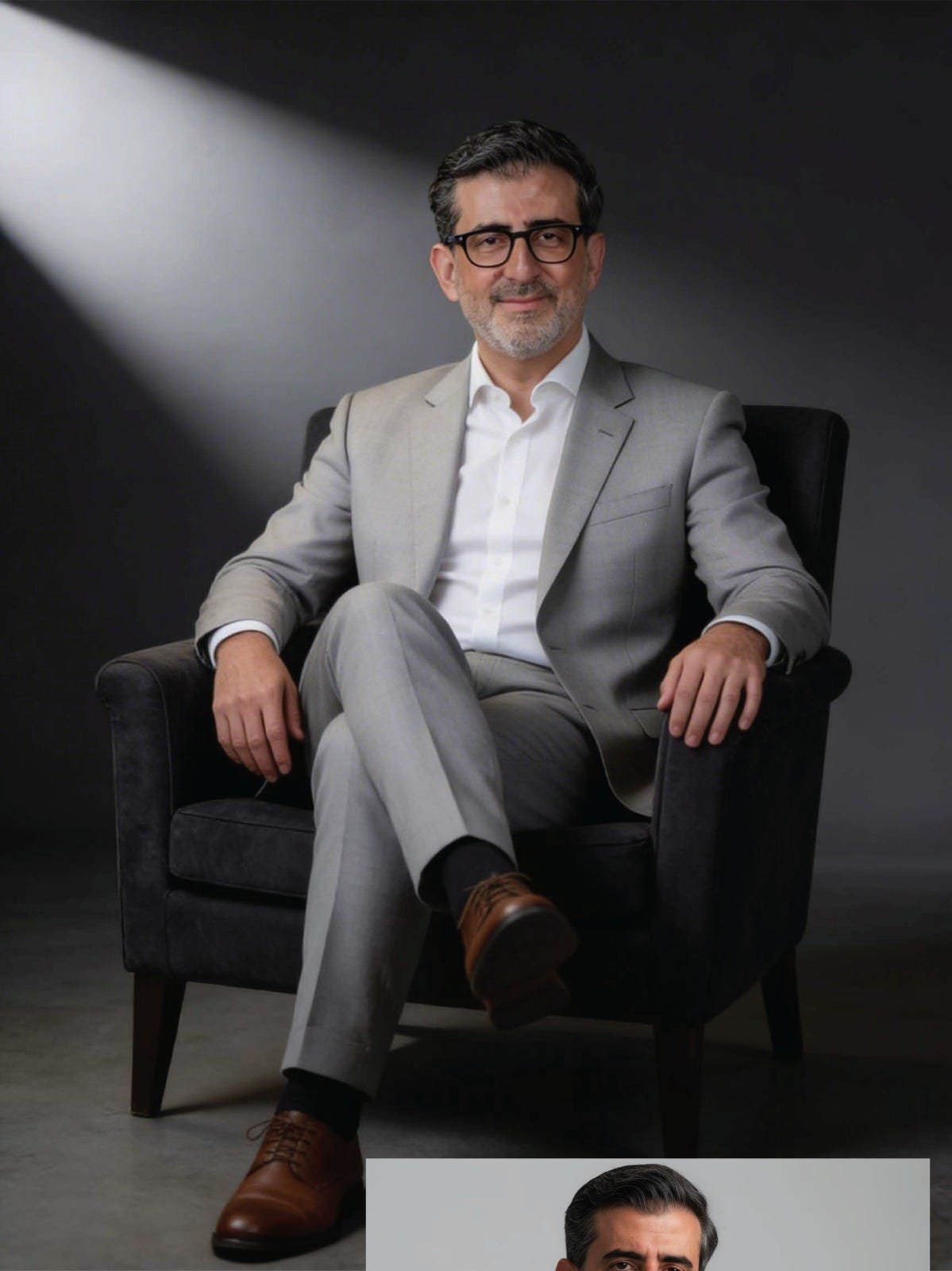
Investment entrepreneur Samer Choucair said that global markets are entering a new phase in which artificial intelligence technologies have become an essential part of risk analysis and investment decision-making, after major Wall Street financial institutions began using advanced models to attempt to predict geopolitical conflicts before they occur, in a manner similar to models used for predicting earthquakes and natural disasters.
Choucair explained that this shift comes at a time when the impact of global violence and conflict represents a massive economic burden reaching roughly 22 trillion dollars, exceeding 10% of the size of the global economy, making understanding geopolitical risk an essential factor for investors seeking stability and growth.
He added that these developments don’t just represent a new challenge for markets, but create important investment opportunities for countries with a long-term vision and an economic structure capable of adapting, led by Saudi Arabia under Vision 2030’s targets.
*Wall Street and AI, A New Era of Risk Forecasting*
Samer Choucair noted that the traditional question in markets had always been “what if war breaks out?”, but the current development has shifted the discussion to a more advanced level: “where and when could it start?”
He explained that modern AI models have become capable of analyzing massive amounts of political, economic, and social data, aiming to detect patterns and early signals that might indicate the likelihood of crises or conflicts.
He added that one recent model that drew widespread attention gave Iran a 66% probability of conflict roughly a month and a half before it occurred, reflecting the growing capabilities of these technologies in risk analysis.
He affirmed that financial institutions and major companies have begun viewing AI as a strategic tool for portfolio management, not just an operational technology.
*The Economic Cost of Conflict and Its Market Impact*
Samer Choucair explained that the economic cost of global violence and conflict is estimated at roughly 22 trillion dollars, including military spending, productivity losses, supply chain disruptions, and direct effects on commodity and energy prices.
He added that energy markets are among the most sensitive to geopolitical developments, with any escalation leading to volatility in oil prices and global trade movement.
He noted that Saudi Arabia holds an important strategic position in this landscape, thanks to its standing in the global energy market, its economic stability, and its flexible production capacity.
He affirmed that these factors make Saudi Arabia an attractive investment destination for investors seeking a balance between return and stability.
*Samer Choucair’s View, AI as an Investment Opportunity, Not Just an Analysis Tool*
Samer Choucair said that AI has become an investment opportunity in its own right, alongside its role in improving risk management.
He added that AI has become an essential tool for forecasting geopolitical risk with greater precision, helping investors make more informed decisions and protect their portfolios. At the same time, this development opens new investment horizons in the technology and AI sector itself.
He explained that Saudi Arabia has placed advanced technologies at the heart of its future plans under Vision 2030, noting that investment in AI and digital infrastructure has become a national priority, providing significant opportunities for investors seeking long-term growth sectors.
*Saudi Arabia and Vision 2030, Building a Technology and Innovation Economy*
Samer Choucair added that under Vision 2030, investment in AI and advanced technologies has become a national priority in Saudi Arabia, creating exceptional opportunities for investors seeking long-term growth backed by a clear government strategy and a strong Public Investment Fund.
He explained that the Saudi economic transformation doesn’t rely on a single sector, but is built on an integrated ecosystem encompassing technology, energy, manufacturing, and logistics, noting that the Public Investment Fund’s role in supporting major projects, transferring knowledge, and developing new sectors strengthens the Kingdom’s position as a regional and global investment hub.
*The Hybrid Investment Model, A Strategy for Navigating Global Volatility*
Samer Choucair affirmed the importance of adopting a balanced investment model that combines stable sectors with future-facing ones.
Choucair said: “I advise investors to adopt a hybrid investment model that balances stable sectors like energy and manufacturing with emerging sectors like AI, mining, and logistics. This balance provides better protection during periods of geopolitical volatility and achieves sustainable growth.”
He added that the smart investor in the period ahead won’t just be looking for the highest return, but for assets capable of withstanding global shifts.
*International Partnerships and Strengthening Saudi Arabia’s Investment Standing*
Samer Choucair noted that strengthening international strategic partnerships, particularly with China and global markets, opens new opportunities for the Kingdom in technology transfer and industrial localization.
He added that with strengthened strategic partnerships and the Public Investment Fund’s pivotal role in knowledge transfer and industrial localization, Saudi Arabia is emerging as a global hub attracting investment in renewable energy, advanced manufacturing, and technology, affirming that these opportunities are available to investors with a long-term vision and the capacity to invest in major shifts.
*2026 Economic Trends, The Sectors Most Attractive to Investment*
Samer Choucair explained that economic shifts during 2026 are focused on a set of strategic sectors:
*Energy and Manufacturing*
Includes opportunities in renewable energy localization and green hydrogen projects, alongside expanding investment in future industries.
*AI and Technology*
Growing opportunities in data centers, AIoT technologies, and smart digital solutions.
*Mining and Strategic Materials*
Capitalizing on mineral wealth represents an important opportunity within economic diversification plans.
*Logistics and Ports*
Major projects strengthen the Gulf’s position as a global trade hub connecting markets.
*Capital Markets*
Developing the Saudi stock market (Tadawul) and attracting foreign investment helps deepen the local investment environment.
*Samer Choucair’s Recommendations for Investors*
Samer Choucair concluded his outlook with a set of practical recommendations:
– Following geopolitical developments using advanced analytical tools.
– Focusing on investment opportunities tied to Vision 2030.
– Building hybrid portfolios that combine stability and growth.