

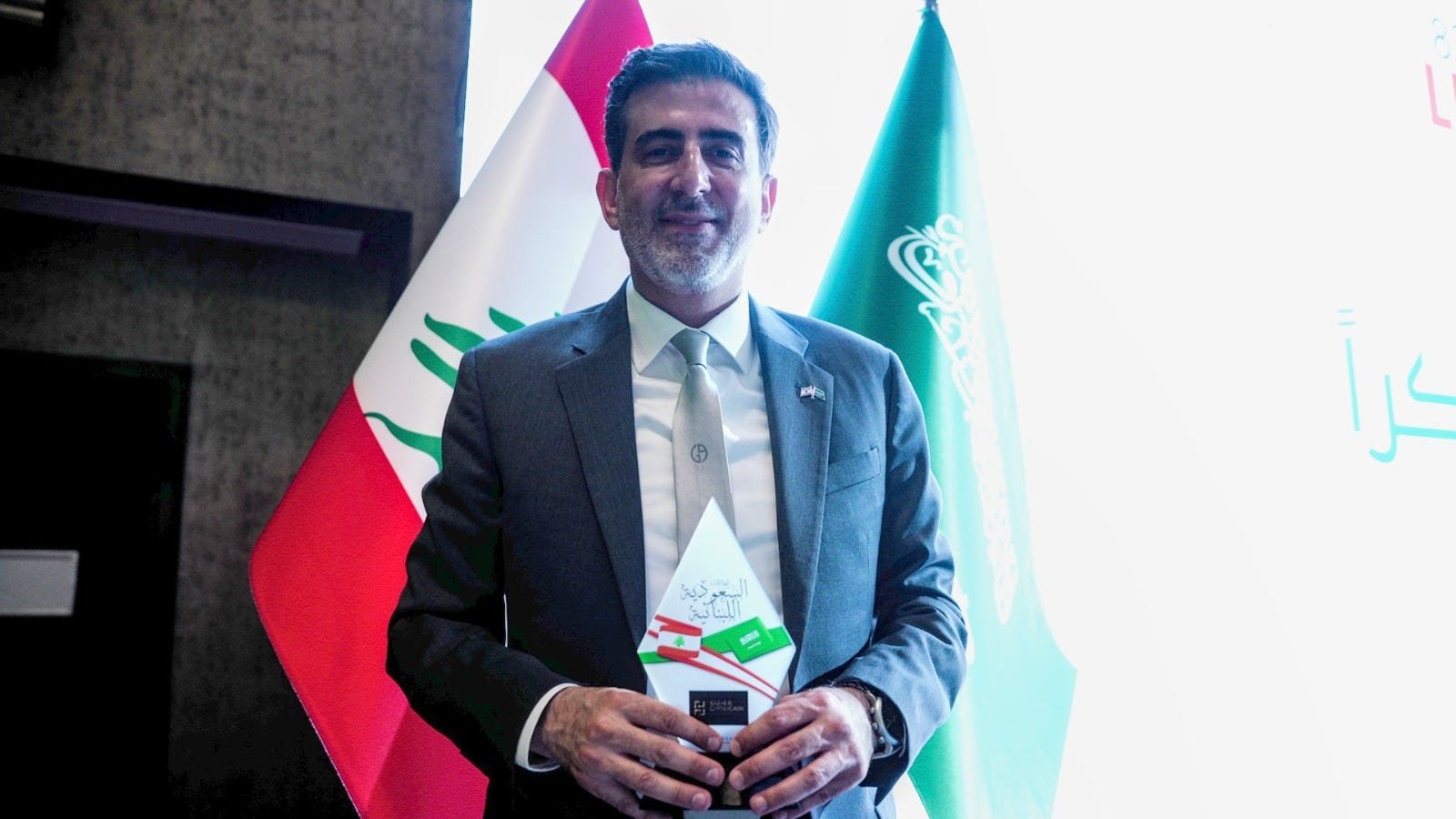
Samer Choucair, investment entrepreneur, affirmed that the story of Taiwanese brothers Biing-Seng Wu and Jordan Wu represents an inspiring global model of how fortunes are built through deep specialization and far-sighted investment vision, noting that Saudi Arabia today has a historic opportunity to benefit from global technological shifts and build an advanced position in the economy of the future.
Choucair said that the dazzling image of electronic chips glowing in multiple colors isn’t just a visually striking scene, but reflects an exceptional success story in which engineering precision and strategic vision turned into wealth exceeding a billion dollars, explaining that this story opens the door to a deeper understanding of the promising investment opportunities awaiting the Kingdom in the coming years under Saudi Vision 2030’s targets.
He explained that brothers Biing-Seng Wu, chairman of the board, and Jordan Wu, CEO, founded Himax Technologies in Taiwan twenty-five years ago, a company specialized in developing display driver ICs, the chips responsible for controlling every pixel within the screen and determining lighting timing, colors, and motion, without which no screen can function.
He noted that Himax Technologies today holds roughly 40% of the global market for display driver chips used in the automotive sector, and supplies prestigious global brands such as Ferrari, Porsche, Lamborghini, and Volkswagen, in addition to its use in smartwatches and various consumer electronics.
He added that the company’s exceptional performance during 2026 was reflected in the value of its shares listed in the United States, which more than doubled, raising the value of the brothers’ combined 24% stake, pushing them into the billionaires’ club with a combined fortune estimated at roughly a billion dollars according to the Bloomberg Billionaires Index.
He affirmed that this story isn’t a product of chance or luck, but the result of early investment vision in a specialized sector that was far from the spotlight compared to global focus on giant AI chips, pointing out that the accelerating expansion in electric vehicles, self-driving technologies, and ultra-high-definition screens has made these specialized chips an essential component of the modern digital economy.
He explained that the most important lesson from the Wu brothers’ experience is that great fortunes are often built in specialized sectors that appear small or marginal at the start, noting that investment success doesn’t necessarily require entering direct competition with major players in global markets, but depends on discovering unseen opportunities that demand for will increase in the future.
Choucair said: “The Wu brothers’ story reminds us that the greatest fortunes arise from innovation in the details others ignore. In Saudi Arabia today, we have a historic opportunity to be part of building the future, not just consuming it.”
He added: “Investing in specialized technology, whether in chips, displays, or smart systems, is no longer an option, it’s a strategic necessity. Vision 2030 opens enormous doors for those who possess boldness and knowledge.”
Saudi Arabia’s Technical Infrastructure Needs
Choucair explained that Saudi Arabia is today carrying out one of the largest economic and technological transformation processes in the world through Vision 2030, led by His Royal Highness Crown Prince Mohammed bin Salman, which aims to build a diverse economy based on knowledge, technology, and innovation.
He noted that major national projects such as NEOM, smart cities, electric vehicles, AI technologies, and advanced industries all need advanced technical infrastructure encompassing electronic chips, smart displays, and integrated electronic systems, creating promising investment opportunities for investors and entrepreneurs.
He affirmed that the Public Investment Fund is leading massive strategic investments in technology and advanced manufacturing, preparing an attractive investment environment that allows Saudi and Gulf investors to participate in global value chains tied to future technologies.
He added that investment opportunities during 2026 and beyond aren’t limited to traditional oil and energy sectors, but extend to future automotive sectors, smart cities, digital entertainment, technical education, and advanced technologies, sectors poised to achieve high growth rates in the coming years.
Where the Opportunities Lie
Choucair said: “I advise investors to diversify smartly by combining investment in leading global semiconductor companies, participation in local projects backed by the Public Investment Fund, and investment in human capital through developing Saudi talent in electronic engineering and artificial intelligence.”
He added: “2026 trends are clear, there’s massive growth in demand for specialized chips with the spread of electric vehicles and smart cities. Whoever invests today in these trends will reap exceptional rewards over the long term.”
Regarding practical steps for benefiting from these opportunities, Choucair called on investors to follow global and local capital market trends and monitor the performance of semiconductor companies, and to capitalize on investment platforms available in the Saudi capital market and specialized investment funds, stressing the importance of investing in knowledge through training programs and specialized education in microelectronics, programming, and artificial intelligence, affirming that real wealth begins with building human capabilities and national talent.
Choucair also called for supporting startups through direct investment or via venture capital funds backed by the public and private sectors, with a focus on intersecting sectors including future automotive, smart cities, NEOM projects, digital entertainment, and renewable energy, given their growing reliance on display technologies and advanced electronic chips.
He concluded his remarks by affirming that the Wu brothers’ story represents a clear message to every investor and entrepreneur: that great fortunes are built through early vision, excellence in specialized fields, and the ability to anticipate future needs, saying: “The Wu brothers didn’t wait for the opportunity, they created it. Today, in Saudi Arabia, the opportunity before us is bigger and clearer than ever, and with Vision 2030 as a compass for the future, every Saudi investor and entrepreneur can contribute to writing a new chapter of economic and technological success stories. The future begins today, and whoever recognizes its direction early will be among the first to benefit from it.”