

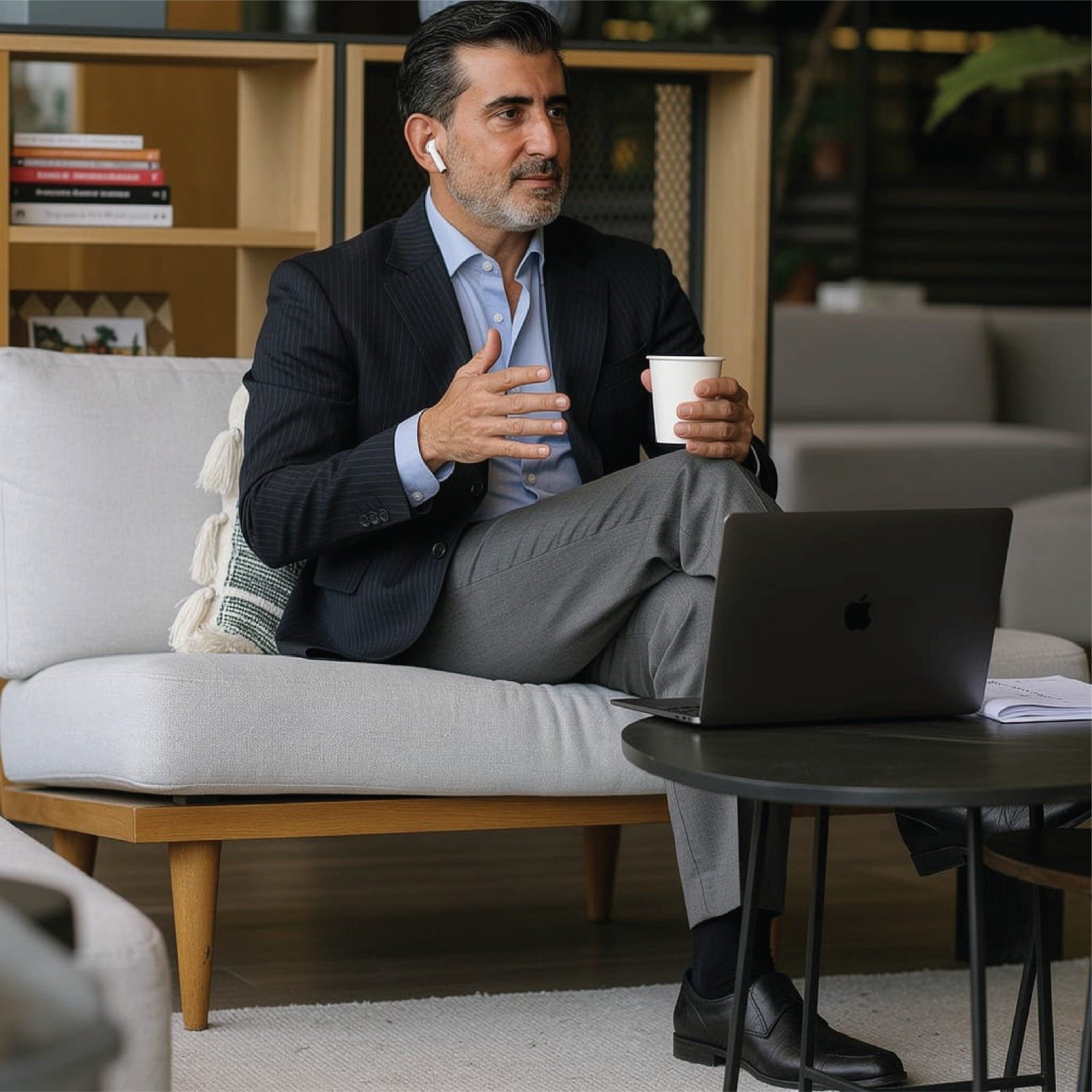
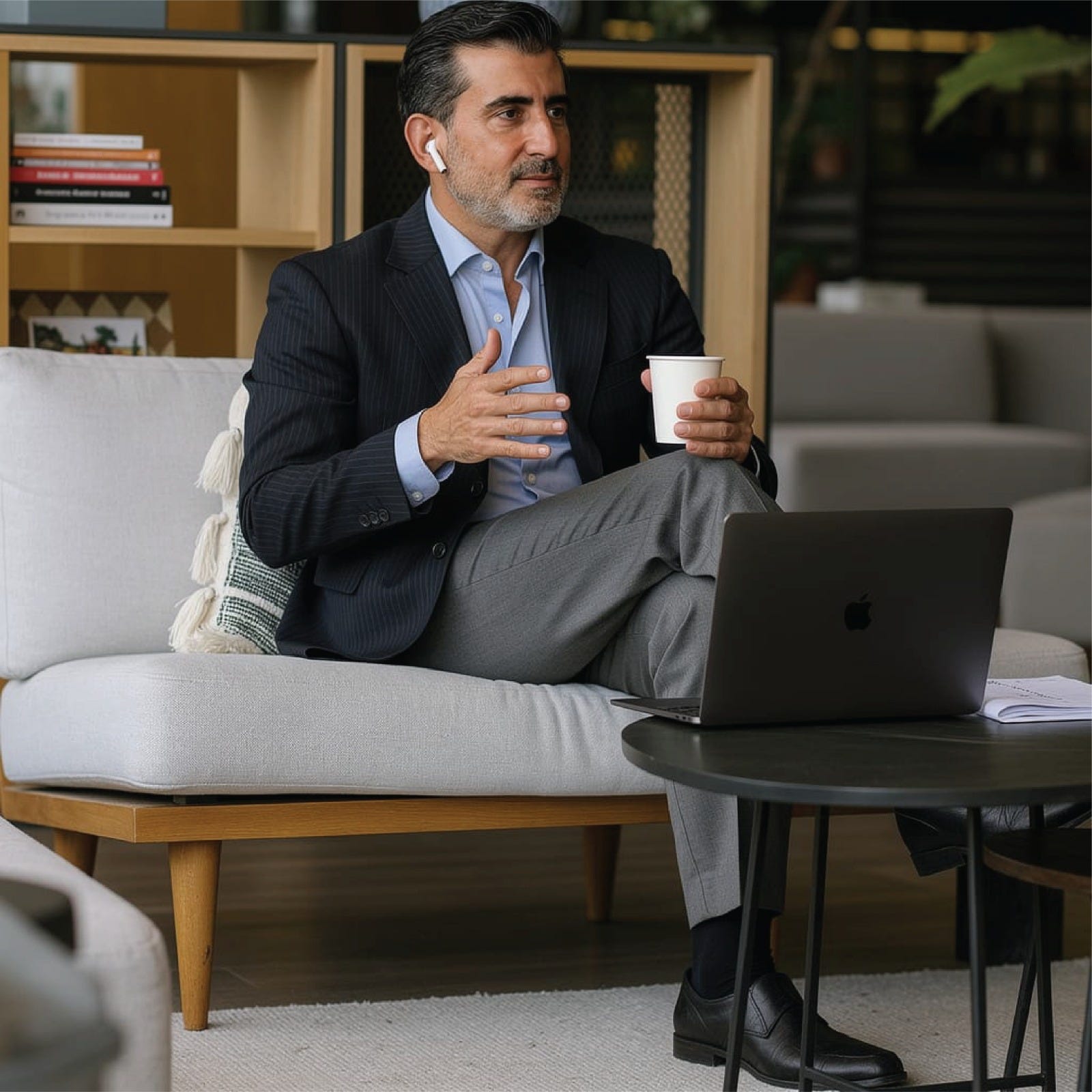
Investment entrepreneur Samer Choucair said that the global economy is undergoing a rapid structural shift, reflected in the growing presence of Indian talent leading the world’s largest technology companies and creative institutions, explaining that this trend reflects the maturity of India’s innovation ecosystem and its ability to generate high added value across global supply chains.
Choucair added that French President Emmanuel Macron highlighted this shift during Indian-French innovation forums earlier this year, pointing to Indian leaders heading global companies such as Alphabet, Microsoft, Adobe, and IBM, alongside Leena Nair’s appointment as CEO of Chanel.
Choucair affirmed that these developments are strengthening the appeal of emerging markets to institutional investors and supporting the reallocation of capital toward economies with strong demographic and educational advantages, noting that the Indian economy recorded growth of 7.6% during fiscal year 2025-2026, while World Bank and Goldman Sachs projections point to continued growth between 6.3% and 6.9% in the coming periods.
Choucair explained that these indicators are opening promising investment opportunities in technology, artificial intelligence, and luxury consumer goods sectors, while also offering sovereign wealth funds and institutional investors in the Gulf states opportunities to diversify their portfolios in line with economic diversification visions, chief among them Saudi Vision 2030, through strategic partnerships in innovation and creative sectors.
The Indian Economy Continues to Cement Its Global Standing
Samer Choucair noted that India continues to strengthen its position as one of the world’s fastest-growing economies, driven by a young population and significant investment in digital infrastructure and higher education.
Choucair added that the growing international recognition of Indian talent holding executive positions at major global companies reflects a qualitative shift in value creation, as India is no longer limited to exporting low-cost IT services but has become a source of executive leadership for multinational companies operating in higher-value sectors such as advanced technology and luxury goods.
Choucair affirmed that continued strength in domestic demand, supported by tax cuts and accommodative monetary policy, has helped sustain growth momentum despite the impact of global energy price volatility and trade tensions.
Choucair explained that global recognition of this talent reflects a structural shift in capital movement, as the quality of human capital has become one of the most important criteria institutional investors use to evaluate emerging markets in their search for sustainable growth.
Strong Economic Growth Supports Investor Confidence
Samer Choucair explained that World Bank data released in April 2026 showed the Indian economy growing by 7.6% during fiscal year 2025-2026, compared with 7.1% the previous year, driven by strong domestic consumption and government investment in infrastructure projects.
Choucair added that international financial institutions, including Goldman Sachs and the OECD, projected continued growth between 6.3% and 6.9% during 2026-2027, despite external challenges linked to energy price volatility.
Choucair noted that foreign direct investment flows have shown clear resilience in recent years, despite some outflows from equity portfolios resulting from elevated valuations and global investment reallocation.
Choucair affirmed that inflation has remained relatively under control, with the Reserve Bank of India targeting a 4% level, alongside continued government reforms to improve the business environment and support strategic sectors, chief among them semiconductors and artificial intelligence.
Indian Talent Is Leading Global Innovation
Samer Choucair said that Indian figures holding leadership positions at companies such as Alphabet under Sundar Pichai, Microsoft under Satya Nadella, alongside Indian leaders at Adobe and IBM, reflects strategic success built up over decades of investment in education, particularly in science, technology, engineering, and mathematics (STEM).
Choucair added that India now has the third-largest ecosystem of high-value startups in the world, confirming the development of its innovation and entrepreneurship environment.
Choucair explained that this shift reflects a change in the nature of globalization, as emerging economies are no longer merely a source of low-cost labor, but have become a source of executive leadership and global innovation.
Choucair noted that multinational companies that invested in R&D centers in cities such as Bangalore and Hyderabad have benefited from combining technical expertise with the ability to scale quickly, strengthening their competitiveness and increasing the value India generates within global value chains.
Indian Presence Extends to Creative Industries
Samer Choucair affirmed that Indian influence is no longer confined to the technology sector, but has also extended to creative industries and luxury goods.
Choucair added that Leena Nair, originally from Kolhapur, taking the position of CEO of Chanel since 2022, alongside the growing presence of Indian talent in global fashion shows, reflects India’s growing soft power and its workforce’s ability to compete in the most distinguished markets.
Choucair explained that this trend supports the growth of India’s luxury goods market, currently valued at around $10 billion, with expectations of continued expansion driven by a rising number of wealthy individuals and an ambitious middle class.
Choucair noted that these developments are opening the door for global brands to expand within the Indian market, while also offering investment opportunities in luxury retail, cultural tourism, and entertainment.
Financial Markets Are Benefiting From India’s Rising Talent
Samer Choucair explained that this shift carries direct implications for asset allocation decisions, as Indian markets have seen growing interest from foreign investors in recent years, despite some temporary outflows resulting from elevated valuations or global conditions.
Choucair added that the continued success story of Indian leadership could support a positive medium-term reassessment of Indian equities, particularly in technology, digital services, and consumer goods sectors, provided earnings growth continues and governance standards improve.
Choucair affirmed that India has become a complementary investment destination to developed markets for sovereign wealth funds and asset managers, with opportunities for higher returns driven by structural growth, in addition to opportunities available in direct investment and private equity, particularly in startups working in artificial intelligence, fintech, and digital infrastructure.
Strategic Partnerships With Gulf Economies
Samer Choucair noted that India’s rise carries particular significance for Gulf states pursuing ambitious strategies to diversify their economies away from oil, explaining that cooperation between the two sides offers broad opportunities in artificial intelligence, tourism, entertainment, and cultural trade.
Choucair added that India is a major trading partner and an important importer of Gulf energy, while Indian talent can support economic diversification projects in the Gulf states, alongside cooperation in developing smart cities and cultural events.
Choucair affirmed that Gulf sovereign wealth funds, thanks to their long-term capital, are well positioned to benefit from this trend by increasing their investments in Indian assets or entering strategic partnerships built on knowledge transfer and joint investment in priority sectors.
The Future of Investment in India
Samer Choucair concluded by affirming that continued investment in education, research and development, and improving the business environment will give India an opportunity to attract a larger share of global capital flows toward higher-value sectors.
Choucair added that success will remain tied to India’s ability to manage geopolitical and regulatory risks, exchange rate volatility, and maintain sustainable economic growth.
Choucair affirmed that institutional investors, particularly in the Gulf states, need to adopt a disciplined investment approach focused on long-term structural value rather than short-term gains, directing investments toward companies and sectors that directly benefit from the quality of human capital and innovation-supportive policies.
Samer Choucair concluded by saying that this approach strengthens the ability of investment portfolios to achieve sustainable returns and manage risk efficiently, amid a global economy increasingly moving toward competition over talent, innovation, and high-growth markets.