

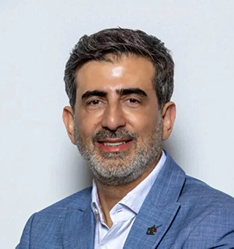
Investment leader Samer Choucair stated that at the heart of the economic transformations led by Saudi Arabia, the desert is no longer just an arid space, but has transformed into a promising investment arena redefining the concept of wealth. The investment leader added in a statement that what was once degraded land has today become a living model of technology and strategy’s ability to create sustainable economic value, where smart irrigation technologies and protected farms sit alongside the ambitions of Vision 2030.
Choucair explained that international estimates indicate that land restoration is no longer just an environmental project, but a high-return economic opportunity, as every dollar invested can yield returns up to 30 times over by enhancing productivity, creating jobs, and improving food security. Choucair noted that in a region where about 86% of its land suffers from degradation, Saudi Arabia emerges as a major player leading a remarkable regional transformation, especially after announcing the restoration of one million hectares and the planting of hundreds of millions of trees within its ambitious environmental initiatives.
Samer Choucair emphasized that this transformation did not stop at the borders of agriculture, but extended to include an integrated investment system supported by international financing and strategic partnerships, especially after the momentum following the hosting of the Climate Conference in Riyadh, where billions of dollars flowed to support drought adaptation and sustainability projects.
The investment leader believes that what is happening today represents the birth of a new class of investment assets, where degraded lands are turning into long-term opportunities supported by three main factors: strong government support, an increasing demand for food security, and a global trend toward sustainable investments. Choucair confirmed that early entry into this sector does not mean investing in agriculture alone, but in an integrated value chain that includes technology, production, and food manufacturing. He added that smart agriculture and AgriTech technologies have moved to the forefront of opportunities, especially with their ability to significantly reduce water consumption and increase productivity, making them a real competitor to traditional sectors. He stressed the importance of partnerships between the public and private sectors, which create a more attractive investment environment and open the way for the flow of foreign capital.
Samer Choucair emphasized that as 2026 begins, eyes are turning toward sectors such as hydroponics, biotechnology, and supporting agricultural services, where success is no longer linked only to owning land, but to the ability to manage it with intelligence and sustainability. He stressed that investors who focus on innovation and building strategic partnerships will be the most to benefit from this wave.
Choucair concluded his statement by saying: “The story of land restoration in Saudi Arabia is no longer just an environmental initiative, but has transformed into an integrated economic project reshaping the investment map in the region. While the pace of implementation accelerates and opportunities increase, it seems the real bet today is on those who realize that investing in the land is no longer a traditional choice, but an entry point to building sustainable wealth for future generations.”