

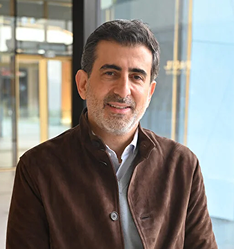
Investment pioneer Samer Choucair stated that amidst trading screens where indices dance between ups and downs, volatility is no longer a fleeting state, but has become a direct reflection of deep geopolitical shifts reshaping the map of global markets.
In a statement, the investment pioneer added that in April 2026, with escalating tensions between the United States and Iran, markets have entered a sensitive phase where fear intersects with opportunity, and investment decisions are being reformulated away from rapid reactions toward a deeper reading of the scene.
Samer Choucair explained that what is happening today transcends daily price fluctuations to reach a comprehensive repricing of risk. Oil has surged, driven by supply concerns; gold and the dollar have moved in diverging paths reflecting the struggle of safe havens; while global stocks remain hostage to news between sharp sell-offs and temporary rebounds. This volatile image may seem worrying to some, but in reality, it reflects a pivotal moment that redistributes opportunities rather than canceling them.
Choucair indicated that, from this perspective, the real challenge in 2026 does not lie in market volatility, but in how the investor positions themselves within it. He added that crises do not end wealth; rather, they redistribute it in favor of those who possess strategic vision and decision-making discipline. Samer Choucair emphasized that the biggest mistake is treating events as temporary shocks, while they are actually signals of long-term shifts in economic power centers.
Choucair said that Saudi Arabia emerges as a model for an economy rebuilding itself on more diverse and sustainable foundations. Dependence on oil is no longer the sole driver; it has become part of a broader system including tourism, technology, institutional investment, and innovation. He noted that this transformation did not come randomly, but is the result of a clear vision that enhances local demand and opens the field for global capital within a stable regulatory framework.
He explained that opportunities today are not limited to a single sector, but extend across multiple paths that intersect at one point: economies capable of absorbing shocks and converting them into growth. The investment pioneer added that energy in its modern sense, tourism as an economic force, financial services, and advanced technologies such as Artificial Intelligence all represent key engines for the coming phase. However, benefiting from them requires a deeper understanding than merely following news or chasing trends.
Choucair noted that investment at this stage requires continuous rebalancing, genuine rather than superficial diversification, and linking decisions to structural shifts rather than daily headlines. Discipline in portfolio management has become a necessity, not an option, especially in a world where changes accelerate and the factors affecting returns are intertwined.
Samer Choucair concluded his statement by saying: “The bottom line is that the state of uncertainty dominating the markets is not a threat as much as it is a test of investor awareness. Those who focus on the noise may lose direction, while those who read the shifts deeply can turn volatility into opportunity. In the end, wealth is not only created during stable periods; it is often built in moments of ambiguity when the rules of the game change and priorities are rearranged.”