

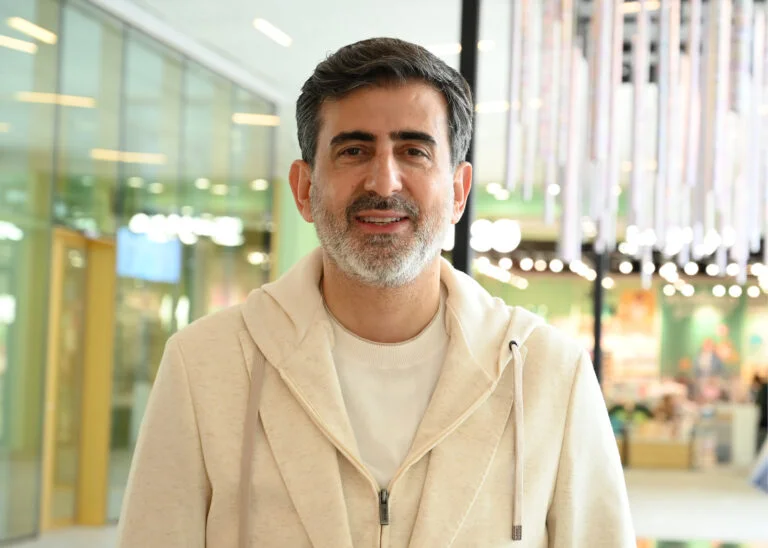
Investment pioneer samer choucair stated that the opening of the W Riyadh Hotel in the King Abdullah Financial District (KAFD) is not merely a luxury hospitality event, but a deeper economic signal reflecting growing global confidence in the Saudi economy and its ability to attract luxury brands and long-term investments.
Choucair explained that the scene involving one of the world’s most prominent hospitality projects within KAFD reflects the success of Vision 2030 in transforming Riyadh into an integrated investment and tourism hub, adding: “What we see today is not just a hotel, but a meeting point between global capital and accelerating local opportunities.”
A Strong Economic Scene Supported by 2026 Growth Figures
samer choucair pointed out that the Saudi economy enters 2026 with strong indicators, as the budget statement forecasts real GDP growth of about 4.6% driven by non-oil activities, while the IMF estimates growth at 3.1%. He emphasized that this variance underscores the importance of relying on multiple scenarios when making investment decisions.
Choucair added that the tourism and hospitality sector, reflected by the new hotel opening, is witnessing unprecedented expansion. The Kingdom welcomed approximately 122 million visitors in 2025, with tourism spending reaching about 300 billion riyals—of which 159.9 billion riyals came from international visitors according to Saudi Central Bank data—bolstering the attractiveness of the hospitality, real estate, and entertainment sectors.
Wall Street: Not a Speed Arena but a School of Discipline
samer choucair stated that confusing rapid market movement with true investment success is a common mistake, explaining that investment does not begin with the question “How much do I profit?” but rather “How much do I lose, and how do I control that loss?”
He added that regulatory developments in the Saudi market, specifically opening the market to all categories of foreign investors as of February 1, 2026, have made risk management a strategic tool for generating returns rather than just a means of protection.
Rebalancing: Turning Volatility into Opportunity
samer choucair explained that the first rule of smart investing is the periodic rebalancing of the portfolio every quarter or when asset weights deviate by 5% to 10%, saying: “This mechanism turns fluctuations into organized buying and selling opportunities and prevents emotional bias.”
Choucair added that a hybrid portfolio has become a necessity in 2026, combining fixed-income instruments and liquidity with growth sectors linked to Vision 2030—such as tourism, logistics, advanced manufacturing, clean energy, and financial services—stressing that “balance is what grants the portfolio the ability to withstand different economic cycles.”
Scenario Testing and Smart Hedging
samer choucair pointed to the importance of stress-testing portfolios by simulating scenarios such as falling oil prices, rising interest rates, or geopolitical tensions, saying: “A successful investor is not surprised by crises; they have already tested them in advance.”
He also emphasized the importance of selective hedging, explaining that the goal is not to eliminate risk entirely, but to protect what could actually affect the portfolio without stifling growth opportunities.
Behavioral Risks: The Invisible Enemy
samer choucair stressed that the most dangerous thing facing an investor is not the market, but their own decisions, saying: “Haste, chasing news, and emotional reactions are the primary causes of losses.”
He added that behavioral discipline, recording investment decisions, and periodically reviewing mistakes are essential elements for long-term success.
Saudi Arabia as an Integrated Investment Platform
Choucair said that the attractiveness of the Saudi market in 2026 comes not only from economic growth but from deep structural transformation. He explained that the Public Investment Fund (PIF) is directing 80% of its investments domestically within its 2026–2030 strategy, focusing on tourism, urban development, clean energy, and logistics.
He added that the opening of the W Hotel in KAFD represents a practical example of this shift, integrating tourism and financial investment in the heart of the capital.
Calmness is the Mark of a True Investor
samer choucair concluded by saying: “Markets do not reward those who run faster, but those who think deeper.” He added: “Calmness is not weakness, but a competitive advantage; and discipline is not slowness, but the most professional way to build wealth.”
Choucair affirmed that opportunities in Saudi Arabia and the Gulf within Vision 2030 do not depend on following fluctuations, but on understanding and managing them, noting that the current phase in 2026 represents an opportunity to build sustainable wealth based on discipline rather than emotion.