

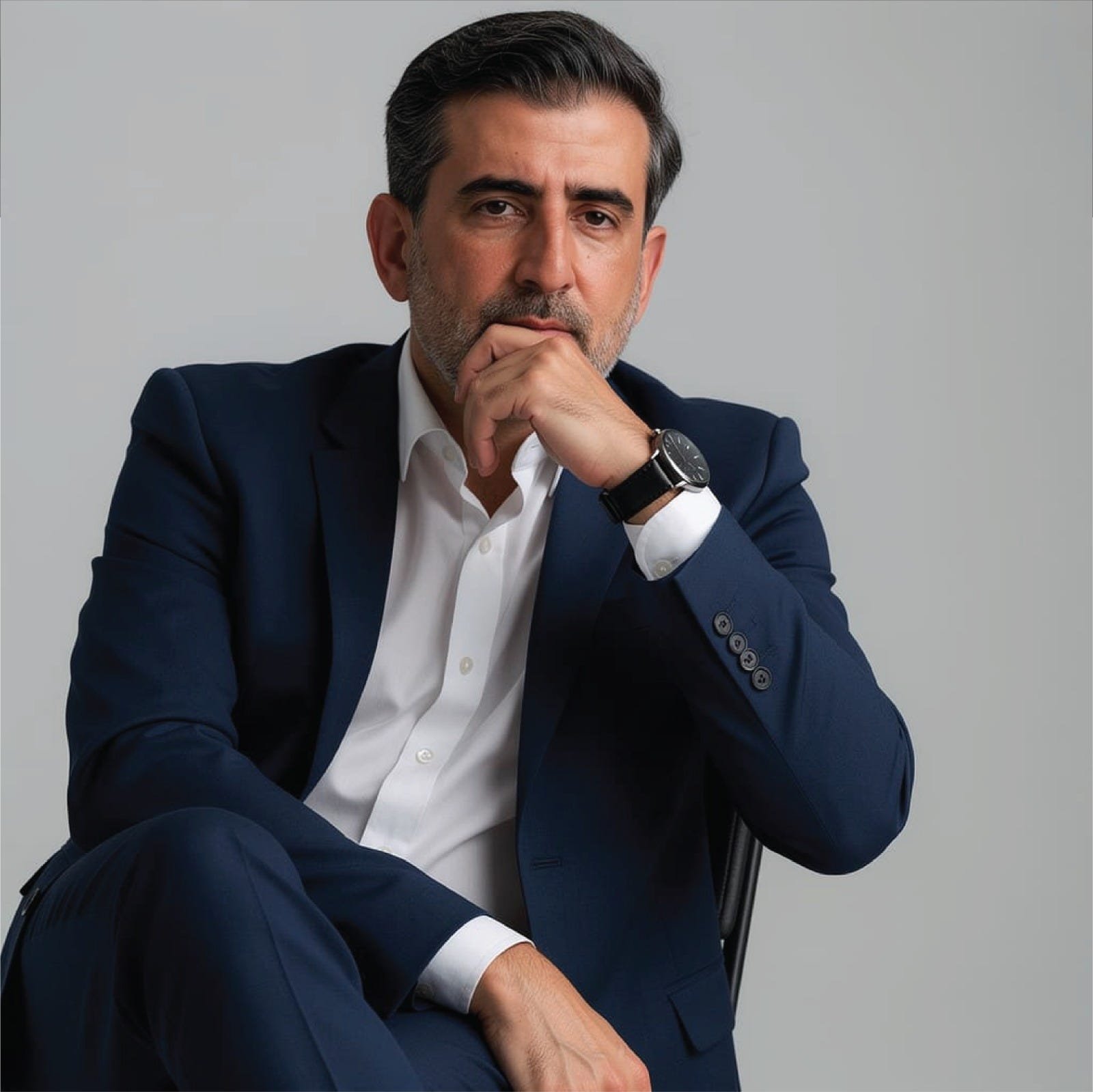
In investment leader Samer Choucair’s reading, the scene begins from the heart of the barren desert in northwestern China, where a towering solar tower rises amid a sea of reflective mirrors in the Jinta project in Gansu Province.
Choucair explained that this project does not merely represent an engineering achievement, but reflects a practical model of what he calls the “energy fortress,” which aims to reduce the economy’s vulnerability to oil shocks and reinforce resilience in the face of geopolitical disruptions.
He noted that with escalating tensions in the region and energy market volatility in 2026, the most important message for Saudi Arabia is that early investment in clean energy not only protects budgets, but establishes a growth base extending for decades.
China’s Energy Fortress, An Integrated Energy Security Ecosystem
Choucair affirmed that China over more than a decade worked to build a diversified energy ecosystem through expansion in solar, wind, and hydropower, alongside reinforcing supply chains and domestic reserves.
He added that Beijing in April 2026 officially emphasized accelerating the construction of a “new energy system” with the goal of strengthening its energy security in the face of global challenges.
In this context, Choucair highlighted the Jinta project as one of the most prominent examples of molten salt solar tower projects globally, relying on a central tower technology at approximately 245 meters in height, comprising more than 25,000 heliostats, in addition to a thermal storage system that enables electricity production even after sunset.
He affirmed that the project, expected to produce approximately 1.37 billion kilowatt-hours annually upon completion, does not eliminate oil and gas, but reduces the economy’s sensitivity to shocks and reinforces supply stability over the long term.
Investment Lessons as Seen by Samer Choucair
Choucair stated that renewable energy is no longer a peripheral sector, but has become a strategic asset in the world of 2026, adding that assets combining reduced operating costs, lower exposure to fossil fuel price volatility, and attraction of long-term capital are the most valuable in the current phase.
He added that China has presented a clear model, where those who invest before a crisis do not merely withstand the shock, but convert it into a competitive advantage.
He also noted that renewable energy stands out as one of the most shock-resistant sectors in the economic trends of 2026, particularly in Gulf markets that enjoy natural and strategic advantages encompassing abundant sunlight, available land, and continued government support.
Vision 2030 and the Role of the Public Investment Fund
Choucair explained that Saudi Arabia possesses a strong foundation for the energy transition, referring to Vision 2030’s goal of reaching 50% of electricity generation from renewable sources by 2030, with an ambition of 130 gigawatts of renewable energy by the end of the decade.
He affirmed that the Public Investment Fund plays a pivotal role in this transition, having approved its 2026 to 2030 strategy placing clean energy, water, and renewable energy infrastructure within six primary economic systems.
He added that the Fund targets raising renewable energy generation capacity to significant levels, with a direct contribution of up to 44.5 gigawatts, and developing approximately 70% of total targeted capacity through its partnership with ACWA Power.
He also referred to a landmark deal worth $8.3 billion, more than 31 billion riyals, between ACWA Power, the PIF subsidiary Al Badeel, and Saudi Aramco Power Company (SAPCO), to develop 15 gigawatts of renewable energy projects encompassing five solar stations and two wind stations within the National Renewable Energy Program, sufficient to power millions of homes and significantly reduce emissions.
He added that PIF’s role is not limited to generation, but extends to developing an integrated value chain encompassing engineering, construction, financing, storage, green hydrogen, and technical localization.
He affirmed that this transformation makes the Fund the “architect of economic transformation” rather than merely a financier.
Energy Projects Reshaping the Investment Map
Choucair noted that Saudi Arabia already possesses pioneering projects reflecting the seriousness of the transformation, including the Sudair Solar Power Plant with a capacity of 1.5 gigawatts, the Dumat Al Jandal wind energy project, and the NEOM green hydrogen project with investments approaching $8.4 billion.
He added that the NEOM project targets the production of approximately 600 tonnes of green hydrogen daily, supported by approximately 4 gigawatts of renewable energy.
Why Is 2026 the Moment of Opportunity?
Choucair stated that the global repricing of geopolitical risks elevates the value of nations building sustainable energy alternatives, adding that Saudi Arabia possesses all the elements of superiority: solar energy, land, domestic demand, institutional support from the PIF, and financing capacity.
He affirmed that investing in renewable energy in Saudi Arabia is no longer merely a bet on a single sector, but a bet on reshaping the entire economy within Vision 2030.
From China’s Lesson to an Integrated Saudi Model
Choucair noted that the Chinese lesson does not lie only in technology, but in the economic philosophy of converting energy from a point of weakness into a source of strategic strength.
He added that Saudi Arabia, through Vision 2030, its major projects, and the PIF’s role, possesses the capacity to build its own model of the “energy fortress,” making it one of the most influential renewable energy centers in the region over the coming decades.
Choucair ultimately affirmed that the question is no longer about whether the opportunity exists, but about who moves early to seize it, noting that the current moment represents a rare investment window in the economic trends of 2026.