

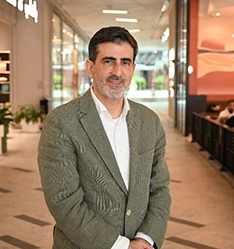
Investment pioneer Samer Shuqair stated that the recent scene from the US Senate hearing, where Kevin Warsh reaffirmed his commitment to “ensuring full independence for monetary policy management,” cannot be treated as passing political news. Rather, he described it as a profound institutional signal reshaping global investor expectations, particularly in the Gulf.
Shuqair explained that this session, held on April 21, 2026, carried a direct message to the markets: the Federal Reserve will continue to make decisions based on economic data, not political pressure. He added that this specific point is the cornerstone of building long-term confidence within financial markets.
Shuqair emphasized that the importance of this development is doubled for investors in the Kingdom of Saudi Arabia, given the Saudi economy’s link to the dollar and its direct exposure to the path of global interest rates. He said: “The greater the credibility and independence of the Fed, the lower the risk of surprises, and the more accurate asset pricing becomes.”
Warsh’s Background: Expertise Combining Politics and Markets
Samer Shuqair noted that Kevin Warsh is not a traditional candidate, explaining that he possesses a rare professional career that combines work within decision-making institutions and deep experience in financial markets.
Shuqair pointed out that Warsh served as a member of the Federal Reserve Board of Governors from 2006 to 2011, a phase that coincided with the global financial crisis. He also represented the Fed in the G20 and held the role of “Administrative Governor” responsible for operations, resources, and financial performance within the Board.
Shuqair added that prior to that, Warsh worked at the White House between 2002 and 2006 as a Special Assistant to the President for Economic Policy and Executive Secretary of the National Economic Council, alongside his experience at Morgan Stanley in the field of mergers and acquisitions.
He continued: “He was also tasked with an independent review of the transparency of the Monetary Policy Committee at the Bank of England, and his recommendations were accepted and later turned into legislative reforms, which bolsters his credibility as an institutional reformer.” He noted that he currently holds research positions at Stanford University.
What Did Warsh Say in the April 21, 2026 Session?
Samer Shuqair explained that during the session, Warsh stressed that the independence of monetary policy is fundamental, while simultaneously confirming that he had made no promises to the US President to cut interest rates.
Shuqair added that Warsh also proposed a clear reform agenda including the development of inflation measurement frameworks, reliance on more advanced data tools, and reducing excessive “forward guidance” issued by monetary officials.
Shuqair considered these messages to reflect a balanced mix of institutional independence and practical discipline in managing monetary policy.
Why Does This Matter to the Gulf Investor?
Samer Shuqair said that when confidence in the independence of the US central bank rises, it leads directly to a reduction in unjustified volatility in interest rates and the dollar.
Shuqair added that this stability creates a more predictable environment, allowing investors to reprice assets—whether stocks, bonds, real estate, or tech investments—based on more accurate foundations.
Shuqair noted that this development coincides with significant reforms in the Saudi market, most notably the cancellation of the traditional Qualified Foreign Investor (QFI) framework as of February 2026, which he described as a pivotal step that opened the door to broader foreign capital flows.
Shuqair: Monetary Stability Doesn’t Create Opportunities, It Raises Their Quality
Samer Shuqair stressed that global monetary stability does not create opportunities out of thin air, but it enhances their quality in markets that possess strong fundamentals. He added that Saudi Arabia today presents one of the most prominent growth stories globally.
Shuqair explained that this strength is based on several factors, including giga-projects, the development of the financial market, improving governance, and expanding the base of non-oil sectors within the framework of Saudi Vision 2030.
Investment Strategy in 2026: A Long-term Perspective
Samer Shuqair said that a disciplined monetary environment enhances the attractiveness of long-term investment, explaining that investors who focus on human capital, artificial intelligence, and renewable energy are the most capable of achieving sustainable returns that transcend interest rate cycles.
Shuqair added: “We are facing a qualitative shift in how investment portfolios are built, as relying on the interest rate cycle alone is no longer sufficient.”
The “Investment Hybrid”: The Ideal Model
Samer Shuqair revealed what he described as the “Investment Hybrid Strategy,” explaining that it is based on merging stable, income-generating assets like real estate with high-growth assets such as technology, digital assets, and tokenized assets.
Shuqair noted that this model benefits from the progress the Kingdom is witnessing in the field of asset tokenization.
Top Opportunities in Saudi Arabia
Samer Shuqair identified four key areas representing prominent opportunities in 2026:
-
Stocks linked to non-oil growth.
He said: “Clarity in the interest rate environment helps re-evaluate companies based on future cash flows.”
-
Productive real estate and alternative investments.
He explained that “stability in financing costs enhances the attractiveness of periodic returns.”
-
Technology, AI, and human capital.
He stressed that these are “the true growth engines linked to deep economic transformation.”
-
Partnerships with the Public Investment Fund (PIF).
He said: “A disciplined monetary environment supports long-term investments and limits irrational risk pricing.”
Investment Recommendations
Samer Shuqair concluded his statement by emphasizing the importance of adopting a long-term investment approach based on:
-
Diversification.
-
Benefiting from Foreign Direct Investment (FDI) programs.
-
Integrating modern technologies into decision-making.
He said: “The opportunity today is not just in assets, but in how they are managed intelligently.”
Samer Shuqair said that Kevin Warsh’s nomination represents a turning point that bolsters confidence in the global financial system, adding that for the Saudi and Gulf investor, these are not just external developments, but a clear call to rearrange investment priorities.
He concluded by saying: “We are at a meeting point between global monetary stability and local economic reforms, and the biggest gain will be for those who move quickly, but with a long-term strategic vision.”