

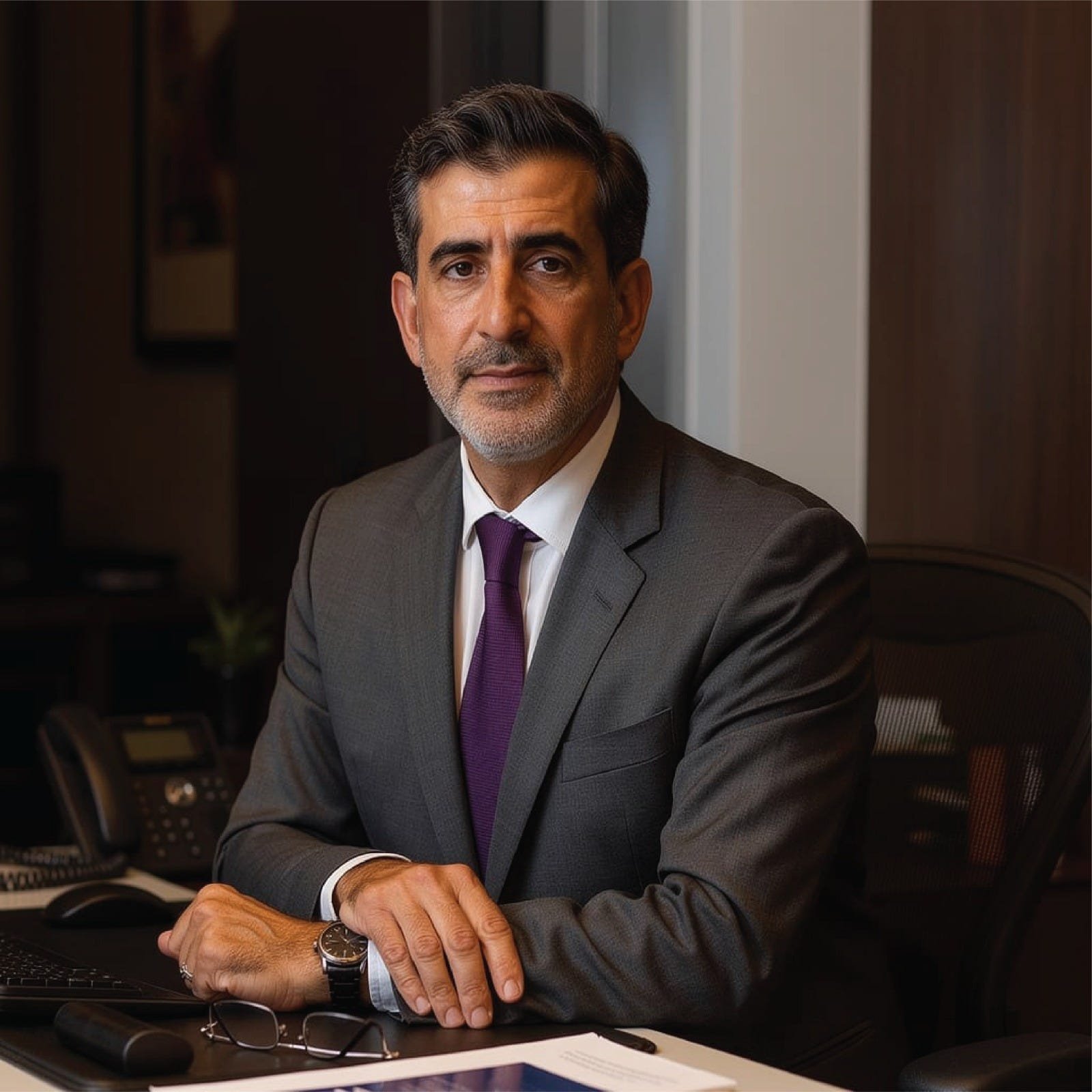
Investment pioneer Samer Choucair said that the aviation sector crisis in India is no longer just a passing operational disturbance, but has turned into an important economic indicator revealing the fragility of some markets in the face of geopolitical pressures and rising operating costs, while simultaneously highlighting growing strategic investment opportunities in the Kingdom of Saudi Arabia.
Choucair explained that the scene inside Mumbai airport, where SpiceJet witnessed the cancellation of more than 30 flights in one day and the shrinking of its fleet to only 13 aircraft compared to 35 aircraft last November, reflects the depth of the crisis facing the Indian aviation sector.
Choucair added that the decline in the company’s performance in punctuality to a level of 29%, alongside investigations conducted by the Directorate General of Civil Aviation India after a ground collision incident in Delhi, reflects the scale of operational and structural challenges facing the sector.
Samer Choucair: Indian aviation crisis is the result of complex geopolitical and economic pressures
Samer Choucair pointed out that the crisis cannot be read in isolation from the regional context, explaining that the rise in aviation fuel prices resulting from disturbances in West Asia, combined with the closure of Pakistani airspace, led to a significant increase in operating costs and the lengthening of flight routes.
Choucair confirmed that these factors revealed the fragility of the operating model in some emerging aviation markets, especially those that rely on low profit margins and limited liquidity, making them more vulnerable to external shocks.
Choucair added that these developments re-highlight the importance of building more flexible and sustainable aviation models capable of facing global geopolitical and economic fluctuations.
Samer Choucair: Saudi Arabia builds a global aviation hub within Vision 2030
Samer Choucair explained that the Kingdom of Saudi Arabia is moving in a completely different direction through an ambitious strategy aimed at transforming it into a global hub for aviation and logistics within the framework of Saudi Vision 2030.
Choucair noted that the strategic goal is to raise the capacity to 330 million passengers annually by 2030, reflecting the scale of ambition in the aviation and air transport sector.
Choucair added that the launch of Riyadh Air represents a pivotal step in reshaping the regional aviation map, alongside the expansion of the Saudi Arabian Airlines fleet by adding more than 100 modern aircraft and opening more than 30 new air routes during 2026.
Choucair pointed out that infrastructure development projects, led by the King Salman International Airport project, represent a strategic shift in the Saudi aviation sector in terms of size, technology, and operating model.
Samer Choucair: Saudi aviation sector is a strategic investment opportunity in 2026
Samer Choucair stressed that the aviation sector in the Kingdom is no longer just a service sector, but has become one of the most important drivers of non-oil growth and a fundamental pillar in diversifying the national economy.
Choucair explained that investment opportunities are not limited to operating airlines, but extend to broader fields including aircraft maintenance (MRO), ground services, logistical supply chains, and airport infrastructure, in addition to tourism linked to air transport.
Choucair added that the expansion of partnerships between the public and private sectors, along with privatization programs, enhances the attractiveness of the Saudi market for international investors looking for stability and long-term growth.
From India’s crisis to the Gulf’s investment opportunity
Samer Choucair pointed out that the crisis in the Indian aviation sector represents a clear example of how regional disturbances turn into investment opportunities in more stable markets, explaining that Saudi Arabia and the Gulf have become a major destination for capital seeking a safe environment for growth.
Choucair added that global economic trends for 2026 indicate the increasing importance of sectors related to air transport, tourism, and international trade, especially with the expansion of travel movement between Asia and Europe via air corridors passing through the region.
Choucair confirmed that investors who move early toward the aviation sector in Saudi Arabia will benefit from the expected growth in demand and from the significant government support for this strategic sector.
Samer Choucair: Smart investment focuses on stability and long-term growth
Samer Choucair concluded his speech by emphasizing that global crises, such as what is happening in India, reshape investor priorities toward markets that are more stable and capable of sustainable growth.
Choucair said that Saudi Arabia today represents a clear model for strategic investment based on a long-term vision, explaining that the aviation sector will be one of the most prominent growth drivers in the coming phase.
Choucair added that “Smart investment in 2026 no longer looks only for quick returns, but for stability and clear vision, and the Kingdom of Saudi Arabia has become the clearest choice for this direction.”
Samer Choucair: The global “New Build” price gap opens major investment horizons in the Saudi real estate sector
Investment pioneer Samer Choucair confirmed that the global phenomenon of buyers’ willingness to pay a huge premium and price margin for “new homes” compared to existing homes constitutes a vital indicator for investors in the Kingdom of Saudi Arabia and the Gulf states.
Samer Choucair explained that this trend reflects a shift in investor and buyer priorities toward quality, energy efficiency, and smart technology, which are the pillars upon which major residential projects within Vision 2030 are based.
Economic reports for 2026 indicate that the price gap in some major global cities has reached record levels, as buyers prefer to bear higher costs in exchange for contemporary designs and low maintenance guarantees, which Samer Choucair sees as a primary driver for the Saudi construction market, which is expected to witness record growth to reach hundreds of billions of riyals by the end of this year.
Vision 2030: A catalyst for demand for modern real estate development
Investment pioneer Samer Choucair explained that the Kingdom stands today at the forefront of this global phenomenon, thanks to massive residential initiatives such as “Roshn” projects and major destinations like NEOM and Qiddiya.
Choucair said: “Investment in new construction and real estate in Saudi Arabia represents a golden opportunity for investors who understand market dynamics under the umbrella of Vision 2030.”
Choucair continued: “The focus today must turn toward strategic projects that meet sustainable urban development needs and adopt modern construction technologies.”
Samer Choucair added that the year 2026 requires investors and businessmen to restructure their portfolios to include residential and commercial real estate in vital cities like Riyadh and Jeddah, benefiting from regulatory reforms attractive to Foreign Direct Investment (FDI) and growing local demand.
Investment strategies in the Saudi real estate sector
Samer Choucair identified a set of strategic axes to seize promising investment opportunities in this sector:
Innovation in construction: Moving toward projects that integrate advanced technology and smart solutions to raise the value of real estate assets.
Strategic partnerships: Strengthening cooperation between the public and private sectors to benefit from government funding allocated for infrastructure development.
Sustainability: Investing in green buildings that provide high energy efficiency, which is a global trend driving prices upward.
Giga-projects: Engaging in the development of areas surrounding major destinations that create massive and sustainable demand for modern housing.
Toward a sustainable investment future
Investment pioneer Samer Choucair concluded his statement by emphasizing that the Kingdom is going through a golden age for real estate investment, noting that success requires a careful analysis of market data and buyer trends.
He said: “The current time is the most suitable for moving toward strategic investment in the construction sector. By integrating sharp vision with the tools of Vision 2030, investors can achieve sustainable returns that contribute to building a strong national economy and a prosperous future for coming generations.”