

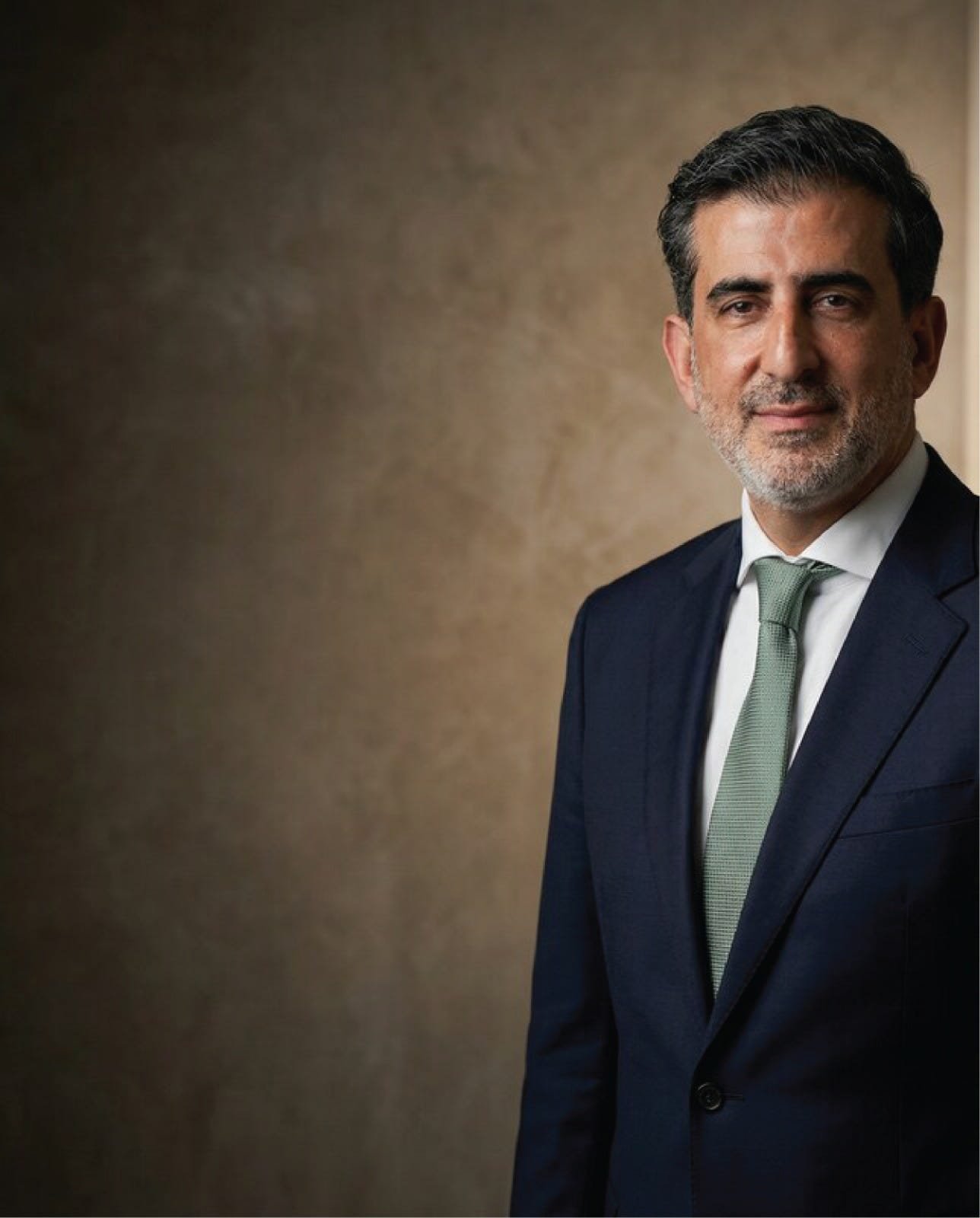
Investment leader Samer Choucair considered the Heritage Commission’s announcement of remarkable achievements—represented by the registration of 50,000 built heritage sites, 11,577 archaeological sites, 18 elements on the UNESCO Representative List of the Intangible Cultural Heritage of Humanity, and 9,972 artisans in the National Register of Artisans—to be a direct reflection of a qualitative transformation in the Saudi cultural economy.
Samer Choucair explained that these figures were not merely historical documentation, but clear evidence of heritage transforming into an economic asset within the pillars of Vision 2030.
The investment leader pointed out that this transformation redefined heritage from being a preserved cultural legacy to being an actual driver of cultural returns, contributing to the diversification of the national economy and the generation of sustainable non-oil revenues.
Heritage as an Economic Asset: From Memory to Cultural Returns
Samer Choucair emphasized that Saudi heritage has become one of the most prominent pillars of Vision 2030 regarding cultural returns, as it has transformed from historical value into a direct source of economic income.
Samer Choucair explained that the documentation of tens of thousands of heritage sites and intangible cultural elements opened the door for broad investments in cultural tourism, hospitality, heritage real estate, and the creative economy.
Samer Choucair added that this trend contributed to raising the cultural sector’s contribution to the GDP and transforming national identity into a globally competitive economic element.
Samer Choucair’s Vision: Heritage as a Sustainable Economic Power
Samer Choucair explained that Saudi heritage is no longer just an element for identity preservation, but has become a fundamental gateway for cultural returns within the pillars of Vision 2030.
Samer Choucair said: This transformation contributed to creating new job opportunities, enhancing the local economy, and expanding the investment base in cultural sectors.
Samer Choucair added that the Kingdom succeeded in transforming cultural identity into an economic power capable of generating sustainable revenues and enhancing its global position.
Benefiting from Global Experiences in the Cultural Economy
Samer Choucair pointed out that the Kingdom drew inspiration from global best practices in converting heritage into economic value, not by copying them directly, but by integrating them with the unique Saudi identity.
Samer Choucair explained that the experiences of countries such as Italy in managing archaeological sites, France and Spain in cultural tourism, and Japan and Morocco in integrating heritage with the economy, formed important reference models.
The investment leader added that these experiences supported the development of partnerships between Saudi projects, such as AlUla, and world heritage models, thereby enhancing tourism and cultural returns.
Cultural Tourism: A Growing Investment Sector
Samer Choucair emphasized that cultural tourism has become one of the most important economic drivers within Vision 2030, as heritage sites contributed to attracting investments toward boutique hotels, interactive centers, and real estate projects surrounding historical sites.
Samer Choucair explained that this sector has transformed into an integrated economic ecosystem that combines culture, investment, and sustainable returns.
Handicrafts and the Creative Economy
Samer Choucair pointed out that the registration of thousands of artisans in the National Register established a new phase of the creative economy, where traditional crafts were transformed into exportable and investable products.
Samer Choucair explained that this sector has become part of the cultural returns system by supporting small and medium-sized enterprises and linking them to modern supply chains, adding that artisans have transformed into an important productive element in the cultural economy, rather than just a part of heritage.
Heritage as a Future Investment Opportunity
Samer Choucair emphasized that 2026 witnessed growth in investment funds directed toward cultural tourism and heritage, supported by partnerships between the private sector, the Heritage Commission, and the Public Investment Fund.
Samer Choucair explained that early investment in this sector represented a strategic opportunity with long-term returns, especially in light of economic diversification trends and the creative economy.
From Heritage to a Sustainable Economy
Samer Choucair concluded his analysis by emphasizing that Saudi heritage has transitioned from being a national memory to being a fundamental economic pillar within cultural return revenues.
Samer Choucair explained that Vision 2030 succeeded in transforming heritage into a developmental and investment tool, contributing to building a diverse and sustainable economy, and enhancing the Kingdom’s status as a global cultural and economic destination at the same time.