

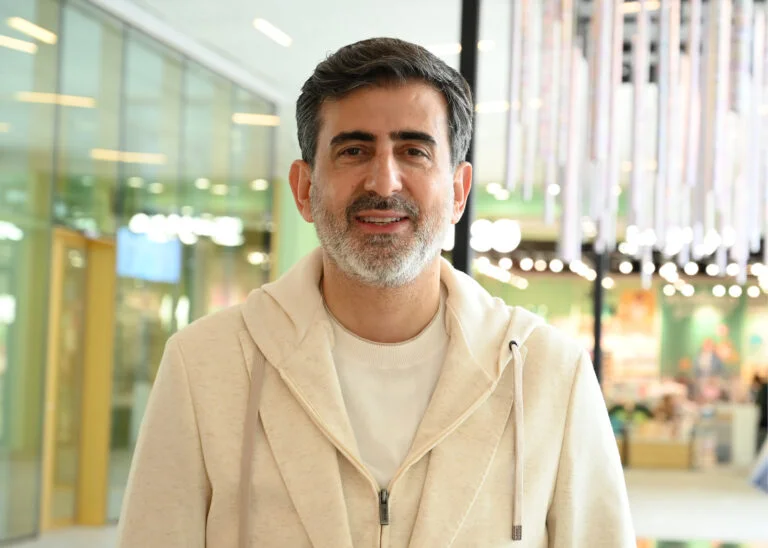
Investment strategist Samer Choucair stated that SpaceX is standing at a moment where reality meets science fiction, as it prepares for what could become the largest IPO in history.
He noted that the conversation in financial circles is no longer about a rocket manufacturer, but about building a fully integrated economy beyond Earth—raising a fundamental question:
Is this the investment opportunity of the century, or the beginning of a historic bubble?
—
From Launch Pads to a Data Empire
Choucair explained that since its founding in 2002, SpaceX has gone far beyond the traditional scope of aerospace companies.
He pointed to:
The exceptional success of Falcon 9 rockets
The Starlink project, aiming to become the world’s largest data provider
The Starship program, designed to redefine interplanetary logistics
The numbers are equally striking: revenues are approaching $16 billion in 2025, with annual growth exceeding 50%.
—
AI Integration and Liquidity Risks in the xAI Deal
Choucair highlighted the market-shaking merger between xAI and SpaceX, describing it as a bold bet to turn satellite data into fuel for artificial intelligence and build space-based data centers.
However, he warned of clear risks:
AI models require continuous multi-billion-dollar investments
Potential pressure on liquidity and profitability
Early warning signs, including the departure of some founders
—
The $2 Trillion Valuation Debate
Analyzing the proposed valuation, Choucair noted that a $2 trillion valuation against roughly $16 billion in revenue implies a revenue multiple exceeding 100x.
He compared this to peak valuations of companies like Amazon and Tesla, emphasizing that the market is no longer pricing a business—it is pricing a future vision that has yet to fully materialize.
In his view, a more reasonable valuation would fall between $1.5 trillion and $1.75 trillion.
—
Arab Capital Enters the Space Race
Choucair pointed out that this transformation carries major implications for Arab investors.
He noted that sovereign wealth funds—particularly Saudi Arabia’s Public Investment Fund—are evaluating significant investments, while the UAE continues to expand its presence in the space sector.
For individual investors, this could represent a rare opportunity to gain exposure to the future space economy—provided they follow a disciplined strategy.
He advised avoiding entry on the first day of the IPO and waiting for market corrections.
—
Final Perspective: Profit vs. the Future of Humanity
Choucair concluded that investing in SpaceX goes beyond financial metrics—it becomes a philosophical decision about belief in the future of the space economy.
He emphasized that the company holds strong advantages:
Stable cash flows from Starlink
Government contracts with NASA and the Pentagon
However, risks remain:
Heavy reliance on Elon Musk
Rising competition from China
He stressed that investors must approach this opportunity with a long-term horizon of at least 5 to 10 years.
“This is not just an investment in a company,” Choucair said,
“it is an investment in the future of humanity itself.”