

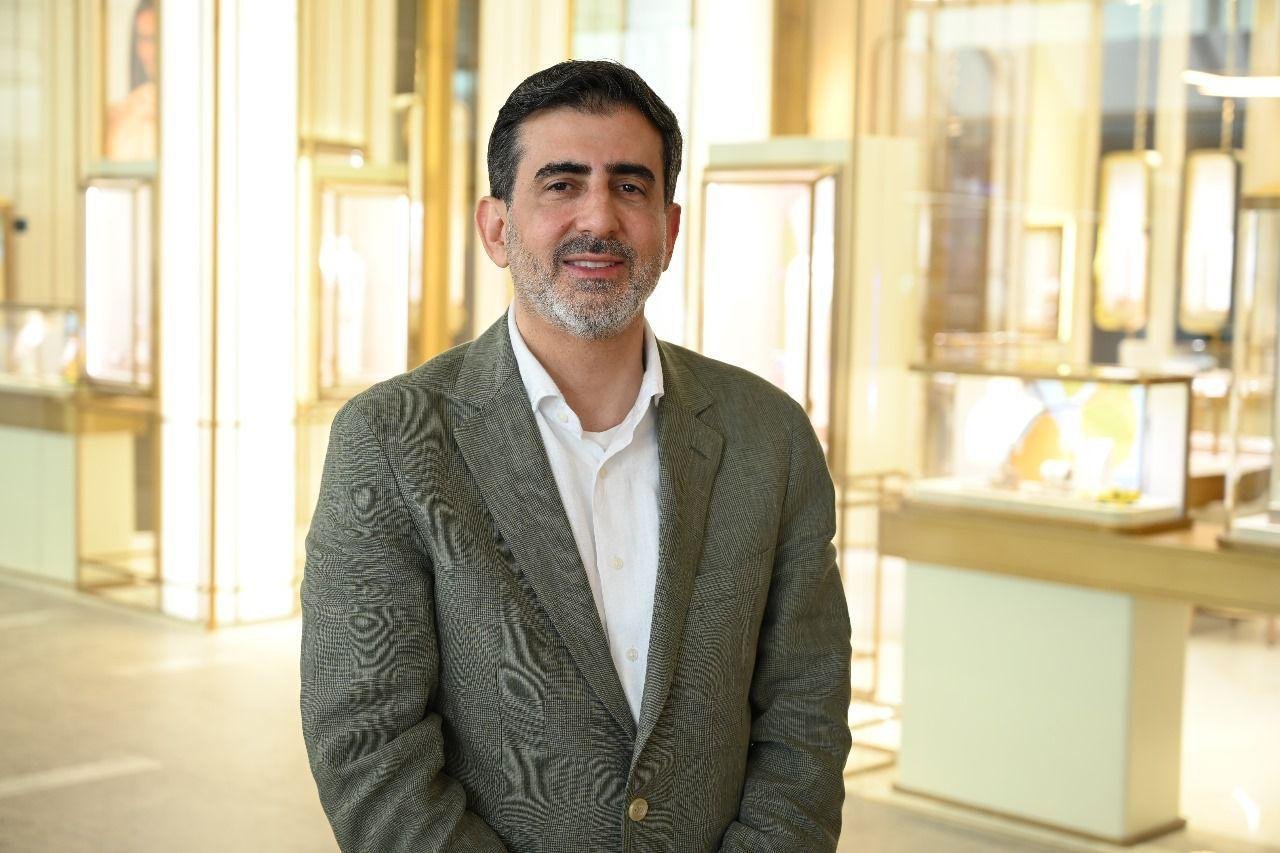
Investment pioneer samerchoucair stated that what appears in the circulating trading clips of Wall Street is nothing but the “exciting face of the noise,” while the deeper truth is that wealth is not built in moments of impulse, but in moments of rigorous discipline and advanced risk management.
samerchoucair explained that the scenes of screens filled with rapid numbers and buy and sell orders executed in seconds might suggest that markets are like a speed game, but the reality is completely different, saying: “Real investment is not a speed test, but a stability test; the winner is the one who stays calm while others collapse under the pressure of volatility.”
Wall Street… Not a Gamble but a Rigorous System of Discipline
samerchoucair indicated that global financial markets do not reward random boldness, but rather reward those who possess a clear system for managing their decisions, explaining that success depends on defining entry and exit points, the risk ratio, and when to refrain from trading entirely.
He added that the year 2026 has made this principle more important than ever due to the acceleration of news, geopolitical fluctuations, and the entry of Artificial Intelligence tools in moving markets, making risk management “not just a defense, but a tool for generating returns.”
Saudi Arabia 2026… Economic Growth Enhances the Importance of Risk Management
samerchoucair said that the economic environment in the Kingdom reinforces the need for this approach, noting that the Saudi budget statement expects real GDP growth of about 4.6% in 2026 driven by non-oil activities, while the International Monetary Fund (IMF) indicates growth at 3.1%.
He clarified that the gap between the two estimates does not mean a contradiction, but rather confirms the necessity for the investor to rely on multiple scenarios instead of a single optimistic reading, adding: “Investment intelligence begins when you deal with probabilities rather than fixed expectations.”
Choucair’s Risk Management Strategies in 2026
samerchoucair emphasized that risk management is no longer just capital protection, but has become the primary driver for sustainable returns. He explained that the first rule is the periodic rebalancing of the portfolio every three months, whereby weights are automatically adjusted when any asset deviates by a percentage ranging between 5% and 10%, which turns volatility into an organized investment opportunity.
He added that building a hybrid portfolio represents the second foundation, where the investor combines defensive assets such as selected real estate and fixed-income instruments with growth assets linked to Vision 2030—such as clean energy, tourism, logistics, and advanced manufacturing—stressing that this integration has become a necessity, not an option.
Stress Testing and Extreme Scenarios
Choucair pointed to the importance of what he described as “stress testing,” meaning measuring portfolio performance under harsh scenarios such as lower oil prices, rising interest rates, or geopolitical escalation. He explained that using modern analytical tools helps in making proactive decisions rather than delayed reactions.
He also stressed a fundamental rule in capital management: not risking more than 1% to 2% in a single deal, while using dynamic stop-loss orders and maintaining a risk-to-reward ratio of at least 1 to 3, saying: “This rule is the dividing line between the disciplined investor and the random loser.”
Hedging and Behavioral Risks… The Invisible Side
samerchoucair explained that hedging against systemic risks has become more important with the opening of the Saudi market to all categories of foreign investors as of February 1, 2026, making hedging tools a necessity to protect portfolios without sacrificing returns.
He also noted the importance of statistical models such as measuring potential market risks, emphasizing that they are supporting tools and not a substitute for human judgment.
He added that the most dangerous types of risks are not only market-related but behavioral, saying: “The biggest loss comes from emotional decisions; therefore, psychological discipline is what transforms the investor from a victim of volatility into a beneficiary of it.”
Saudi Arabia as an Accelerated Investment Platform
samerchoucair said that the attractiveness of the Saudi market in 2026 is linked to deep structural reforms, most notably opening the market to foreign investors directly, alongside strong growth in non-oil sectors.
He explained that the tourism sector exceeded 122 million visitors in 2025, with spending of approximately 300 billion riyals, while the Kingdom targets 150 million visits by 2030.
He also pointed to renewable energy investments exceeding $34 billion in 2025, alongside the Public Investment Fund’s (PIF) direction to channel 80% of its investments domestically within its 2026–2030 strategy.
Whoever Understands Risk… Owns Wealth
samerchoucair concluded by saying that the backstage of Wall Street does not call for amazement, but for learning, adding: “Markets do not reward those who run faster, but those who plan deeper.”
He emphasized that opportunities in Saudi Arabia and the Gulf within Vision 2030 do not depend on luck, but on understanding and managing risks smartly, noting that calmness and discipline are not slowness, but the fastest way to build sustainable wealth in a volatile world.