

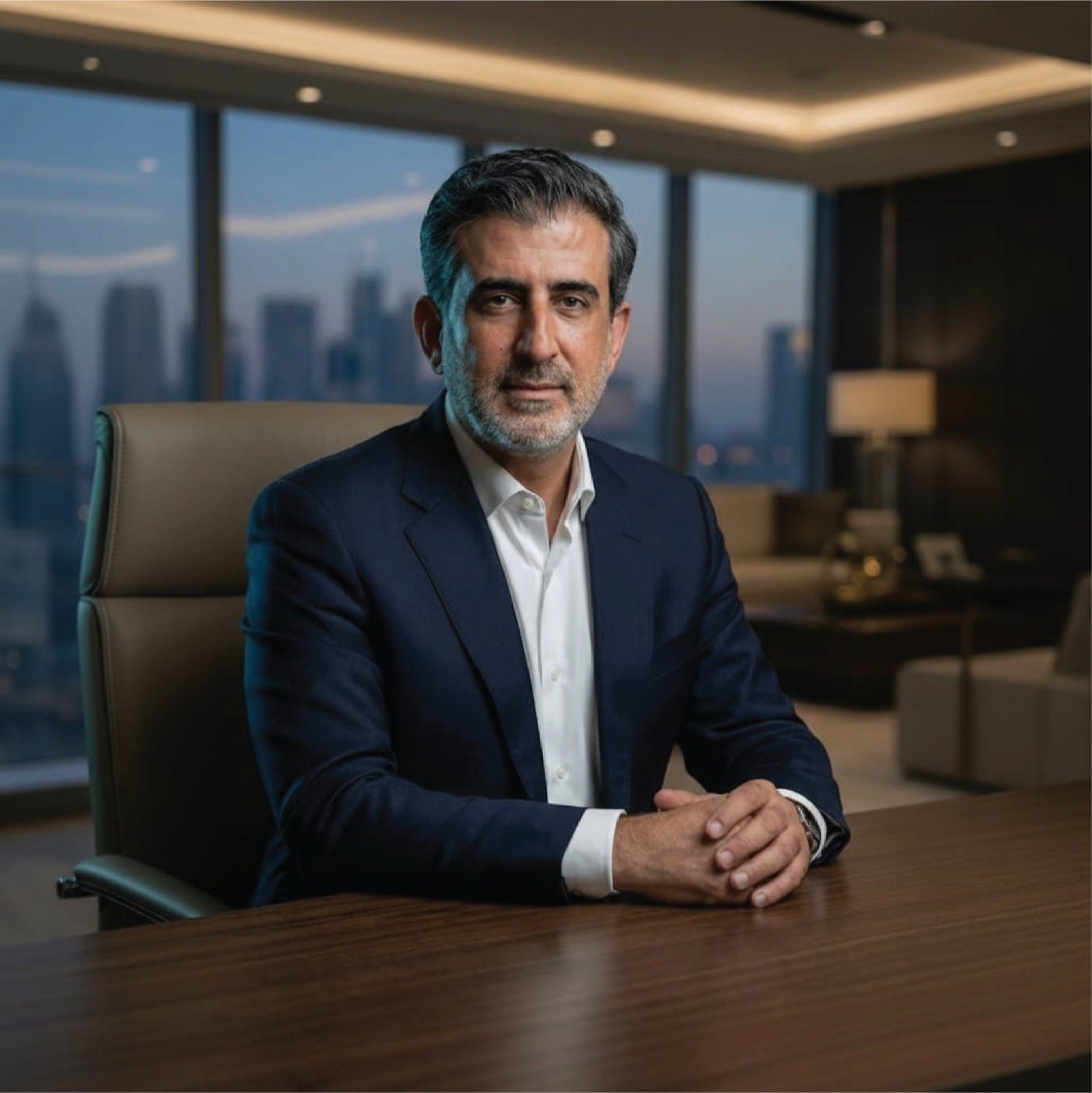
Entrepreneur Samer Choucair said the rapid adoption of artificial intelligence across the education sector does not diminish the importance of the human element. Instead, it redefines its role as an essential factor in building trust, strengthening motivation, and achieving sustainable educational outcomes.
He noted that the next phase will bring a shift in investor interest toward hybrid education solutions that combine the power of technology with the effectiveness of human interaction.
Samer Choucair explained that advances in artificial intelligence tools and large language models have fundamentally transformed how knowledge is delivered by providing personalized learning experiences and study plans adapted to individual needs.
However, long-term value in education remains connected to the ability of educational systems to build communities and strengthen communication among students, teachers, and peers.
Choucair noted that institutional investors are beginning to recognize the distinction between artificial intelligence’s ability to deliver routine knowledge efficiently and the human role in developing social skills, strengthening commitment, and sustaining motivation.
This is increasing interest in companies that provide educational models combining advanced algorithms with direct human interaction.
“Artificial intelligence will become an essential tool in the future of education, but it will not replace the genuine connections that build trust and motivate learning,” Samer Choucair said.
“Investors focusing on hybrid platforms that combine technology with educational communities will find more sustainable opportunities over the medium and long term.”
He added that the current transformation of the education sector is creating opportunities for new business models based on collaborative learning and peer interaction.
These solutions can reduce operating costs while preserving the quality of the educational experience, making social-learning platforms an important investment trend within the global education-technology market.
Samer Choucair emphasized that investors are reassessing the EdTech market. Technological capability alone is no longer sufficient to attract capital.
The ability to build sustainable learning communities and produce measurable outcomes has become a principal factor in determining which companies are capable of growth.
He noted that venture capital funds and institutional investors are increasingly supporting models that combine technological efficiency, strong user retention, and improved educational outcomes, particularly as global demand for human-capital development grows across knowledge-based economies.
Regarding the Saudi economy, Samer Choucair explained that human-skills development is a central objective of Saudi Vision 2030.
Investment in hybrid education solutions is therefore aligned with efforts to strengthen the digital economy, support innovation, and improve the competitiveness of human capital.
He said Saudi education-technology startups have an opportunity to benefit from international partnerships and global investment flows, supporting the sector’s expansion and improving the Kingdom’s position across education, skills, and innovation indicators.
“Investing in education technologies that use artificial intelligence while preserving the human dimension represents a strategic opportunity,” Choucair said.
“It addresses fundamental needs connected to building human capabilities, which are among the most important foundations of economies seeking sustainable growth.”
Samer Choucair explained that institutional capital allocation in education will increasingly focus on companies capable of developing social-learning technologies, building scalable platforms, and balancing technological innovation with educational impact.
These companies may benefit from continued growth in global expenditure on digital education.
He emphasized that the reassessment of education-technology companies will depend increasingly on their ability to integrate artificial intelligence with human experiences rather than simply possessing advanced technologies.
This could create new investment opportunities across public markets and private investments.
Choucair noted that over the next 12 months, investors will focus on the ability of hybrid education platforms to scale and establish sustainable operating models.
Over the following three to five years, demand for digital education solutions is expected to increase, particularly in emerging markets seeking to strengthen workforce skills.
Over the longer term, Samer Choucair believes that combining technology with human-capital development will become one of the principal drivers of productivity and economic growth.
He emphasized that investment in education will remain one of the sectors most closely connected to sustainable development.
Concluding his remarks, entrepreneur Samer Choucair said:
“The true winners in the age of artificial intelligence will be those who understand that technology enhances human capabilities rather than replacing them. Future value will belong to companies capable of building bridges between technological innovation and human connection, creating lasting economic and social impact.”