

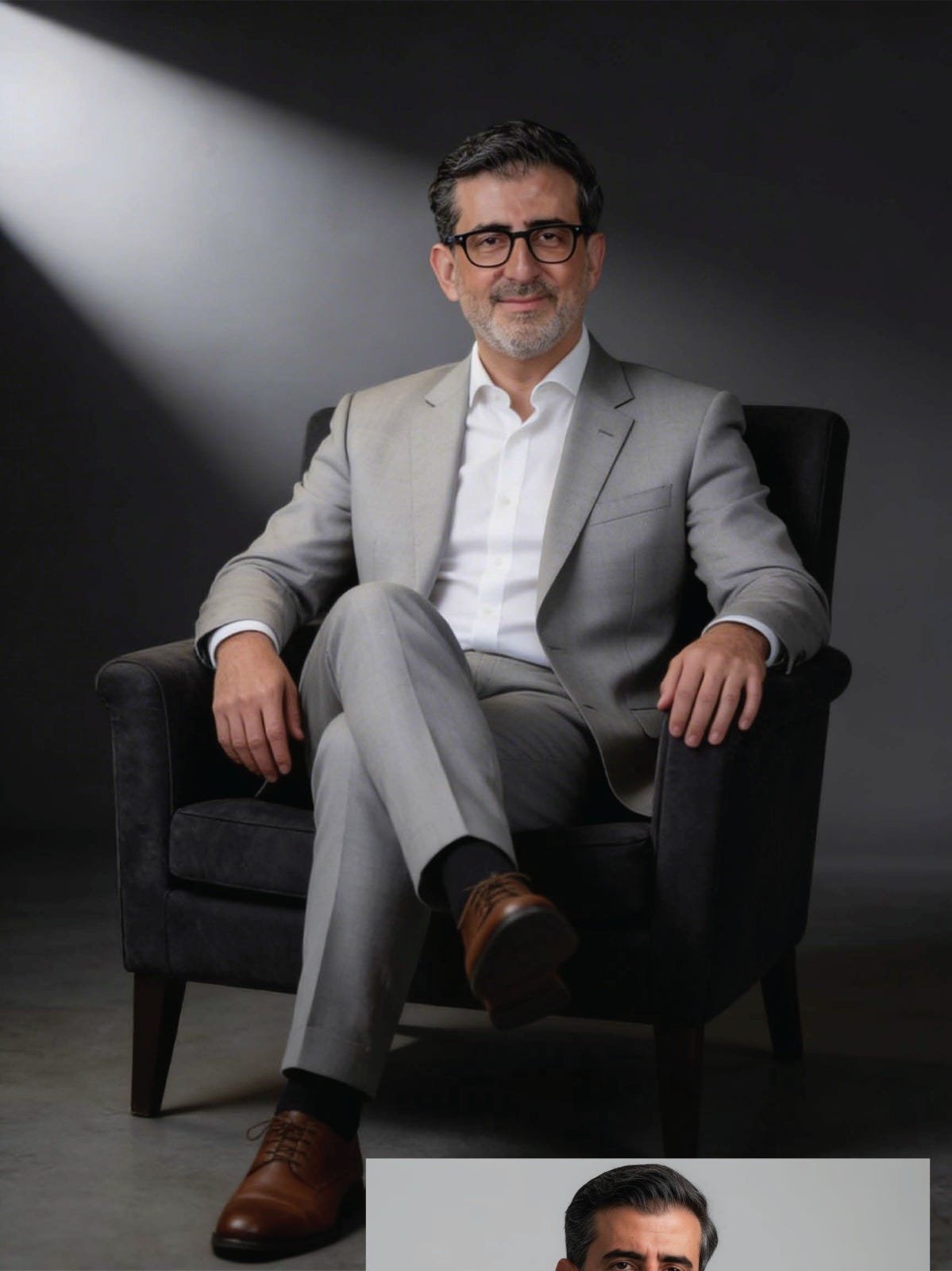
Investment pioneer Samer Choucair stated that what emerged from the Cabinet session in Jeddah, chaired by His Royal Highness Prince Mohammed bin Salman bin Abdulaziz Al Saud, Crown Prince and Prime Minister, cannot be read as a traditional package of government decisions; rather, it is an additional step in the path of rebuilding the institutional structure of the Saudi economy. The investment pioneer added in a statement that the Kingdom is no longer moving only through mega-projects, but through improving the rules that govern the economy itself, which is the most important transformation for investors in the long term.
Choucair explained that recent decisions reflect a clear trend toward an economy that is more understandable and evaluable. When the fiscal year is aligned with the Gregorian calendar, non-oil revenues are regulated, the Hajj and Umrah system is enhanced, and a national framework for security and safety is approved, the core message is the reduction of ambiguity and the raising of the level of discipline—factors that are crucial for any sustainable investment flow.
Choucair pointed out that the adjustment of the fiscal year specifically seems technical, but it carries a deep impact. Alignment with the global financial cycle makes it easier for international investors to read data and reduces complexity in reports and comparisons, which raises the efficiency of investment decision-making. This step places the Saudi market in a position more consistent with international standards and lowers invisible barriers to foreign capital.
Choucair emphasized that, in contrast, the regulation of non-oil revenues comes as a signal of advanced financial maturity. The goal is no longer just to increase revenues, but to make them more stable and predictable. This enhances investor confidence in the sustainability of the economy and supports the expansion of new sectors such as tourism, services, and technology. The more diverse and organized the sources of income become, the less vulnerable the economy is to fluctuations and the more attractive it becomes for long-term partnerships.
Samer Choucair explained that supporting the Hajj and Umrah system reflects an advanced economic understanding of the visitor sector. Easing the operational burdens on companies during major seasons aims not only to improve service but also to enable the private sector to expand and raise efficiency. This opens up wide investment opportunities in hospitality, transportation, logistics, and crowd management technologies.
Choucair said that on another side, the National Framework for Physical Security and Safety emerges as one of the most important elements of indirect confidence in the economy. A major investor does not look only at returns, but at the level of security and operational stability. The existence of a clear system for protecting assets and infrastructure bolsters investment decisions, reduces risks, and raises the overall quality of the economic environment.
Choucair added that from this perspective, the true value of these decisions does not lie in their individual details, but in their total cumulative effect. Saudi Arabia is building an economy today that is based not only on growth, but on the clarity and discipline of rules. This is the difference between a promising market and a market suitable for large-scale institutional investment.
The bottom line is that the Kingdom, within Vision 2030, is no longer focusing only on creating opportunities, but on improving the environment that embraces these opportunities. This specifically is where the true value that the smart investor seeks is formed.