

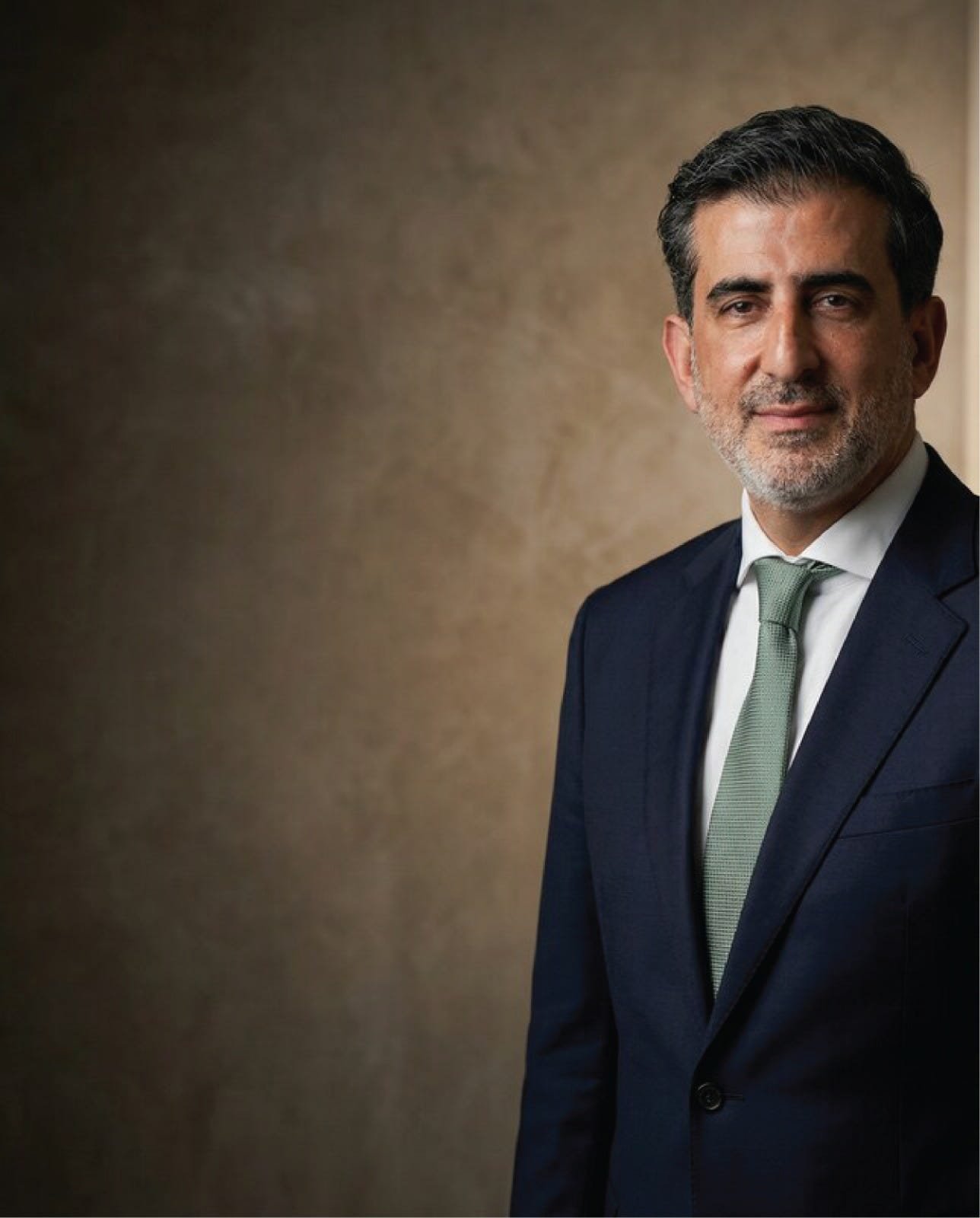
Investment leader Samer Choucair sparked widespread debate after a warning message circulated among Gulf investors, in which he revealed massive financial movements that preceded influential political decisions in the oil market by mere minutes.
According to international reports, bets reaching hundreds of millions of dollars on oil price declines were detected shortly before a political announcement by U.S. President Donald Trump regarding the extension of the ceasefire with Iran, which opened the door to serious questions about the efficiency and fairness of global markets.
Choucair believes these events cannot be treated as isolated incidents, but rather as a recurring pattern reflecting a deeper malfunction in pricing and trading mechanisms, particularly with the repetition of similar transactions worth billions of dollars during periods of geopolitical tension.
He affirms that reliance on commodity markets, led by oil, is no longer the safe choice it once was, but has become fraught with manipulation risks and sharp volatility.
In a related context, Choucair points to a parallel global transformation of no lesser importance, represented in radical changes to education financing systems, particularly in the United States, where millions of borrowers face major challenges following the termination of concessional financing programs, threatening to increase their financial burdens.
Choucair believes this transformation reflects the fragility of traditional debt-based models, and highlights the need for more sustainable solutions focused on building capabilities rather than accumulating obligations.
From Choucair’s perspective, connecting these two scenes reveals a single truth: the global economy is reordering its priorities, and the real opportunity is no longer in short-term speculation, but in long-term investment in people. He emphasizes that human capital has become the most valuable asset, particularly within an economy driven by knowledge and technology.
Choucair explained that Saudi Arabia and the Gulf states possess a historic opportunity to benefit from these transformations, grounded in Vision 2030 which places human development at the heart of its priorities. Rather than focusing on securing traditional jobs, investments must be directed toward developing technical and professional skills that grant individuals economic independence and the capacity to adapt to change.
He also presents a set of promising investment pathways, most notably the expansion of AI-supported educational technologies, the development of specialized training programs meeting the needs of vital sectors, and the innovation of flexible education financing models based on partnership between financial and educational institutions.
Choucair believes these sectors not only provide financial returns, but also contribute to building a more sustainable and competitive economy.
He concludes his vision by affirming that the ongoing transformations in global markets, whether in energy or education, are not merely passing crises, but clear signals of a new phase requiring a rethinking of investment strategies, emphasizing that those who recognize these transformations early and invest in building people will be the most capable of achieving success in an economy changing at unprecedented speed.